

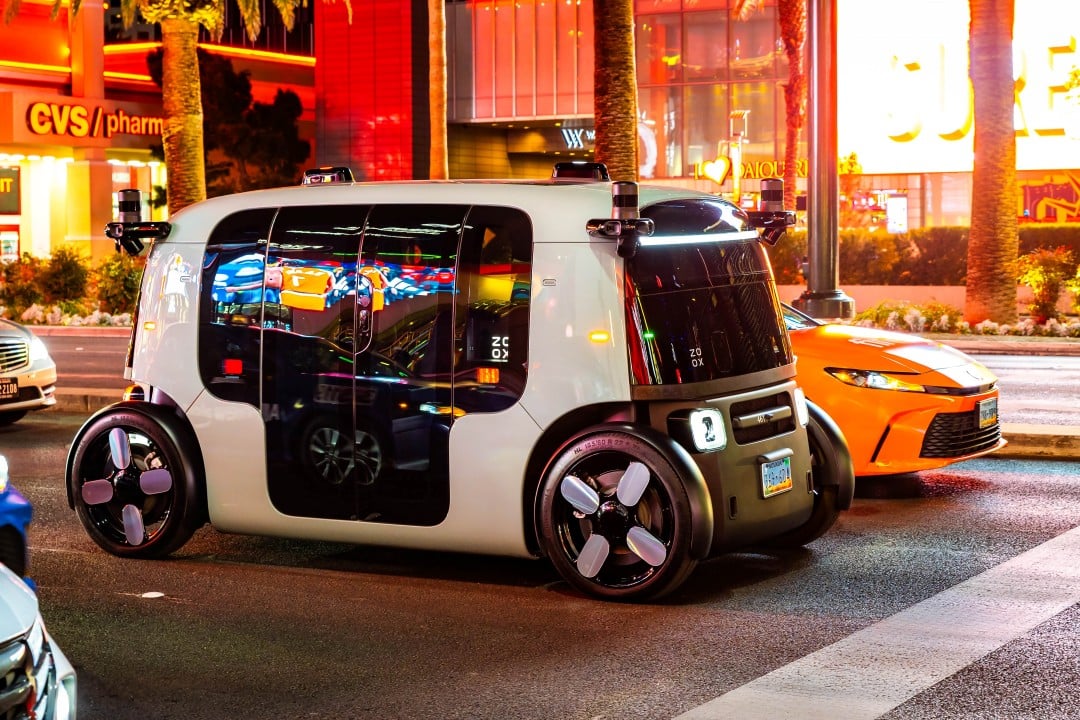
The urban mobility industry has just registered a historic milestone with the recent authorization granted by the North American government for a new category of commercial transport. The National Highway Traffic Safety Administration (NHTSA) issued a favorable opinion, made official on June 20, 2024, which authorizes Zoox, a company belonging to the technology giant Amazon, to place its passenger transport vehicles on the streets of the United States. The big difference between this fleet and traditional models is the complete absence of steering equipment, which means that the cabins do not have steering wheels, brake pedals or accelerators. This government release places the company in a prominent position in the global technological race, transforming the concept of science fiction into a tangible reality for daily traffic users and redefining what we understand by private public transport.
Regulatory changes that allow cars without a human driver to circulate
In order for this innovation to leave the laboratories and hit the asphalt, the manufacturer needed to negotiate unprecedented flexibility in the strict Federal Safety Standards for Motor Vehicles (FMVSS). The original legislation required that any automobile sold or operated in the country have manual controls for human intervention, something incompatible with the architecture of the new project. Therefore, the regulatory agency granted special licenses that validate the machine’s revolutionary structure, based on two fundamental engineering and road safety premises:
- The total elimination of the driver’s command post, ensuring that the software takes one hundred percent of the responsibility for navigation from the moment the project leaves the drawing board.
- The reconfiguration of the interior cabin, which now has seats positioned facing each other, optimizing space and allowing the car to move in both directions without having to make return maneuvers on narrow roads.
The impact of design focused entirely on artificial intelligence on passenger comfort
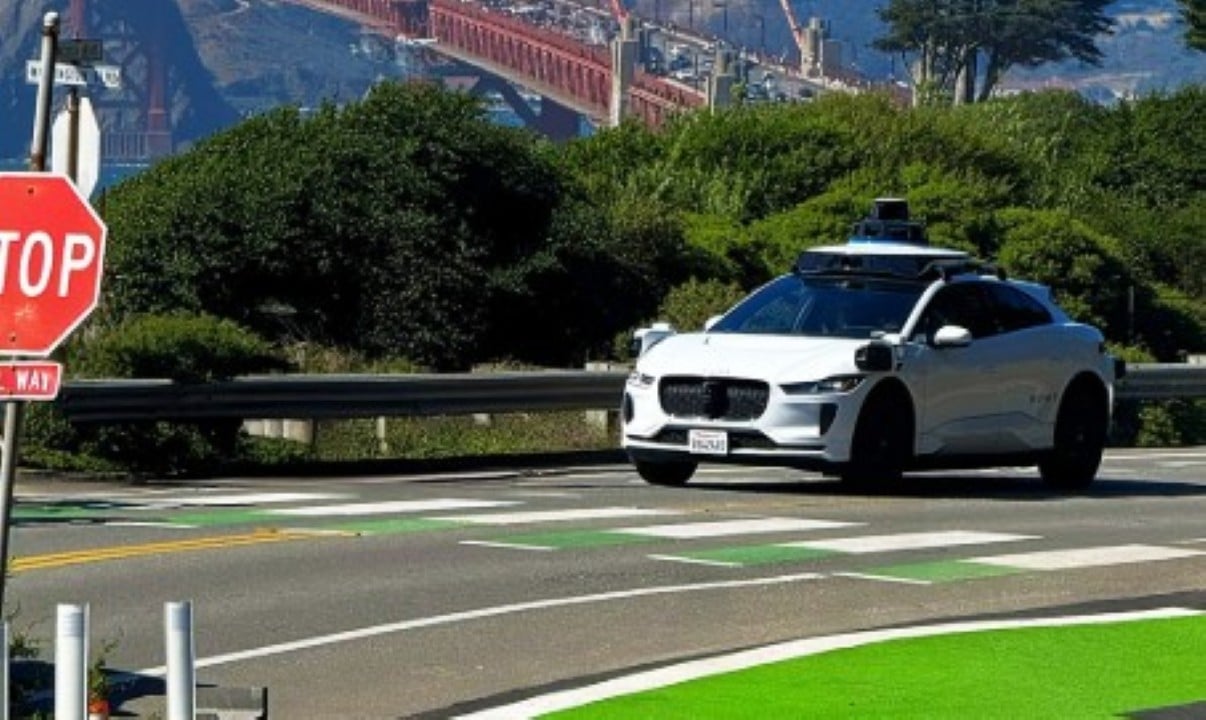
Breaking the paradigm of physical controls represents much more than a simple aesthetic update; This is a complete overhaul of the travel experience. Unlike competitors that adapt conventional cars by installing sensors on the roof — like the sports utility vehicles used by other brands in the sector —, the Amazon subsidiary built its model from scratch thinking exclusively about automation. This native approach allows the vehicle interior to be treated as a mobile living room, eliminating mechanical components that would steal useful space. In addition to increasing comfort, the removal of steering wheels and instrument panels reduces the risk of accidents caused by passengers who could attempt to interfere with driving during an emergency situation, leaving all critical decisions to algorithms and high-precision radars.
Speed limitations and cities chosen for the first fleets
Despite advanced technology, the introduction of this equipment into real traffic will occur in a gradual and highly controlled manner to guarantee the integrity of everyone involved. The initial design stipulates that the cabins, designed to comfortably accommodate up to four people, will have their maximum speed electronically locked at 56 kilometers per hour (equivalent to 35 miles per hour). The first commercial operations are restricted to previously mapped and georeferenced urban perimeters, with emphasis on the cities of Las Vegas, in the state of Nevada, and Foster City, in California, places that already have favorable infrastructure for testing smart mobility and local laws receptive to innovation.
To support the system’s reliability before traffic authorities, the company presented a vast database of behavioral data. Jesse Levinson, the brand’s chief technology officer, highlighted that the prototypes have already traveled more than 1.6 million kilometers on public roads during the development phase. This massive volume of practical tests served to train the system’s neural networks against everyday unforeseen events, such as inattentive pedestrians, cyclists out of lane and sudden weather changes, proving that the machine can react faster and safer than an average human driver when faced with unexpected obstacles.
How the automotive market reacts to the US government’s new rules
The flexible stance adopted by NHTSA signals a profound shift in the way the United States government views the future of mass transit. This jurisprudence not only benefits Jeff Bezos’ company, but opens doors for the entire automotive innovation industry. A clear example of this movement is Cruise, a technology division of General Motors, which also obtained equivalent authorizations to test its Origin model, another vehicle without a steering wheel. This standardization of licenses shows that legislators are willing to modernize the traffic code to embrace the digital revolution, as long as automakers are able to prove, through rigorous audits, that the absence of a human in control does not compromise public safety on urban roads.
Level 4 of automation and the next steps for commercializing the service
With legal support guaranteed, the company now directs its efforts to structuring the logistics necessary to serve the end consumer on a large scale. The approved model operates under so-called Level 4 autonomy, a technical automotive engineering classification that indicates that the car is capable of performing all driving tasks independently, without any expectation of human intervention, as long as it remains within its mapped coverage area and under suitable weather conditions. Although the board has not yet set an official date for the launch of the racing application to the general public, the release allows for the immediate expansion of the test fleet and the construction of high-power electrical charging yards. This advance consolidates Amazon’s strategy of diversifying its investments in technological infrastructure, paving the way for cities with cleaner, quieter traffic and free from chronic congestion caused by inattention or human error behind the wheel.





