

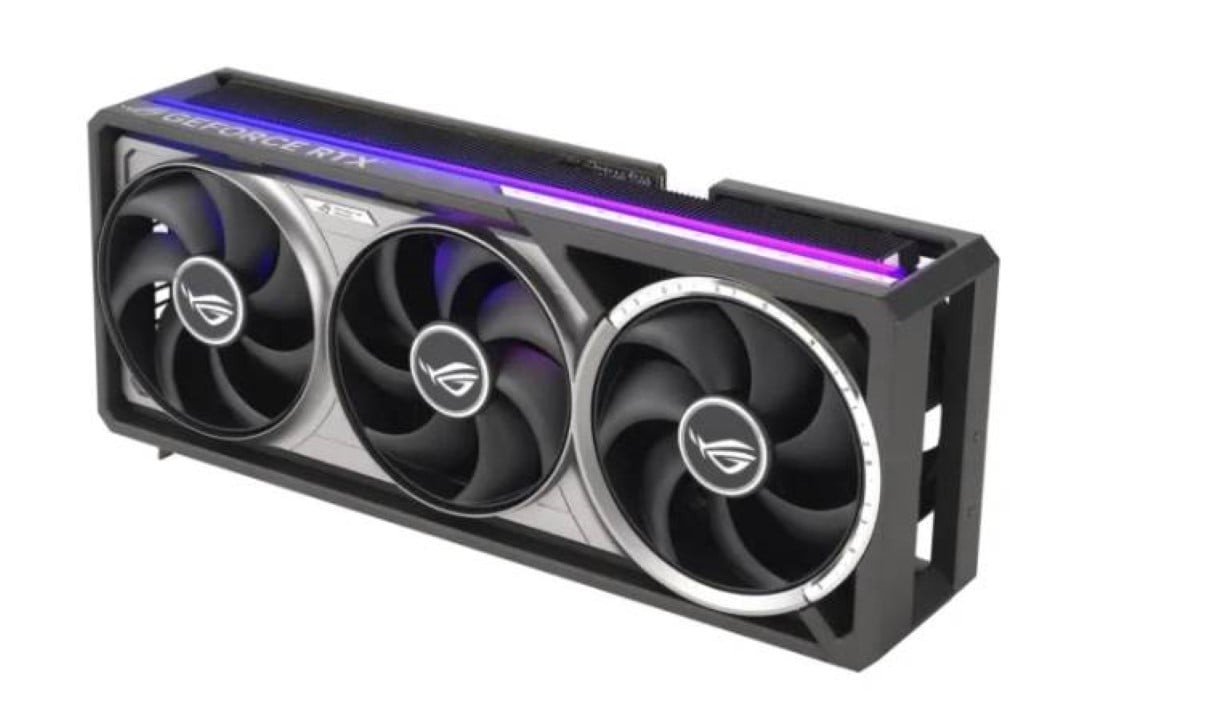
Consumers looking to upgrade their computers were faced with an unusual situation in late July 2026, when Best Buy listed the Asus ROG Astral RTX 5080 OC for a whopping $2,099. The amount charged by the North American store exceeds the official table designed for the top category of the same graphic line. This modified edition by the Taiwanese manufacturer originally hit the shelves costing US$1,499, which shows a 40% increase in price over the original price tag and reinforces the financial instability in the desktop computer parts segment.
Brutal difference between the factory price and that practiced in stores
The financial leap required by Asus’ customized hardware draws attention due to its disproportion with the product hierarchy. By jumping from around one thousand and five hundred dollars to more than two thousand dollars in the Best Buy catalog, the intermediate-premium equipment breaks an important psychological barrier. In practice, the customer pays more for this model than the US$1,999 stipulated as a reference for the almighty RTX 5090, which will deliver considerably higher performance.
When compared to Nvidia’s own base project, known as Founders Edition and priced at US$999, the financial gulf becomes even more evident, costing more than twice as much. Market analysts estimate that this margin inflated by four tenths is not an isolated case, but rather a dangerous thermometer for the consumer’s pocket. The expectation of those who follow computer retail is that other partner brands will begin to inflate their labels in the coming weeks to keep up with this movement.
Reasons that drive the inflation of electronic components
The root cause of this aggressive increase in high-performance graphics cards mixes industrial bottlenecks with macroeconomic instabilities. The main current villain is the global difficulty in obtaining state-of-the-art RAM memory modules, a mandatory input that has had its production cost multiplied recently. With factories receiving less raw material than they need, the volume of boxes reaching storefronts decreases, forcing retailers to increase profit margins.
The semiconductor crisis, which harks back to the worst logistical moments of previous years, has returned to haunt the sector due to recent geopolitical tensions that have paralyzed export routes. Without the essential chips to bring graphics processors to life, a funnel is created where there are many buyers competing for very few available units. This chronic imbalance between those who want to buy and those who can sell has dragged on for months, harming everyone from the assembly lines in Asia to the casual player in the West.
Behind-the-scenes information from the industry indicates that Nvidia itself is already preparing an official review of its charging table for chips supplied to partners. Financial estimates indicate that transfers could make products between 20% and 30% more expensive in the short term, representing the third consecutive increase in an interval of just twelve months. This drastic attitude by the main supplier illustrates how strangled the supply chain is in the face of a public that never stops consuming technology, motivated by specific factors:
- Continued shortage of critical semiconductors in Asian factories.
- Skyrocket in the value of video memory chips, vital for processing.
- Pass-through of operating costs by automakers to protect their margins.
- Variations in the exchange rate that make transport and imports more expensive.
Variations in stores and the return of outdated hardware
Despite the scare caused by the Best Buy label, a quick survey reveals that the market still presents discrepancies in the prices charged for the same item. On the official Asus store and direct competitors, the exact same graphics card can be ordered for US$1,899, a number that, although steep, alleviates the financial impact somewhat. This commercial fluctuation demonstrates that each retail chain is adopting its own survival strategy, without a standardized price alignment.
It is important to point out that the “OC” (Overclocked) nomenclature guarantees that the equipment leaves the factory with accelerated operating frequencies, delivering more frames per second than the basic versions. This superior engineering historically justifies an increase in the final price charged to the enthusiast. However, even putting the robust cooling system and extra performance into the balance, the two thousand dollar barrier required by the retail giant is completely out of the norm.
The general atmosphere behind the scenes is one of apprehension, as the maintenance of expensive inputs is likely to drag other editions of the 5080 line into the same financial abyss. The natural inclination of commerce is for competitors to observe the acceptance of this value at Best Buy and adjust their catalogs upward. As a bizarre reflection of this supply crisis, manufacturers began to resurrect extremely limited projects, such as the ASRock AMD Radeon RX 9050 Challenger, which has a measly 4 GB of video memory — a specification considered obsolete by 2026 standards. This maneuver reveals the brands’ desperation to have any cheap product on the shelves, as powerful chips are inaccessible.
Consequences for the gaming public and the future of the segment
All this financial turbulence falls directly into the laps of those who use the computer as a heavy work tool or main entertainment platform. The impossibility of purchasing a modern graphics card without compromising the family budget forces many users to postpone the assembly of new machines or to accept lower quality parts. Those who usually build high-end computers, always looking for the best refresh rate on their monitors, end up being the most affected by this rampant inflation.
Looking to the horizon, experts do not see immediate relief for buyers’ wallets. Without a massive injection of components into the global market or a drastic change in the policy of silicon developers, the new reality will be to live with increasingly elite luxury hardware. Keeping a computer up to date will require much greater financial planning than in past generations. To try to avoid the loss, the consumer’s only option will be to tirelessly monitor price comparators on the internet, waiting for occasional stock-outs or flash promotions that bring prices back to reality.
The damage caused by these exorbitant labels goes beyond the gamer’s bedroom and reaches the backbone of the software development industry. If the installed base of users is unable to purchase powerful equipment, game studios lose the incentive to create revolutionary graphics engines, stagnating the visual evolution of releases. This complex web of dependence shows that the increase in the price of a simple computer part is powerful enough to slow down the technological advancement of an entire digital ecosystem, affecting the creative economy on a global scale.





