Impact on the Moon: SpaceX Falcon 9 rocket fragment causes collision
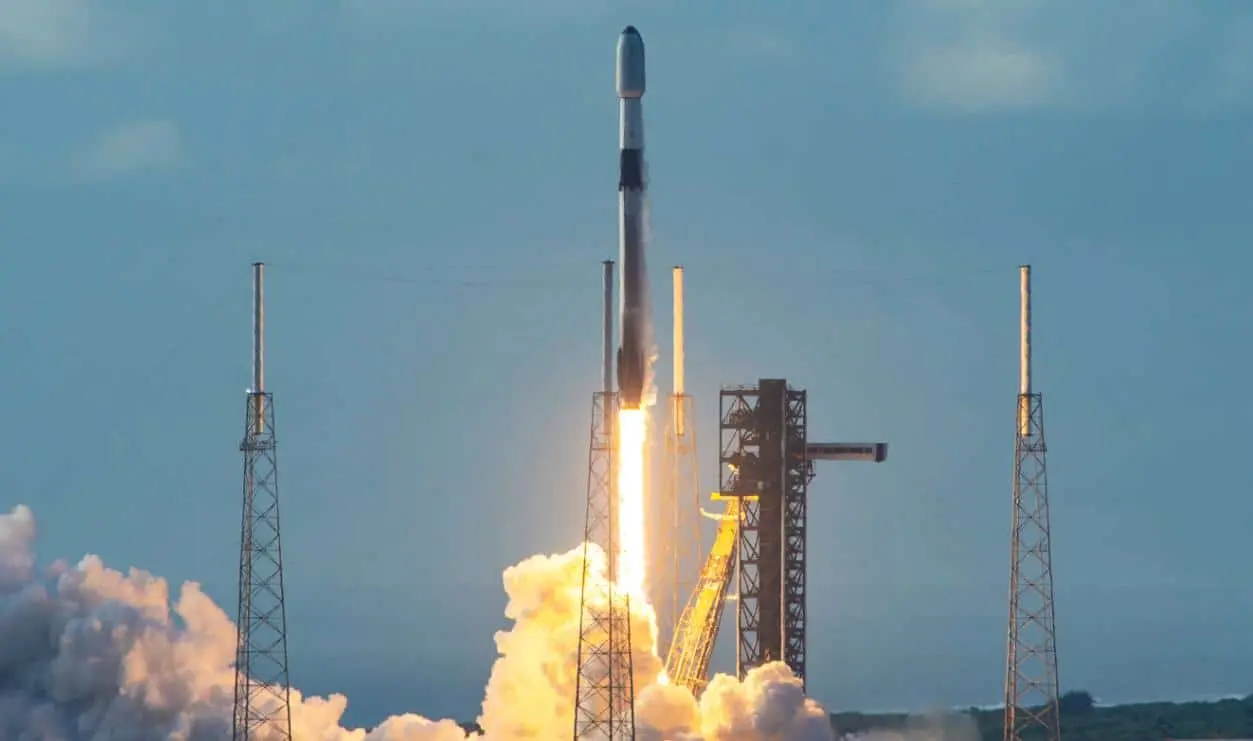
A piece of a SpaceX rocket, part of a Falcon 9, collided with the lunar surface on August 5, 2026. The fragment, which had been traveling uncontrolled for years, had its impact confirmed by astronomers after extensive observations. This incident marks an unusual event in the history of space exploration, raising discussions about tracking debris and its fate.
Details of the lunar impact and the origin of the fragment
The collision confirmed on August 5, 2026 involved the second stage of a SpaceX Falcon 9 rocket, launched in 2015. This stage had carried the Deep Space Climate Observatory (DSCOVR) satellite into space, a joint NASA and National Oceanic and Atmospheric Administration (NOAA) mission focused on Earth and climate observation. After delivering the payload, the booster was left in a complex and difficult-to-predict orbit, influenced by the gravity of both the Earth and the Moon.
On the same topic: SpaceX rocket is on a collision course with the Moon in August, scientists say
Amateur and professional astronomers such as Bill Gray of the Pluto Project were crucial in identifying and tracking the object. Initially, the fragment was mistakenly identified as part of a Chinese rocket. However, further analysis of the trajectory and optical properties revealed its true origin in the SpaceX spacecraft. Accuracy in tracking was essential to predict the moment and approximate location of the impact.
Unexpected trajectory: what usually happens with SpaceX rockets
Most rocket upper stages, especially those from SpaceX, are designed for a specific destination after separation from the payload. Generally, space debris safety and mitigation guidelines provide for two main options. The first is to perform a controlled deorbit burn, which directs the stage toward safe re-entry into Earth’s atmosphere, where it disintegrates. The second option is to send it into a solar “graveyard” orbit, ensuring it does not pose a risk to other satellites or celestial bodies.
Contrary to these standard procedures, the Falcon 9 stage involved in the 2026 incident was unable to perform such maneuvers. Because it ran out of fuel at a critical moment, close to the Moon, it entered an unstable orbit. This chaotic orbit remained for nearly a decade, resulting in the unplanned collision with the lunar surface. The unexpected trajectory highlights the challenges of managing debris in complex gravitational environments.
Scientific research and the value of collisions on the Moon’s surface
Although the impact of a rocket piece is an accidental event, it offers unique opportunities for lunar scientific research. The collision creates a new crater on the Moon’s surface, exposing subsurface materials that would otherwise be inaccessible for study. This exhibition allows scientists to investigate the geological composition and internal structure of the natural satellite through telescopic observations and future orbital missions.
See Also

The real mummy’s curse: study reveals serious health risks in mummified remains sold online

Gravelines nuclear power plant in France has reactors affected by jellyfish for the second year in a row

Runner Ashley Paulson completes 160 km on a treadmill and breaks world record with impressive milestone
More on this story: SpaceX rocket collides with the Moon in an event monitored by NASA, which eliminates risks to Earth
These events provide valuable data that can be compared with information obtained from planned missions. For example, NASA’s LCROSS (Lunar Crater Observation and Sensing Satellite) mission in 2009 performed a controlled impact to search for water ice. Analysis of material plumes and crater size resulting from accidental impacts can improve our understanding of:
- The composition of the lunar regolith and the presence of volatiles.
- The density and stratification of the Moon’s subsurface layers.
- The formation and evolution of impact craters.
- The behavior of materials in extreme vacuum conditions after a collision.
Growing Space Junk Challenge and Future Impacts
The SpaceX debris incident underscores the growing global concern about space debris, a problem that extends beyond low Earth orbit. Thousands of satellites and millions of smaller pieces of debris orbit the Earth, but larger objects on interplanetary or translunar trajectories pose a different kind of risk. As the number of launches increases and more missions are planned to the Moon and other celestial bodies, monitoring and managing this debris becomes increasingly critical.
Governments and space agencies around the world are stepping up efforts to develop more effective tracking systems and technologies to mitigate the space debris problem. Protecting celestial environments, such as the Moon, from uncontrolled impacts is an important consideration for the sustainable future of space exploration. The need for more robust regulations and international cooperation to ensure that decommissioned objects do not become space threats is a recurring theme in the scientific and aerospace community.
Learn more: SpaceX rocket fragment crashes into the Moon at high speed after months adrift