

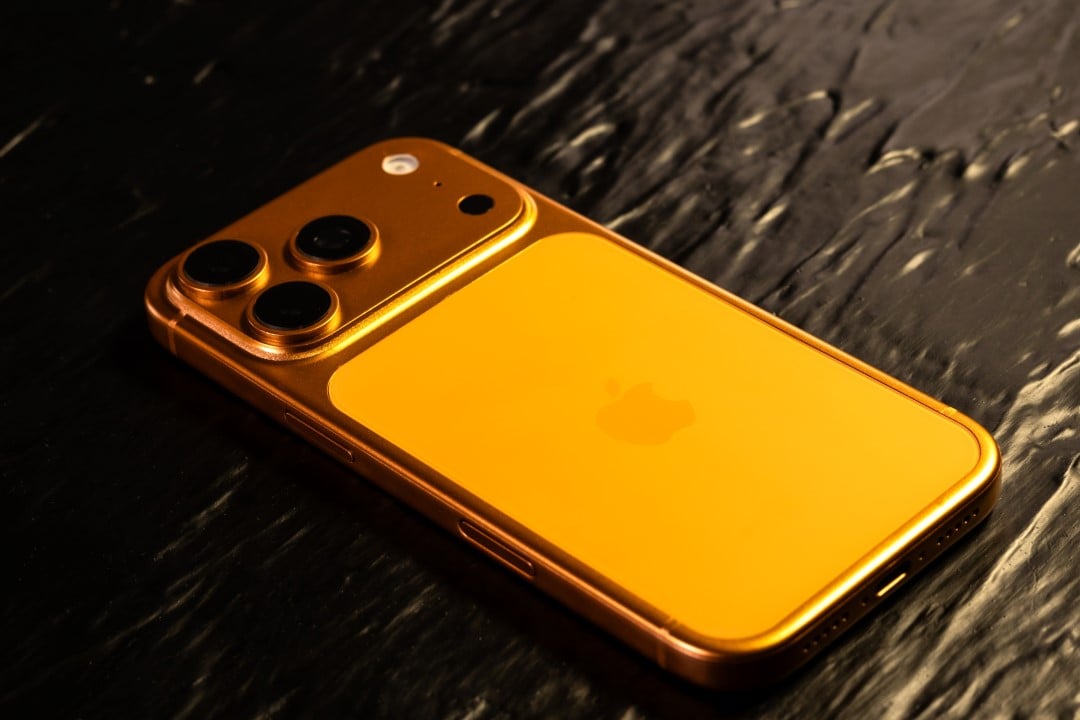
During the festivities marking the semi-quincentenary of the independence of the United States, scheduled for July 4, 2026, a copy of the iPhone 17 Pro Max in Cosmic Orange will receive an unusual destination. The device will be stored in a historic container at Independence National Historical Park, located in Philadelphia, with instructions to remain untouched until 2276. The future date will coincide with the half-millennium anniversary of the country’s founding. Choosing a cell phone to represent today’s technological edge, in a tradition that dates back to the famous Westinghouse capsules of 1939, has raised curious debates about the durability of electronic components over two and a half centuries.
Entity responsible for the American project explains the presence of the Apple smartphone
The America250 committee, a non-profit group approved by the United States Congress, manages all commemorative actions for this 250-year milestone. The insertion of Apple equipment occurred through the project called “America Innovates”, whose objective is to immortalize the nation’s stage of scientific development. According to organizers, the mobile phone epitomizes the giant leaps in data processing, image capture and global communication that have radically transformed modern society.
To guarantee a direct message to the citizens of the future, the phone’s memory houses texts saved in the Notes application, detailing the routine and customs of the current population.
On the same topic: IPhone 17 Pro Max is sealed in a time capsule in the USA, scheduled to open in 2276
Cultural relics and documents that will keep the electronic device company
The underground collection brings together donations sent by all 56 states and territories in the country, together with pieces provided by the three powers of the republic. The final catalog impresses with the variety and historical weight of each element. Featured inventory includes:
- Civil War:A plume belonging to the bald eagle named “Old Abe,” which served as the symbol of a Wisconsin regiment.
- Flight history:A piece of the original canvas used on the Wright Brothers’ 1903 airplane, sent by the state of Ohio.
- Purchasing habits:A traditional glass container from the Coca-Cola brand, accompanied by a banner from the 2026 Rose Parade.
- Genetic preservation:The full text of the Declaration of Independence written by Thomas Jefferson, translated into a synthetic DNA sequence by the Library of Congress.
- Computational projection:A text formulated by Anthropic’s artificial intelligence system, Claude, describing the projected scenario for California in 250 years.
- Citizen perspective:Messages written by ordinary inhabitants with bets on the social and scientific changes expected in 2276.
- National authority:Items linked to sport and official objects provided by the Supreme Court, Congress and the presidency.
The Californian contribution generated by algorithms draws attention for its originality. This is the absolute debut of material created by artificial intelligence within a government historical repository in the United States, establishing a new paradigm in the way of recording the evolution of humanity.
Structural details of the cylinder designed to resist the effects of time
The construction of the enclosure required the collaboration of researchers from the National Institute of Standards and Technology (NIST), conservation technicians from the Library of Congress and employees from the National Park Service. The joint effort resulted in a 400-kilogram stainless steel tube, manufactured with as few welds as possible to block infiltrations. To reinforce security, a half-ton metal dome, called a *bell jar*, was installed on top of the main structure, forming a bubble of dry air that removes natural humidity from the ground.
The technical specifications of the storage project reveal the following data:
More on this story: IPhone buried in time capsule for 250 years may not work when opened
- Composition:Stainless steel with drastic reduction of seams.
- Container mass:About 400 kilos.
- Outer shell:Superimposed metal structure weighing 500 kilos with insulating air chamber.
- Burial point:Land of Independence National Historical Park, in the city of Philadelphia.
- Scheduled rescue:July 4th of the year 2276.
All the engineering applied in the manufacture of the casing derived from techniques already established in the maintenance of parchments and secular books.
Technical challenges prevent cell phones from working after centuries underground
The chances of the device’s screen lighting up at the time of exhumation are practically zero. Hardware engineers warn that the lithium-ion cells present in the battery suffer natural chemical degradation, regardless of whether the equipment is turned off. The interval of two and a half centuries exceeds any estimate of the useful life of this type of component. Added to this, the operating system would require communication with Apple servers, specific power cables and code updates, factors impossible to guarantee in such a distant future.
The true intention of the creators, however, goes far beyond electronic functionality. The phone enters the capsule like a representative sculpture of an era of accelerated transition, carrying an anthropological importance that does not depend on its processing capacity. Americans of the future will have in their hands physical proof of a historical period in which the global population used pocket-sized machines that were infinitely superior to the largest supercomputers built decades earlier.
Learn more: OnePlus’ withdrawal from the American market raises alarm for the Nothing brand
The meaning of using a consumer good to define a nation’s identity
Choosing a personal technology article to translate the spirit of the United States in 2026 serves as a strong sociological manifesto. Instead of prioritizing diplomatic agreements, classical paintings or weapons, the country chose to highlight a commercial item that shaped the way we talk, record memories and consume information. The impact of this telephone model at the beginning of the 21st century is comparable to the revolution caused by automobiles in the 20th century, changing the dynamics of cities and human behavior forever.
When the seal is broken during the nation’s fifth centenary, those responsible for the excavation will come across an orange-toned block of titanium, resting alongside war relics and pioneering aviation fabrics. Most likely, this future generation will look at the device without even understanding the concept of plugging a wire into an outlet to recharge a battery.