Artificial intelligence improves prediction of solar flares and offers early warning to Earth
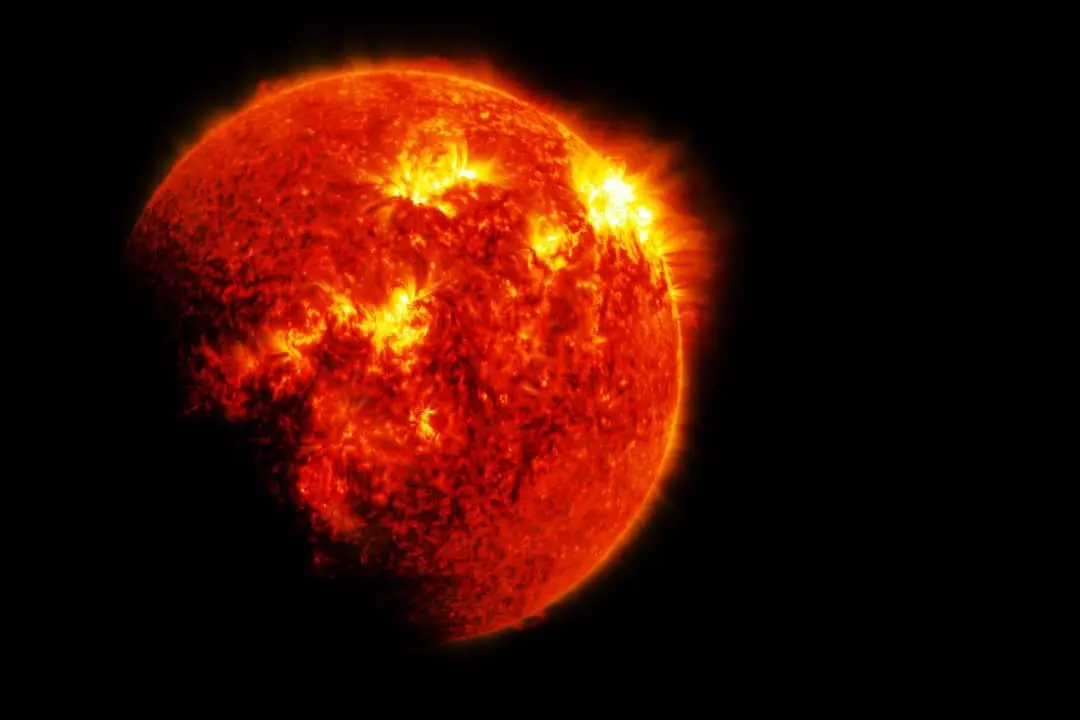
The Sun, although essential for life on Earth, is also a source of intense phenomena. Occasionally, our star releases large eruptions known as coronal mass ejections (CMEs), which consist of enormous volumes of plasma and magnetic fields hurled into space.
More on this story: Horoscope for August 14, 2026: discover the influences for each sign
When this material is directed towards our planet, its interaction with the Earth’s magnetic field can generate everything from spectacular northern lights and southern lights to geomagnetic storms. These storms, in particular, pose a significant risk, potentially disrupting GPS systems, disrupting communications, and affecting the operation of critical satellites.
The task of predicting space weather has always represented a major challenge for scientists. However, recent advances suggest a promising change in this scenario.
Learn more: Artificial intelligence reveals signs of solar flares hours before and innovates in alerts
New artificial intelligence model anticipates formations on the Sun
Researchers at the New Jersey Institute of Technology have developed new artificial intelligence that promises to revolutionize solar forecasting. The model, called EarlyDetect, is capable of identifying subtle signs of the formation of active regions on the Sun, before they even become visible on the surface. This capacity allows an advance of approximately nine hours.
See Also

Ancestral life of microorganisms discovered beneath the ice at Antarctica’s Blood Falls

Russia suffers record Ukraine drone attack with 620 targets

REDMI Note 17 Pro Max 5G, Xiaomi’s new smartphone arrives with record-breaking 10,000 mAh battery
On the same topic: Today’s horoscope: astrological predictions indicate new beginnings and crucial decisions for the signs this August 17th
The research details that changes in acoustic waves and the solar magnetic field are crucial indicators of the emergence of these structures. In other words, the Sun emits “clues” before an active region develops, and EarlyDetect has been trained to recognize these small changes.
For its analyses, EarlyDetect processes hourly maps of acoustic power and magnetic field data, which are collected by NASA’s Solar Dynamics Observatory (SDO). Acoustic information is provided by the Helioseismic and Magnetic Imager (HMI) instrument, which performs observations every 45 seconds.
More on this story: Flamengo x Cruzeiro: Psychic reveals which team will be champions of today’s Libertadores game

Challenges and next steps in solar forecasting
Despite notable progress, the system is not yet ready to operate real-time forecasts. There are challenges to be overcome, such as the occurrence of false alarms and situations in which the warning arrives late. It is also important to note that not all active regions result in large events such as coronal mass ejections, which is an additional limitation that the model still needs to refine.