
Diplomatic tension grows after Donald Trump suggests new name for Lake Ontario
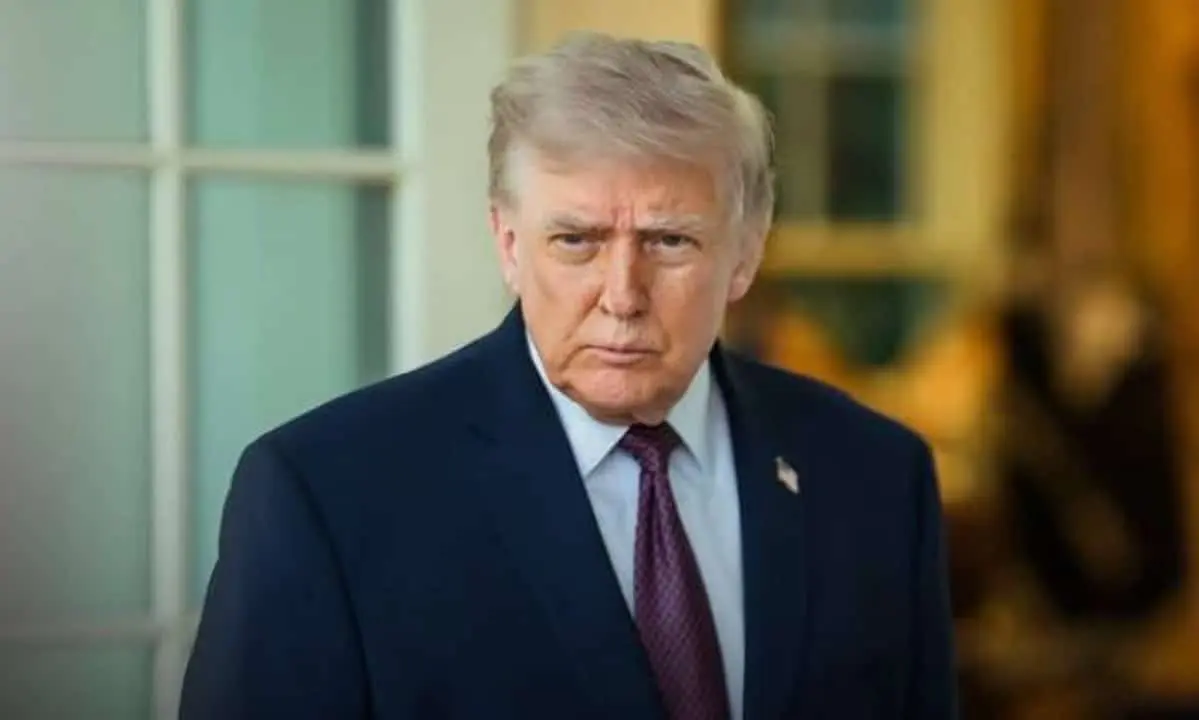
A new diplomatic crisis is beginning to emerge on the North American border after a controversial statement by the former president of the United States. Amid a scenario of frustrated trade negotiations, Donald Trump used his social networks to defend that the traditional Lake Ontario should be called “Lake America”. The unexpected demonstration generated immediate discomfort in the government of Canada, a country that has shared the waters and administration of the river basin with the Americans for more than a century. International relations experts believe that the rhetoric goes far beyond a simple geographical change, reaching the heart of shared sovereignty between the two neighboring nations.
The historical weight of the water border and the impact on bilateral relations
Divided exactly in half by an imaginary line that separates the Canadian province of Ontario from the American state of New York, the natural reservoir is governed by the Boundary Waters Treaty of 1909. This century-old agreement establishes that neither party can unilaterally change the conditions or official nomenclature of the shared waters without mutual consent. By ignoring this diplomatic pact in his speech, the Republican politician signals a stance of direct confrontation with the guidelines established by Ottawa. The basin represents not just a watershed, but a vital ecosystem that supports millions of people on both sides of the border.
The region’s fresh waters form an essential logistical corridor for the flow of industrial and agricultural production in North America. In addition to ensuring the supply of drinking water to populated metropolises, the place is home to navigation routes that generate billions of dollars annually. Any political instability that threatens the joint management of this natural resource raises a red alert in financial markets and industries that depend on the stability of cross-border trade flows.
Message on digital platform reflects new commercial pressure tactic
The channel chosen to publicize the renaming proposal was Truth Social, a digital platform controlled by the businessman himself. The publication came shortly after the abrupt end of a crucial round of tariff talks between Washington representatives and Canadian officials. Without a consensus on import and export taxes on essential products, the diplomatic environment was already deteriorating. The post acted as a catalyst for the worsening of the climate of mutual distrust that hovers over the capitals of both countries.
Learn more: 19th century doctrine guides Donald Trump’s foreign strategy in Latin America
 First tests of Apple’s foldable cell phone reveal robust hinge The global technology market awaits with great anticipation the Cupertino giant's next major autumn event, which promises to redefine the brand's portfolio. With just a few weeks to… In Latest News (EN) · 26/08/2026 |
 Magnitude 5.1 earthquake shakes Colombia and prompts evacuations in Bogotá An earthquake of magnitude 5.1 was recorded in Colombia on August 26, with its epicenter located in Los Santos, in the Santander region. The tremor was noticed in… In Latest News (EN) · 26/08/2026 |
 Tim Curry, iconic ‘Rocky Horror Picture Show’ and Pennywise actor, dies at 80 Tim Curry, the acclaimed British actor known for portraying Dr. Frank-N-Furter in the cult classic “The Rocky Horror Picture Show,” has passed away at his home in Los… In Latest News (EN) · 26/08/2026 |
Historically, the former president’s approach towards his northern neighbor has always been marked by aggressive pragmatism. During his time in the White House, he did not hesitate to impose severe surcharges on Canadian steel and aluminum, justifying the measure on the grounds of national security. This transactional strategy, where historical alliances are put on the back burner in favor of immediate economic advantages, returns with strength in this new phase of its political trajectory. The use of national symbols as currency highlights a tightening of customs procedures.
On the same topic: Visa of Brazilian ambassador revoked by decision of the Trump administration in the USA
Main consequences of a possible rupture in the Great Lakes agreements
Insistence on a unilateral agenda involving shared water resources can trigger a series of chain reactions in the public and private sectors. If the rhetoric turns into State policy, the losses would go beyond the symbolic sphere and severely affect the real economy. Analysts point out that the destabilization of the current environmental governance model would have immediate impacts on several strategic areas.
- Suspension of joint projects for depollution and conservation of native aquatic fauna in the river basin.
- Increase in sea freight costs due to the possible imposition of new navigation rules by American authorities.
- Legal uncertainty for multinational companies that operate ports and locks along the São Lourenço waterway system.
- Trade retaliations by the Canadian parliament, which could tax agricultural products from the Midwest of the United States.
Faced with this scenario of uncertainty, governors of American states that depend on trade with Canada are beginning to show concern about the verbal escalation. The economic interdependence between border regions is so deep that isolationist measures tend to harm the very voters who support nationalist discourses. Canadian diplomacy, in turn, maintains an official cautious stance, avoiding responding directly to provocations on social media, but working behind the scenes to strengthen its commercial alliances with other continents.
With a surface area that exceeds eighteen thousand square kilometers, the reservoir in dispute is the smallest of the five Great Lakes in terms of territorial extension, but it has a depth that guarantees a colossal water volume. This geographical characteristic allows the operation of deep-draft vessels during most of the year, connecting the interior of the continent to the Atlantic Ocean. The attempt to alter the visual and nominal identity of this freshwater giant ignores the complex web of indigenous communities, artisanal fishermen and heavy industries that have shaped their lives around the basin under a binational identity.
Immediate repercussions on environmental governance and trade in North America
The controversy surrounding the reservoir’s naming exposes the fragility of contemporary diplomatic ties, even between long-standing allies. Environmental protection organizations have already issued statements of condemnation, warning that the politicization of geography diverts attention from real problems, such as climate change and the proliferation of invasive species in fresh waters. The public debate, now contaminated by identity disputes, takes experts away from the technical negotiation tables that guaranteed the preservation of the ecosystem over the last century.
While chancelleries try to overcome the discomfort generated by the publication, the flow of goods at the border continues its routine under an atmosphere of apprehension. The transformation of a shared natural heritage into a target of rhetorical disputes consolidates a new dynamic in North American international relations. The episode demonstrates that agreements consolidated decades ago are not immune to abrupt revisions motivated by internal political interests and digital engagement strategies.
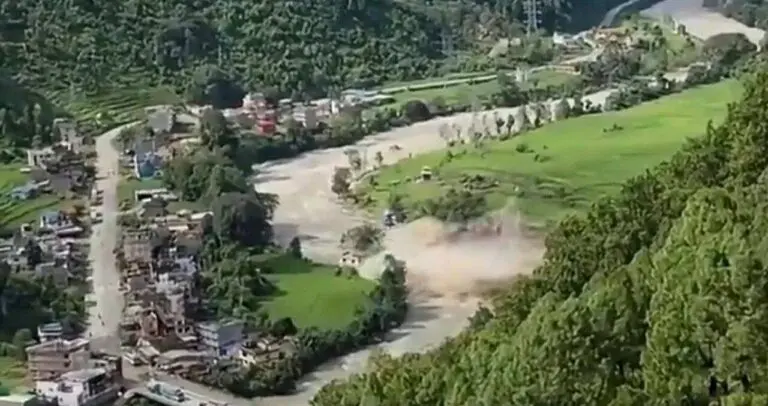
A large avalanche on the border between Nepal and Tibet on August 26, 2026 resulted in the death of 95 individuals and left hundreds of people missing, devastating…
In Latest News (EN) · 26/08/2026
Images released recorded the devastating fire that hit the maternity ward of one of Pakistan's largest medical centers, resulting in the loss of 14 newborns on August 26,…
In Latest News (EN) · 26/08/2026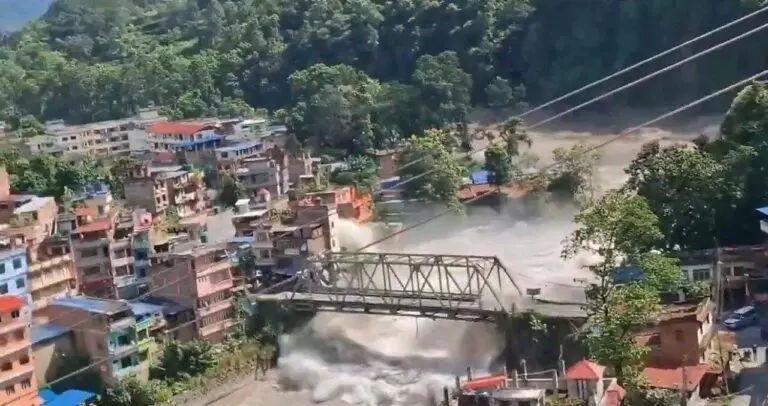
On Wednesday, August 26, 2026, a violent flood swept through the border region that divides Nepalese territory and the Tibet Autonomous Region, under Chinese administration, resulting in a…
In Latest News (EN) · 26/08/2026A sudden flood with great destructive power left a trail of deaths and missing people on the border between Nepal and Tibet, in China, on August 26, 2026.…
In Latest News (EN) · 26/08/2026
After days of speculation and a wave of leaked videos, Rockstar Games has finally spoken out publicly about the incident involving gameplay footage from Grand Theft Auto VI.…
In Latest News (EN) · 26/08/2026
A powerful flash flood hit villages on the Nepal-China border on August 26, 2026, causing widespread devastation. Nepalese authorities confirmed the deaths of at least 17 people and…
In Latest News (EN) · 26/08/2026