19th century doctrine guides Donald Trump’s foreign strategy in Latin America
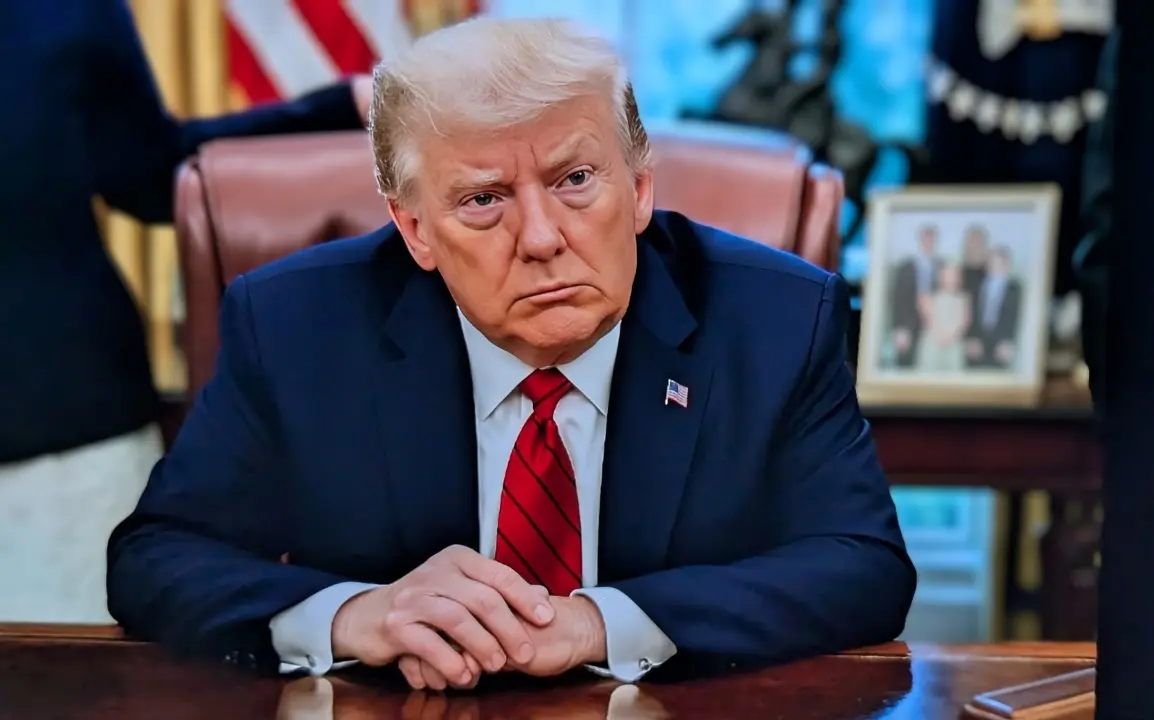
Donald Trump’s administration has reiterated the Monroe Doctrine as a pillar of its foreign policy towards America, more than 200 years after its establishment in 1823.
A video lasting more than five minutes, released on August 11, 2026 on the United States Department of State’s social media, stated that the “doctrine has found its latest defender in Donald Trump.”
The visual material, according to the video, presented the arrest of former Venezuelan president Nicolás Maduro at the beginning of this year as one of the current examples of the application of the doctrine by the Trump administration.
“Over two centuries, Monroe’s declaration shaped U.S. foreign policy across different mandates and in fundamentally different geopolitical areas. What began as a warning to European powers evolved into a framework for regional dominance — a foundation that remains, to this day, the cornerstone of American conduct in the hemisphere,” said the video, narrated by Kevin Marino Cabrera, U.S. Ambassador to Panama.
In the same publication, the State Department declared that “American dominance in the Western Hemisphere will never again be questioned.”
Understand the 19th century doctrine that influences American foreign policy
The doctrine is named after the former president of the United States, James Monroe (1758-1831), its creator.
More on this story: Donald Trump’s ally, Senator Lindsey Graham dies of sudden illness in the USA at age 71
In 1823, during the traditional presidential speech to end the year at the Capitol, the then leader established his geopolitical guidelines. He declared that any effort by European nations to impose their political systems “on any portion of this hemisphere would be regarded as a danger to the peace and security” of the United States.
At that time, the independence of several former colonies was recent and the geopolitical environment was marked by intense imperial disputes over territories.
Thus, the Monroe Doctrine determined that any interventionist action by Europe on the American continent would be seen as a threat to the security of the United States. In return, the USA committed itself not to interfere in internal European conflicts.
This stance consolidated the United States as a kind of “tutor” of the other nations on the continent, designating the region as strategic and of high priority for American interests.
Since then, the doctrine has been the subject of several reinterpretations by different White House administrations. It also served as a justification for interventions, both direct and indirect, in various parts of the continent, especially in the Caribbean and Central America.
Such reinterpretations are known as “corollaries”, which are concepts that extend or add elements to previous statements.
One of the most notable reformulations of the Monroe Doctrine is the Roosevelt Corollary, established in 1904.
Then-president Theodore Roosevelt established that the United States would have the right to intervene in the internal affairs of any Latin American country that was unable to honor its international obligations.
See Also
China’s Shenzhou-23 mission reveals views of Earth from Tiangong station

Manchester City receives third offer from Barcelona for Rodri worth between €60 million and €80 million

Former boxer Prichard Colón dies aged 33 after long battle with brain injury
This interpretation gave rise to another concept often associated with American foreign policy towards America: the “big stick” approach, which symbolizes the imminent threat of intervention by the United States in nations within its sphere of influence.
Learn more: US foreign policy based on the Monroe Doctrine continues to influence sovereignty in Latin America
The “Donroe Doctrine” and Trump’s vision for the American continent
The video released on August 11, 2026 does not represent the Trump administration’s first contact with the Monroe Doctrine.
The combination of the names “Monroe” and “Trump” gave rise to a nickname for the current administration’s policy: the “Donroe Doctrine.”
At the end of the previous year, the White House released its latest National Security Strategy. In this document, the Monroe Doctrine was expressly mentioned as a guide for US relations with Latin America.
A few days before the publication of the document, Donald Trump issued an official message commemorating the doctrine’s anniversary. The Republican president declared that the orientation defined by Monroe is “fundamental” to American history and that his administration is dedicated to safeguarding the Western Hemisphere.
The National Security Strategy points out that, from the perspective of the current White House administration, Latin American nations are the source of issues that directly impact the United States, such as immigration and drug trafficking.
While in the past the Monroe Doctrine aimed to protect the American continent from the influence of European powers, the Trump administration appears to be updating this guideline to, at this moment, limit the advance of China’s power in the region.
In an interview given the previous year, United States Secretary of Defense Pete Hegseth declared that the country should restore its influence in its “backyard”, which would be “lost” to China.
Hegseth’s statement came amid growing pressure exerted by Washington on the Panama Canal, a project built by the US at the beginning of the 20th century and under control of the Central American country since 1999.
On the same topic: Understand the Monroe Doctrine: USA establishes hegemony over America, challenging European powers
The Trump administration has demonstrated opposition to growing Chinese influence in the shipping channel, which connects the Pacific and Atlantic oceans.
The Panama Canal, according to the video released on August 11, 2026 by the United States Department of State about the Monroe Doctrine, is a “symbol of the United States’ enduring leadership in the region.”