
Glacier calving in the Himalayas leaves 600 dead and thousands missing in Asia
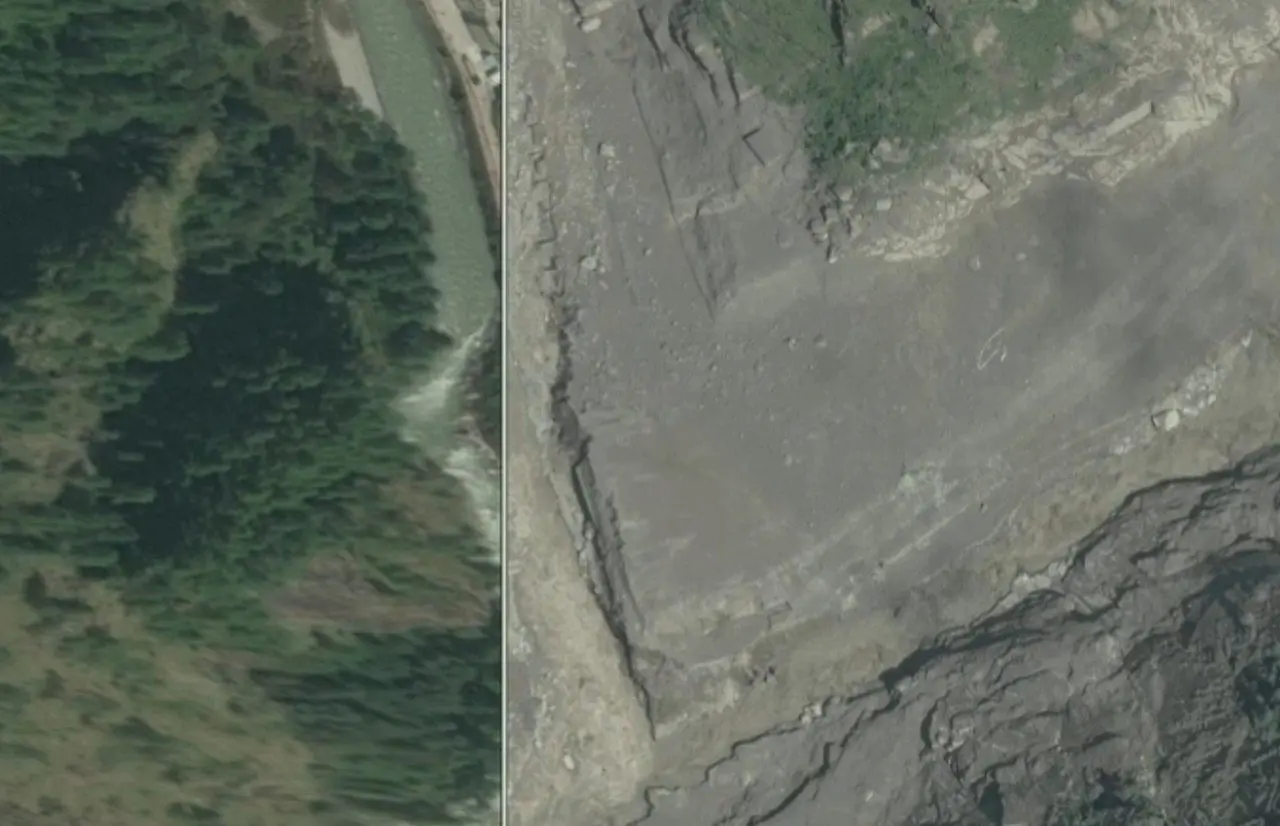
A natural disaster of catastrophic proportions struck the mountainous region that divides Nepal and Tibet on August 26, 2026, resulting in a scenario of absolute devastation with the confirmation of approximately 600 deaths and an alarming number of 2,000 people who have not yet been located. The magnitude of the event turned entire communities into rubble in a matter of minutes, demanding an immediate response from Asian authorities to deal with one of the biggest geological tragedies recorded this decade in the mountain range.
The panic experienced by residents and visitors was widely documented through mobile devices, generating amateur recordings that quickly took over social media and the news across the planet. In these impressive records, it is possible to observe crowds running desperately in search of safe shelter while a colossal cloud of debris and snow engulfs the landscape in the background, highlighting the uncontrollable force of nature and the terror faced by those who were in the path of destruction.
Faced with the instability of the affected terrain, local governments implemented a state of maximum alert, fearing that vibrations from operations or new earth movements could cause secondary landslides that would put even more lives at risk. Simultaneously with this constant vigilance, teams specializing in extreme rescue continue to tirelessly sift through the rubble and thick layers of ice, hoping to find survivors who may be isolated in pockets of air beneath the mud.
To cope with the immensity of the devastated area, an impressive contingent of 4,500 rescuers, including military personnel, firefighters and volunteers trained in high mountains, were mobilized to work on the front line of this complex operation. The work of these teams takes place against the clock, braving freezing temperatures and thin air, in a window of time considered critical by rescue experts not only to save the injured, but also to ensure the dignified recovery of the bodies before weather conditions deteriorate further.
Understand the case: Tragedy in the Himalayas: avalanche causes 1,318 deaths and more than 5,600 missing
Geographic impact and the areas most devastated by the natural phenomenon
The fury of this extreme event was concentrated in the heart of the Himalayas, sweeping kilometers across the complex dividing line that separates Nepali territory from the Tibetan autonomous region. The point of greatest damage documented to date occurred around the Gyirong border crossing, a vital commercial and tourist corridor that was practically erased from the map by the force of the impact, interrupting historic communication and transport routes between the two nations.
Initial dynamics pointed to seismic shock as the main cause
In the first hours after the disaster, the international scientific community and preliminary reports suggested that the avalanche of mud, rocks and frozen water had been triggered by an earthquake. This hypothesis gained strength when United States Geological Survey (USGS) seismographs recorded an earthquake measuring 4.4 on the Richter scale at exactly the same coordinate and time at which the mountainside gave way, leading experts to believe in a traditional direct cause-and-effect relationship.
However, closer analysis of the instrumental data forced the United States Geological Survey to revise its initial statement, revealing a much more frightening and rare sequence of events. Scientists concluded that the earthquake was not the trigger for the tragedy, but rather the direct consequence of the colossal calving of an ancient glacier, whose weight and impact against the rocky ground were so violent that they generated seismic waves equivalent to a tectonic shock of medium intensity.
Massive ice breakup triggered the tremor recorded by seismographs
The information consolidated by North American researchers details that the structural fracture of an ice block of gigantic proportions, located at the top of a steep slope, was the true ground zero of this calamity. When this massive structure lost its support and plummeted toward the abyss, the kinetic energy released upon impact with the base of the valley was enough to shake the Earth’s crust, initially fooling automated earthquake detection systems around the world.
On the same topic: New earthquakes hit China near Tibet after huge avalanche in the Himalayas
Advancement of the destructive mass and the blocking of rivers in the mountainous region
Upon reaching the bottom of the valley with impressive speed, the fragmented glacial mass acted as a kind of natural bulldozer, uprooting everything in its path in a relentless domino effect. The result was the formation of a thick and lethal torrent made up of blocks of ice the size of buildings, sharp rocks, centuries-old trees and tons of soil, which descended down the slopes, gaining volume and destructive power with each meter traveled.
Geologists and hydrological engineers who monitor the region’s river basin point out that all this solid material ended up accumulating in a natural bottleneck in the land, creating a gigantic artificial dam. This sudden accumulation of debris completely interrupted the flow of the Lhende Khola River, one of the most important watercourses in that location, damming millions of liters of water in an extremely short space of time and creating a water time bomb.
The pressure exerted by the rising volume of the river quickly overcame the strength of the barrier of mud and rocks, resulting in a catastrophic rupture that released a liquid shock wave over the lower valley. This sudden and violent flood swept the plains where villages, camps and infrastructure were concentrated, giving no chance of evacuation for residents who were already confused by the initial roar of the glacier’s fall.
More on this story: Unpublished data reveals trail of avalanche destruction between Nepal and Tibet
Geographic factors that increase disasters in the Asian mountain range
Although the exact chronology of this chain collapse still requires field expeditions and rigorous academic studies to be fully validated, the current thesis is strongly corroborated by high-resolution orbital photographs. Images captured by climate monitoring satellites clearly show the scar left on the mountain where the glacier rested, as well as accurately mapping the trail of mud that stretches for dozens of kilometers along the destroyed riverbed.
The territorial strip that divides these two Asian nations is historically known for its extreme environmental fragility and susceptibility to extreme events, a condition worsened by global climate change that accelerates the melting of permafrost. The combination of extreme altitudes with deep valleys creates a scenario where any change in the thermal or structural balance of the mountains can result in fatal consequences for the populations that inhabit the lower parts.
Experts highlight that the local topography brings together a series of natural elements that act as catalysts for tragedies of this magnitude. Among the main risk factors present in the border geography, the following stand out:
- The presence of the highest mountains on the planet, which impose dizzying slopes and facilitate the rapid descent of heavy materials.
- Extensive snowfields and hanging glaciers that are losing density and stability due to ongoing global warming.
- Highly unstable soils and rocks fragmented by the constant tectonic activity of the Indian plate pressing down on the Eurasian plate.
- A deeply irregular relief that channels winds, rain and landslides directly into narrow, densely populated corridors.
The physical impact of this combination of factors resulted in the annihilation of entire neighborhoods, reinforced concrete bridges and highways vital to the region’s water supply, leaving a trail of unprecedented desolation. Hundreds of families lost absolutely everything they owned in a matter of seconds, relying exclusively on improvised shelters, canvas tents and the solidarity of humanitarian organizations to survive the harsh nights of the approaching autumn.
The complexity of mourning and identifying victims takes on international dimensions due to the economic profile of the affected area, which is world famous for attracting trekkers and elite climbers. As it is a highly sought after adventure tourism hub in August, the preliminary lists of fatalities and missing persons include citizens of different nationalities, forcing embassies and consulates to set up crisis offices to assist families seeking news of their relatives abroad.
Learn more: Video of family stranded by avalanche in Nepal highlights rescue challenges and death toll
The work of the forensic teams faces a formidable logistical obstacle, as the speed and strength of the current carried many bodies over kilometer distances, scattering them along banks that were difficult to access and areas of dense forest. This geographical spread makes rescuing and recognizing victims a slow, painful and technically challenging process, requiring the use of sniffer dogs, drones with thermal cameras and helicopters to sweep every bend of the Lhende Khola River.
Assessing the full scope of the destruction, the international committee of the Red Cross released a frightening preliminary assessment of the social and economic consequences of the event that took place on August 26, 2026. The humanitarian organization estimates that around 93,000 people were directly or indirectly affected by the catastrophe, whether through the loss of loved ones, destruction of homes, interruption of basic health services or the collapse of food supply chains at the border.
More news in Latest News (EN)
See more → Sony clarifies launch timing and hardware price plans for PS6
 Sony PlayStation 6 cost nears $950 as memory prices climbAfD state election triumph prompts urgent review of Germany’s democratic foundationsAaron Judge returns to Yankees lineup, igniting playoff push after three-month rib injury absenceHigh-altitude tragedy: Climber perishes after fall on Aspen-area 14er summitEgyptian TV personality and 11 co-defendants condemned to death for large-scale synthetic drug traffickingPlayStation 6 component bills surge to $960 amid memory crunch
 Rockstar North adds canine waste throwing to GTA 6 worldRockstar North details dog mechanics and street combat in GTA 6
 Corporate ChatGPT users gain custom text style replicationWorkplace ChatGPT starts copying individual writing styles
More news on Mix Vale
- 1Trump demands Bombardier relocate production to US for market access, escalating trade tensions
- 2Veteran left-hander Thomas Pannone hurls rare perfect game in Triple-A for Nashville Sounds
- 3Power outage forces FSU and SMU to play college football without modern communication tools
- 4United Kingdom to impose trade restrictions on Israeli settlements, sparking strong U.S. and Israeli opposition
- 5Top Ukrainian prosecutor resigns following probe into vast illegal call center network scheme
- 6Calls intensify for Australia to assert foreign policy independence over extensive US military presence
- 7Saxony-Anhalt results underscore growing momentum for European far-right parties ahead of key votes
- 8Julia Louis-Dreyfus reveals intense creative clashes shaped iconic sitcom ‘Seinfeld’s’ groundbreaking humor
- 9U.S. forces dismantle sophisticated floating drug refueling station tied to Ecuadorian narco-terror group
- 10Giants make unexpected roster move, release longest-tenured player Darius Slayton as Harbaugh era begins