Interstellar comet 3I/ATLAS reveals chemical secrets from an alien star system before leaving

Deep space observatories have tracked interstellar comet 3I/ATLAS beyond the threshold of 1.77 billion kilometers from Earth as the pristine wanderer charges outward at 209,000 kilometers per hour. High-precision astronomical surveys confirm that this alien wanderer condensed within an environment chilled to minus 240 degrees Celsius, forming in the outer reaches of an ancient star deficient in heavy metallic elements.
An unbound hyperbolic path guarantees that the object shares no permanent gravitational tether with our Sun and will leave the Solar System forever. Astrophysics teams based at Northumbria University have unveiled the complex chemical makeup of the comet’s volatile coma, utilizing high-resolution spectrographs perched atop mountain peaks in the Canary Islands.
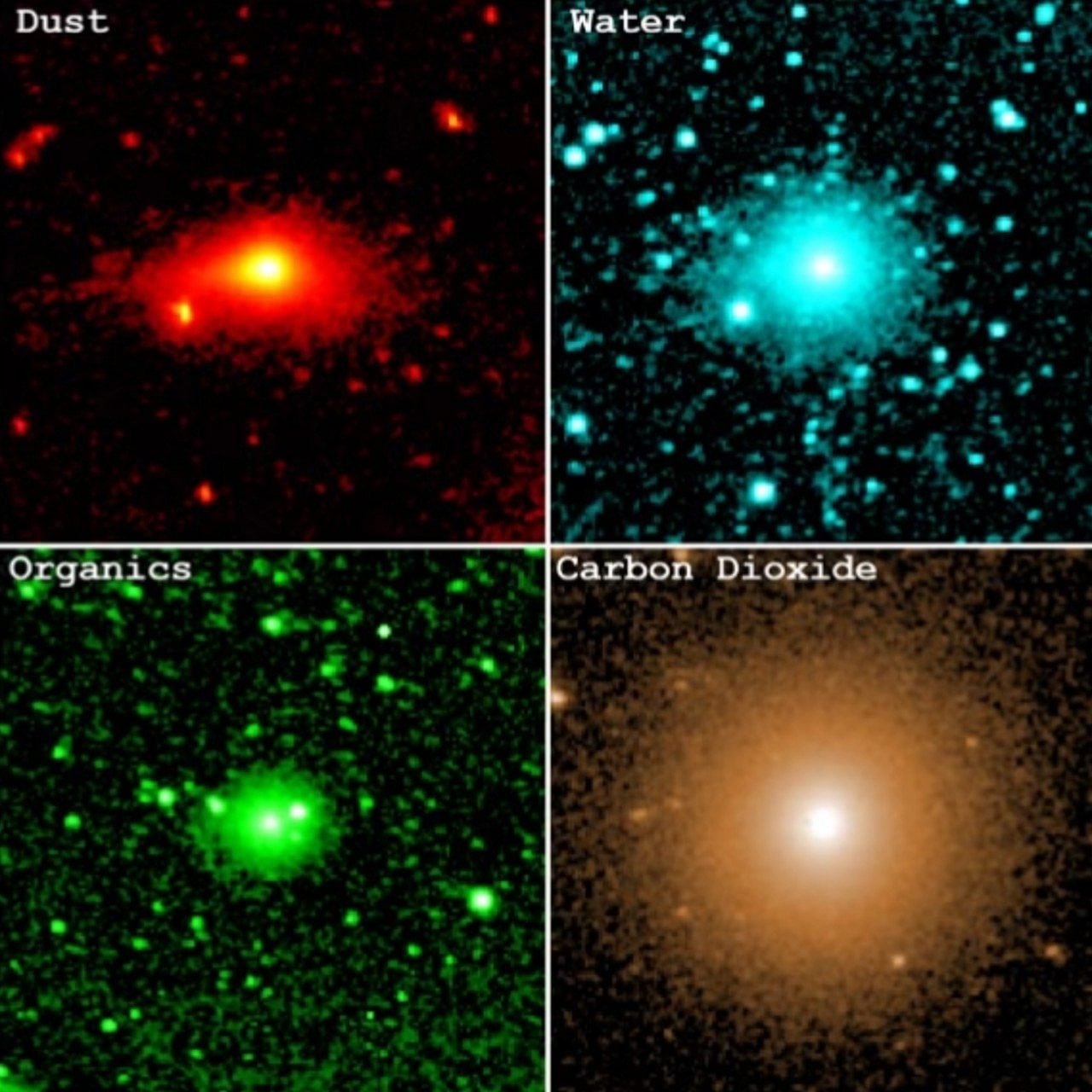
Spectrographic analysis identifies five ion families in the cometary tail
Scientists working through Northumbria University utilized the WEAVE spectrograph mounted to the 4.2-meter William Herschel Telescope at Roque de los Muchachos Observatory on La Palma. The instrument achieved an unprecedented observation for an interstellar object by identifying five distinct ionized chemical species at the same time within the comet’s plasma plume: molecular nitrogen, carbon monoxide, carbon dioxide, water vapor, and methylidyne radicals.
A pronounced concentration of molecular nitrogen relative to carbon monoxide helped astrophysicists deduce that the core solidified in temperatures falling below 30 Kelvin. Such severe thermal conditions confirm that the primordial matter coalesced across deep distances, far beyond the direct radiation emitted by its central home star.
“This object gives us a rare chance to study material that formed somewhere completely different to our own Solar System. Finding that it is so rich in nitrogen tells us it likely formed in extremely cold conditions, far from its home star,” said Léa Ferellec, lead author and research fellow at Northumbria University’s School of Engineering, Physics and Mathematics.
Ground observatories uncover isotopic markers and an ancient host environment
Corroborating observations carried out with the Very Large Telescope, operated by the European Southern Observatory in the Atacama Desert, examined the isotopic signature of water escaping from the comet. Led by astronomer Cyrielle Opitom of the University of Edinburgh, researchers documented uncommon ratios between deuterium and regular hydrogen, reinforcing evidence of formation inside an ultra-cold protoplanetary disc.
The research team also measured proportions of carbon-12 and carbon-13 among the sublimating gases streaming off the nucleus. The recorded spectral signature aligns with expectations for stellar systems formed near low-metallicity stars, where concentrations of elements heavier than hydrogen and helium are roughly half those found in our Sun, suggesting the parent star is older than our own Solar System.
“Every one of these objects we study helps us understand a little more about how planets form around other stars,” Ferellec stated regarding the value of interstellar samples for modern planetary science.
Hubble measurements frame the solid nucleus alongside planetary probe tracking
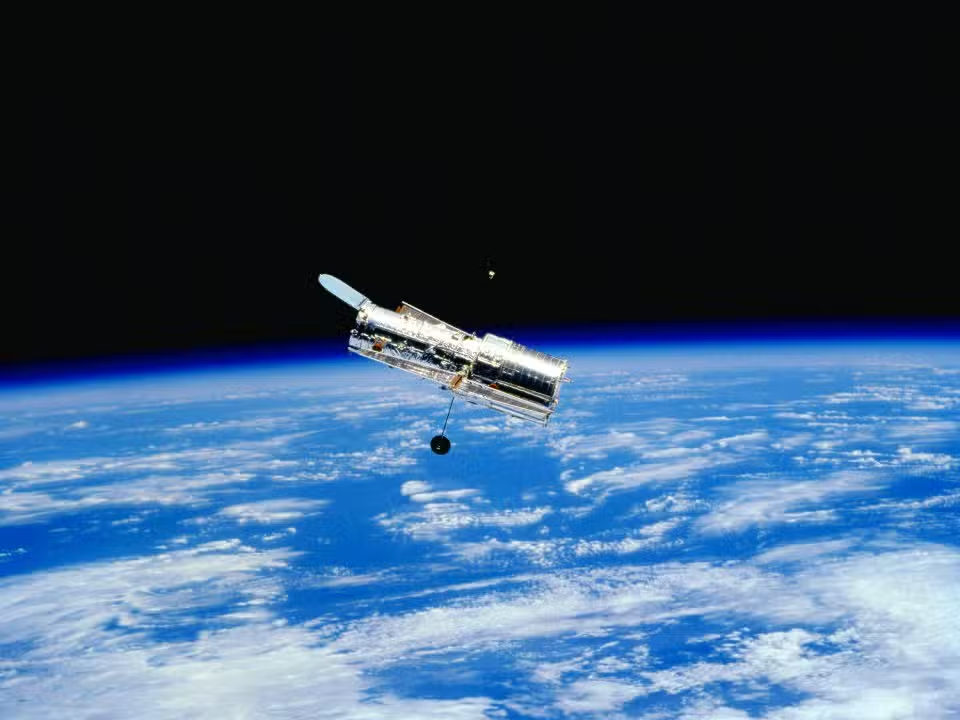
High-resolution imaging gathered by the Hubble Space Telescope places the diameter of the solid nucleus between 320 meters and 5.6 kilometers. Determining an exact surface profile remains challenging because an expanding shroud of dust and volatile ice constantly surrounds the central rock, concealing its underlying crust from direct visual isolation.
Tracking efforts engaged premier facilities across the globe, including the James Webb Space Telescope and deep-space missions stationed around neighboring planets. The European Space Agency’s Juice spacecraft, currently en route toward Jupiter, gathered critical readings alongside Mars Express, the ExoMars Trace Gas Orbiter, and robotic rovers operating across the Martian surface.
Comet 3I/ATLAS represents the third interstellar body ever verified by the astronomical community to transit through our planetary backyard. The detection follows the 2017 discovery of 1I/’Oumuamua and the 2019 detection of comet 2I/Borisov, expanding humanity’s catalog of alien material.
Key milestones define the path of the interstellar wanderer through planetary space
- July 1, 2025 — Survey instruments operated by the Asteroid Terrestrial-impact Last Alert System in Río Hurtado, Chile, discover the incoming object and alert the International Astronomical Union’s Minor Planet Center.
- October 29, 2025 — The comet reaches perihelion at 11:45 Universal Time, sweeping within 1.4 astronomical units of the Sun to make its closest solar approach.
- July 6, 2026 — Publications by the European Southern Observatory and Nature Astronomy document the low stellar metallicity and ancient chemical heritage of the interstellar nucleus.
- September 8, 2026 — The Royal Astronomical Society publishes the primary spectroscopic paper in Monthly Notices of the Royal Astronomical Society, validating the simultaneous presence of five ion species.
- September 24, 2026 — Scientific teams release a comprehensive orbital and physical update as the comet passes 1.77 billion kilometers from Earth.
Unidentified galactic origins and fading signals mark the final journey outward
Astronomers have deciphered the thermal and physical traits of the nursery where 3I/ATLAS came into existence, yet existing models cannot trace the body back to its original parent star. Pinpointing the natal star system and its coordinates across the Milky Way remains unachievable with present astrometric datasets.
Telescopic sightings will drop sharply in the coming weeks as the comet recedes from ground equipment. Moving at 209,000 kilometers per hour into deep interstellar darkness, its visual brightness continues to fade, closing the observational window for the world’s most sensitive optical telescopes.