SMILE mission captures first continuous northern lights ring since 2008 to track space weather
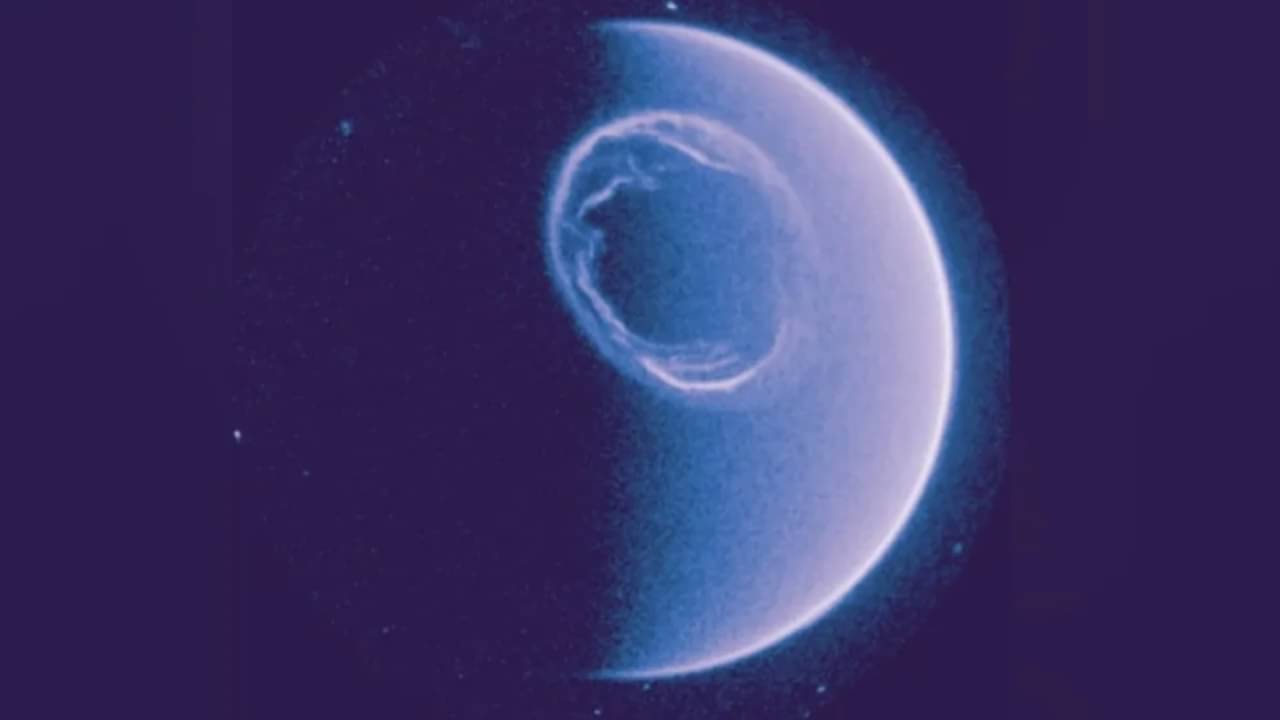
Orbiting detectors on the SMILE satellite have documented the first unbroken, global ring of the aurora borealis recorded from deep space in 18 years. The visual data, published jointly by the European Space Agency and the Chinese Academy of Sciences, demonstrates how Earth’s geomagnetic shield shifts under intense solar wind pressure, observed through ultraviolet sensors perched at an altitude of 121,000 kilometers during an active space weather event.
Public distribution of the orbital imagery on Wednesday, September 30, 2026, confirmed the successful completion of the in-flight commissioning phase for the joint venture, formally titled the Solar wind Magnetosphere Ionosphere Link Explorer. Professor Carole Mundell, director of science at the European Space Agency, highlighted the collaborative milestone following rigorous technical reviews. “The SMILE mission is a testament to the trust built between our teams, their dedication to excellence and their determination to find solutions whatever the challenge,” stated Mundell. She noted that the spacecraft is now approved to begin official science operations, adding that the international partnership is positioned to deliver groundbreaking datasets to researchers worldwide.

Orbital imaging restores planetary vantage unseen since the Polar spacecraft
The newly unveiled recording provides the scientific community with its first continuous, wide-angle panorama of the entire northern auroral oval since NASA decommissioned its Polar satellite in 2008. In the intervening decades, space physicists had to reconstruct geomagnetic disturbances by stitching together localized ground station feeds and piecemeal observations gathered from low-Earth orbit satellites.
Direct ultraviolet sensing circumvents atmospheric and geographical barriers that routinely compromise ground-based observatories. Surface stations can only track the glow of charged particles across nocturnal skies in limited regional sectors. In contrast, spaceborne ultraviolet instrumentation monitors the auroral oval continuously without pause, tracking luminous particle interactions even across sunlit segments of the Arctic polar cap where daylight drowns out visible-light observations.
The primary visual payload executing this mapping work is the onboard Ultraviolet Aurora Imager. Built with specialized optical filters tuned to wavelengths outside the perception of human sight, the instrument can film uninterrupted auroral dynamics for spans reaching up to 45 hours whenever the probe passes through the apogee of its highly elongated orbit, hovering roughly 121,000 kilometers over the Northern Hemisphere.
Check out: Total solar eclipse on August 2 2027 crosses ten countries with record six minutes of darkness
The validated sequence spans 58 minutes of continuous observation, captured between 00:00 and 00:58 UTC on July 24, 2026. The data chronicles the onset and dispersion of an auroral substorm, a rapid discharge of kinetic energy fueled by collisions between incoming streams of solar plasma and Earth’s outer magnetic boundaries. Across the visual record, the luminous ring broadens, creates undulating waves, and envelops the entire high-latitude expanse.
Joint flight milestones from the Guiana Space Centre to deep orbit
Development of the project established an extensive structural framework linking European and Chinese aerospace engineers, covering initial instrument prototyping through to spacecraft assembly and mission control integration. Professor Graziella Branduardi-Raymont, based at University College London’s Mullard Space Science Laboratory, served as the founding scientific proponent of the mission to explore the fundamental mechanisms linking solar activity to planetary magnetospheres.
The operational path leading from the initial rocket liftoff in South America to the release of first-light scientific telemetry followed a structured schedule across 2026:
- May 19, 2026: SMILE launched aboard an Arianespace Vega-C rocket from the spaceport in Kourou, French Guiana.
- June 20, 2026: The satellite settled into its target elliptical orbit and initiated system activation checks.
- July 24, 2026: The onboard ultraviolet camera documented the full 58-minute auroral substorm over the polar region.
- September 23, 2026: Technical steering committees formally certified the completion of commissioning and approved ongoing science duties.
- September 30, 2026: International agencies published the initial batch of ultraviolet imaging and coordinated orbital measurements.
Coordinated payloads monitor solar plasma and geomagnetic boundaries
Beyond its optical camera, SMILE carries three complementary analytical instruments designed to operate concurrently with the aurora imager. By combining real-time global imagery with direct environmental sampling, scientists can establish precise cause-and-effect links within space weather systems. These dynamic models aim to improve early-warning forecasts for severe geomagnetic storms capable of degrading global positioning satellites, triggering grid blackouts on the ground, and disrupting aviation communication channels.
Follow: Orionid meteor shower peaks on October 21 alongside Mars and Jupiter alignments in eastern skies
In-situ plasma environments are tracked through the light ion analyser and an onboard magnetometer, which register ion velocities, particle density, and the local orientation of magnetic field lines. Meanwhile, the soft X-ray imager executed calibration routines on distant celestial objects, such as supernova remnants, preparing its wide-field lobster-eye optics to map the magnetopause boundary where solar wind impacts planetary defenses.
Calibration work continues on soft X-ray detectors ahead of simultaneous monitoring
While the ultraviolet imager, magnetometer, and ion analyzer performed within nominal parameters, flight engineers detected elevated levels of Earth-reflected stray light entering the Soft X-ray Imager optical path during initial trial orbits.
Specialist software teams are applying algorithmic adjustments and operational filtering profiles to suppress the unwanted background emissions without degrading primary sensor sensitivity. Mission controllers at the European Space Agency and the Chinese Academy of Sciences project that optical tuning will conclude by mid-October 2026, allowing all four payloads to conduct simultaneous space weather monitoring.