
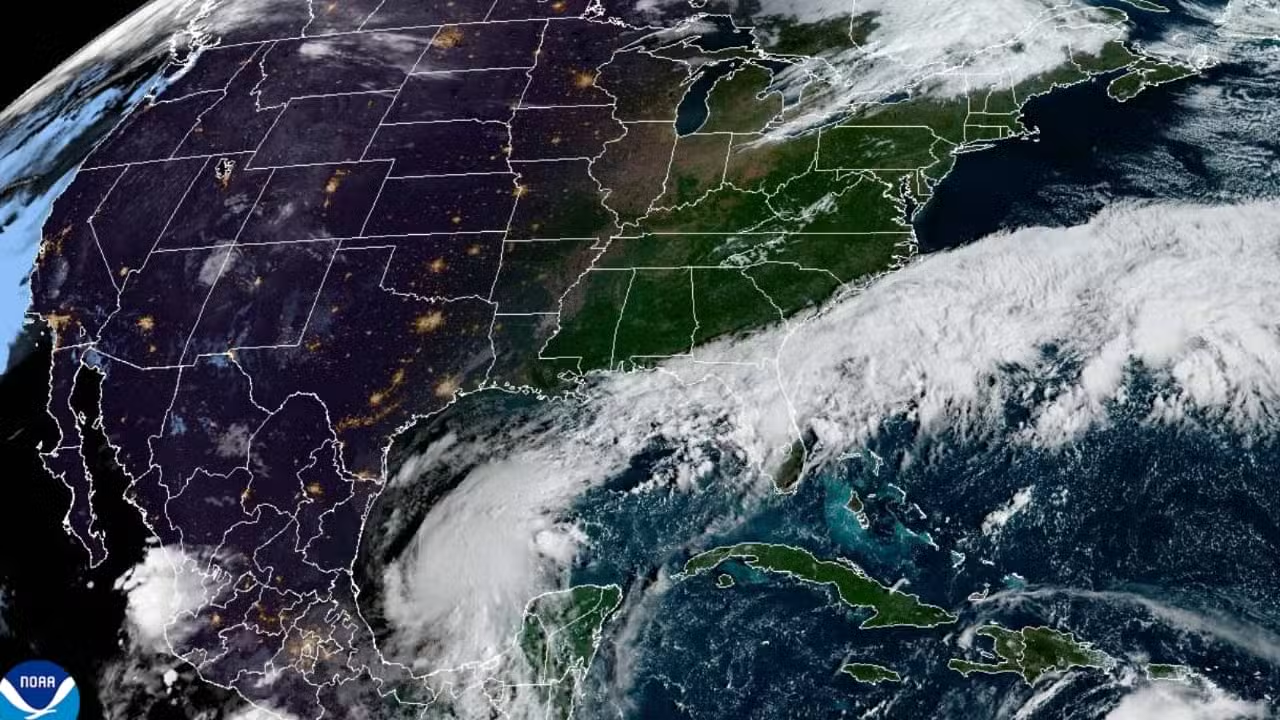
Tropical Storm Isaias prompted emergency management teams across Florida to mobilize heavy machinery, flood barriers and emergency relief supplies throughout the northern portion of the state. The widespread logistical operation follows meteorological alerts indicating the system could strengthen into the first hurricane of the 2026 Atlantic season before reaching the northern Gulf Coast.
Governor Ron DeSantis issued Executive Order 26-202 on Tuesday, October 6, 2026, establishing a formal state of emergency across 25 counties situated in the Florida Panhandle and Big Bend regions. State authorities authorized the measure to ensure emergency personnel can stage critical assets prior to any coastal impacts.
“Today, I signed an Executive Order issuing a state of emergency ahead of potential impacts from Tropical Depression 9. This order will allow the Florida Division of Emergency Management to stage critical preparedness resources and ensure Florida is ready to respond,” DeSantis stated during the initial emergency declaration.
Emergency logistics and resource staging across North Florida
The Florida State Emergency Response Team established staging hubs in Tallahassee and the Santa Rosa area to expedite the dispatch of protective gear and basic provisions to coastal communities. State logistics centers positioned commercial generators, emergency fuel reserves, packaged drinking water, shelf-stable boxed meals, cleanup buckets, tarps, sandbags and commercial Tiger Dam water barriers. State emergency personnel coordinated these resources to counteract saturated soil conditions and high water tables left behind by recent storms across North Florida, which elevate the risk of urban and river flooding.
Emergency management officials focused preliminary deployments on critical infrastructure and low-lying zones vulnerable to rising water levels. By positioning heavy pumping gear, mobile electric generators and physical barriers along northern distribution corridors, the state intends to maintain municipal services if highway networks or power distribution systems experience storm-related interruptions.
Follow: Fox Business staffer Jennifer Eckhart dies in Florida at 36
Wind speeds and meteorological projections for Tropical Storm Isaias
Tropical Storm Isaias organized over the southwestern Gulf of Mexico on Wednesday (7), developing directly from Tropical Depression Nine. Meteorological measurements registered sustained winds of 40 mph at the time the system received its tropical storm classification. The storm moved toward the east-northeast at an average forward speed of 8 mph, with environmental conditions favoring gradual intensification over warm Gulf waters.
Read also: Jennifer Eckhart dies at 36 in Florida, authorities say
Forecasters at the National Hurricane Center projected the system to maintain its general trajectory toward the northern Gulf Coast through Friday, October 9, 2026. The agency issued comprehensive safety warnings for maritime and coastal areas stretching from southeastern Louisiana across to the Florida Panhandle.
“There is an increasing risk of dangerous wind and storm surge impacts along portions of the northern Gulf Coast. Residents from Louisiana to the Florida Panhandle should closely monitor the latest forecast updates and ensure they have their hurricane plan in place,” the National Hurricane Center announced in its official advisory.
Counties included under the Florida emergency declaration
Executive Order 26-202 encompasses a contiguous corridor of 25 northern counties where local emergency operations centers have shifted to elevated alert status:
- Baker, Bay, Calhoun, Columbia, and Dixie
- Escambia, Franklin, Gadsden, Gilchrist, and Gulf
- Hamilton, Holmes, Jackson, Jefferson, and Lafayette
- Leon, Liberty, Madison, Okaloosa, and Santa Rosa
- Suwannee, Taylor, Walton, Wakulla, and Washington
Municipal flood preparations in Pensacola and Escambia County
County and municipal operations across the western Panhandle initiated defensive drainage work to mitigate expected flash flooding. In Escambia County, emergency management personnel established 24-hour monitoring schedules, opened distribution locations where residents can load sandbags, and dispatched public works crews to lower retention pond levels and inspect chronic drainage choke points near swollen creeks.
City crews in Pensacola conducted structural re-inspections of municipal storm drains, removed roadside debris, cleared sediment, secured loose construction material at active job sites, and monitored stormwater retention basins across urban neighborhoods. Concurrently, the National Weather Service established high-rip-current advisories covering coastal waters from Escambia County eastward to Franklin County, warning swimmers that dangerous maritime conditions will persist along Gulf beaches through the weekend.
Atlantic season patterns and storm tracking uncertainties
Isaias represents the ninth named storm of the 2026 Atlantic hurricane season. Should the system reach hurricane intensity before reaching land, it will stand as the first hurricane recorded across the Atlantic basin during the 2026 calendar year, following a historic delay in major cyclone development influenced by persistent atmospheric patterns linked to El Niño.
Meteorological agencies noted that the exact landfall location along the northern Gulf Coast and the maximum wind intensity of the cyclone at the moment of coastal impact remain uncertain, as numerical forecast models continue to adjust tracking projections across the Gulf of Mexico.