
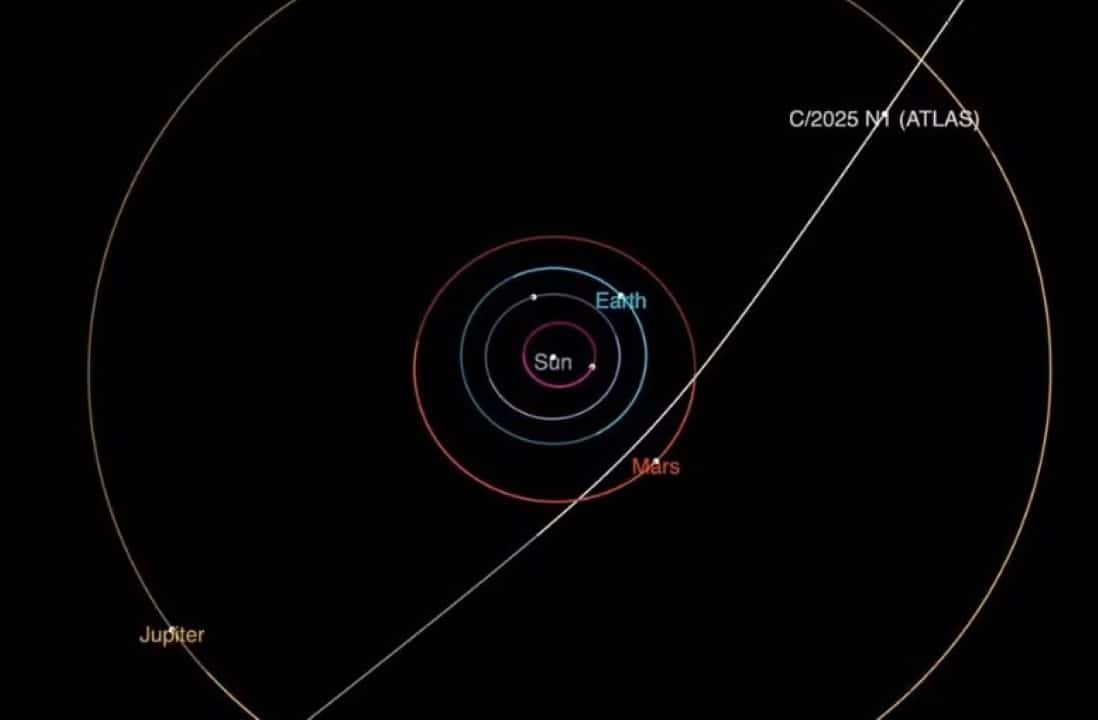
Astronomers finalized updated trajectory parameters for the interstellar comet 3I/ATLAS on September 11, 2026, pinpointing the precise entry corridor from outside the Solar System. Specialized scientific calculations focused on mapping spatial coordinates to trace the celestial body back to its native cosmic environment. These updated vector models confirm the incoming path of the visitor as it travels past planetary orbits.
Extreme speed confirms origin beyond the solar system
Observational tracking verified that the icy object traverses the planetary realm under velocity levels far exceeding typical solar bodies. The comet moves with exceptional orbital momentum that prevents solar gravity from capturing it into a closed cycle. Such rapid displacement provides conclusive evidence that the wanderer arrived from deep interstellar territory.
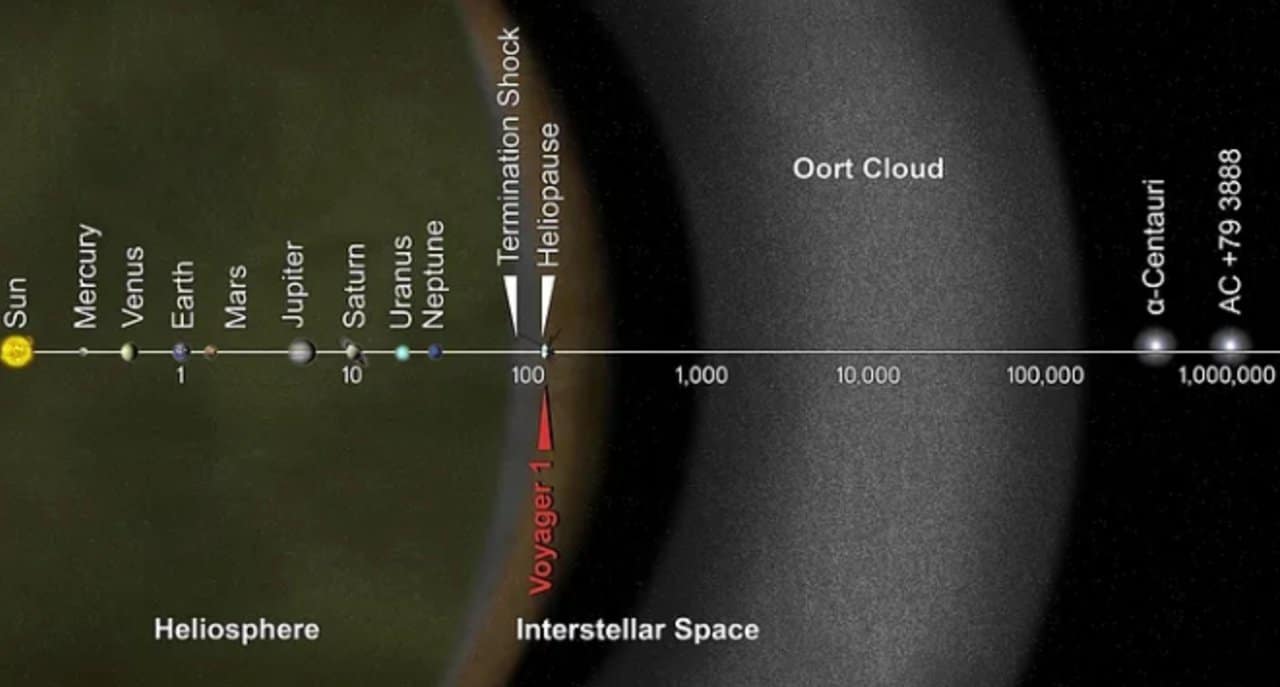
Ancient chemical compounds survive deep space transit
Belonging to an exceedingly rare class of confirmed foreign objects in the Solar System, 3I/ATLAS preserves pristine chemical compounds that condensed within its parent planetary disk. Ongoing astrometric evaluations measure minor gravitational tugs exerted by surrounding planets on its trajectory. These delicate interactions allow planetary scientists to gauge how giant worlds influence unbound bodies moving at high speed.
Keep reading: Interstellar comet 3I/ATLAS reveals origins below 30 Kelvin in outer reaches of another star
Trajectory measurements recorded by optical observatories
- Hyperbolic trajectory confirmation verifying an unbound path through inner planet orbits.
- Angular coordinate data sets cataloged and refined on September 11, 2026.
- Detection of primordial physical material originating from an alien stellar system.
Ground-based observatories continue monitoring hyperbolic comets as they sweep past the inner planets with speeds that readily overcome the Sun’s gravitational grip. Dedicated optical teams continuously record positional coordinates to refine the exact escape vector of the body. Recent spectral tracking in October 2026 further traced expanding gas emissions extending tens of thousands of kilometers from the nucleus, providing deeper insight into its structure.
Ground observatories track departure toward deep space
Astronomical instruments continue registering precision angular positions as 3I/ATLAS accelerates toward deep outer space. Observational campaigns will maintain sensor locks until the faint nucleus drops below the visual detection threshold of ground systems.
Learn more: Interstellar comet 3I/ATLAS formed below -240 °C around an ancient star with low metal levels





