Fertility decline leaves 1960 Science doomsday forecast for 2026 without support

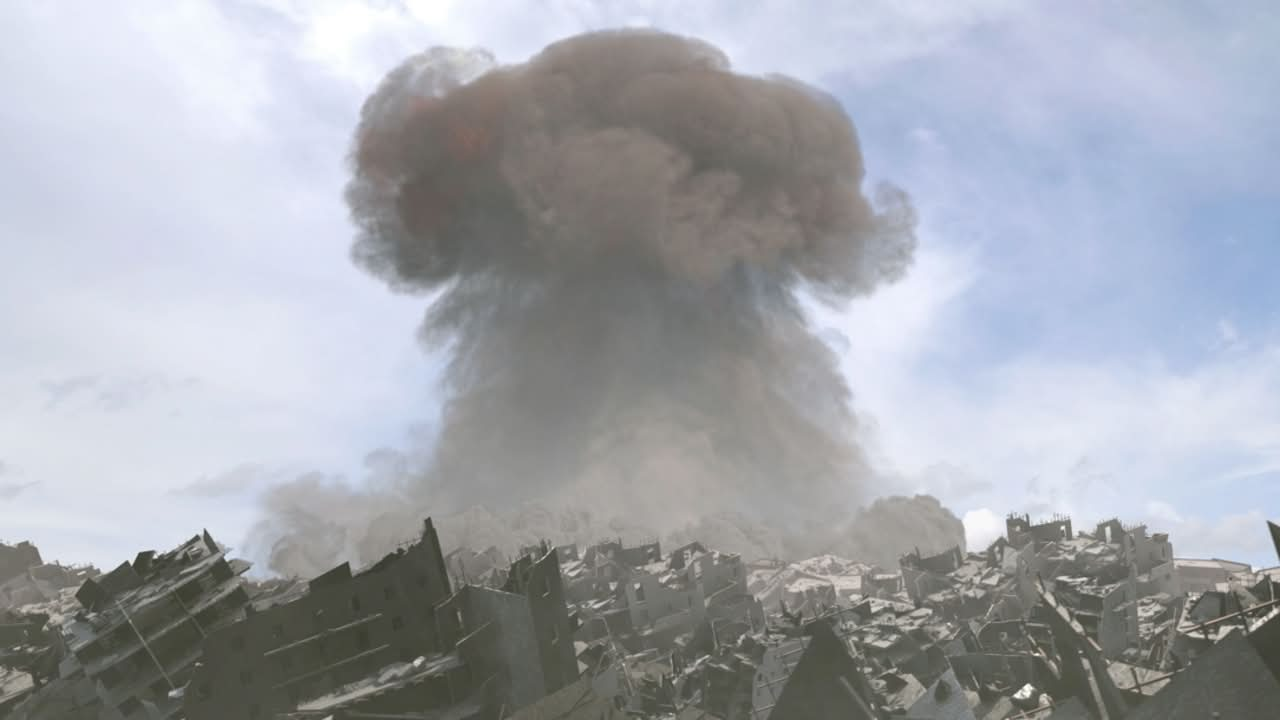
Social media posts and public debates have revived a doomsday forecast for Friday, 13 November 2026, 66 years after the idea first appeared. The date comes from a scientific article published in November 1960 in the journal Science, written by Heinz von Foerster, Patricia Mora and Lawrence Amiot. The day was picked as a joke, since 13 November was von Foerster’s birthday.
The paper built a mathematical model of human population over two thousand years. Its curve suggested that, if births and survival kept accelerating as they had until the mid-20th century, population density would become unsustainable on that Friday. In practice, the equation reached a mathematical singularity, a point where the number of people tended toward infinity.
Paper treated population growth as a numbers problem, not an omen
The article carried the title “Doomsday: Friday, 13 November, A.D. 2026”. The authors wanted to warn the international community and policymakers about the pressure that overpopulation would place on water, food and urban infrastructure.
The model did not predict asteroid collisions, volcanic eruptions or biological catastrophes. It was a numerical experiment based on the assumption that humanity would keep growing with no biological or behavioral limits.
Learn more: United Nations General Assembly debates urgent framework for artificial intelligence risks and benefits
Falling birth rates left the 1960 equation without support
Decades after publication, the premises of the model did not hold up. Global fertility fell steadily, driven by urbanization, access to contraceptives and higher schooling for women. Today the global birth rate is less than half its 1960 level.
Instead of the infinite explosion the model imagined, population growth slowed markedly on almost every continent. That shift moved the collapse scenario of the hyperbolic equation far from reality.
See also: Iranian president's UN General Assembly address follows stark US threat of 'annihilation'
UN estimates put the population ceiling near 10.3 billion in the 2080s
Population reports from the United Nations show a very different path. The UN World Population Prospects 2024, in its medium variant, estimates 8,300,678,395 people on 1 July 2026, about 8.30 billion. The same projection peaks at 10.29 billion in 2084 and then declines gradually.
The date calculated in 1960 remains only a historical record of a mathematical alert. That alert lost scientific validity as the socioeconomic conditions of the planet changed over the following decades.