Geomagnetic storm forecast for November 17-18, 2026: G1 level, Kp 5 at NOAA

The National Oceanic and Atmospheric Administration (NOAA), the agency of the United States that monitors space weather, forecasts a minor geomagnetic storm to reach Earth on Tuesday, November 17, and Wednesday, November 18, 2026. The event is rated G1, the lowest of the agency’s five-level scale, and the planetary Kp index is projected to reach 5 on both days. Satellites, GPS signals and high-frequency radio may face brief failures, but NOAA does not expect a widespread power or cell phone outage on the ground.
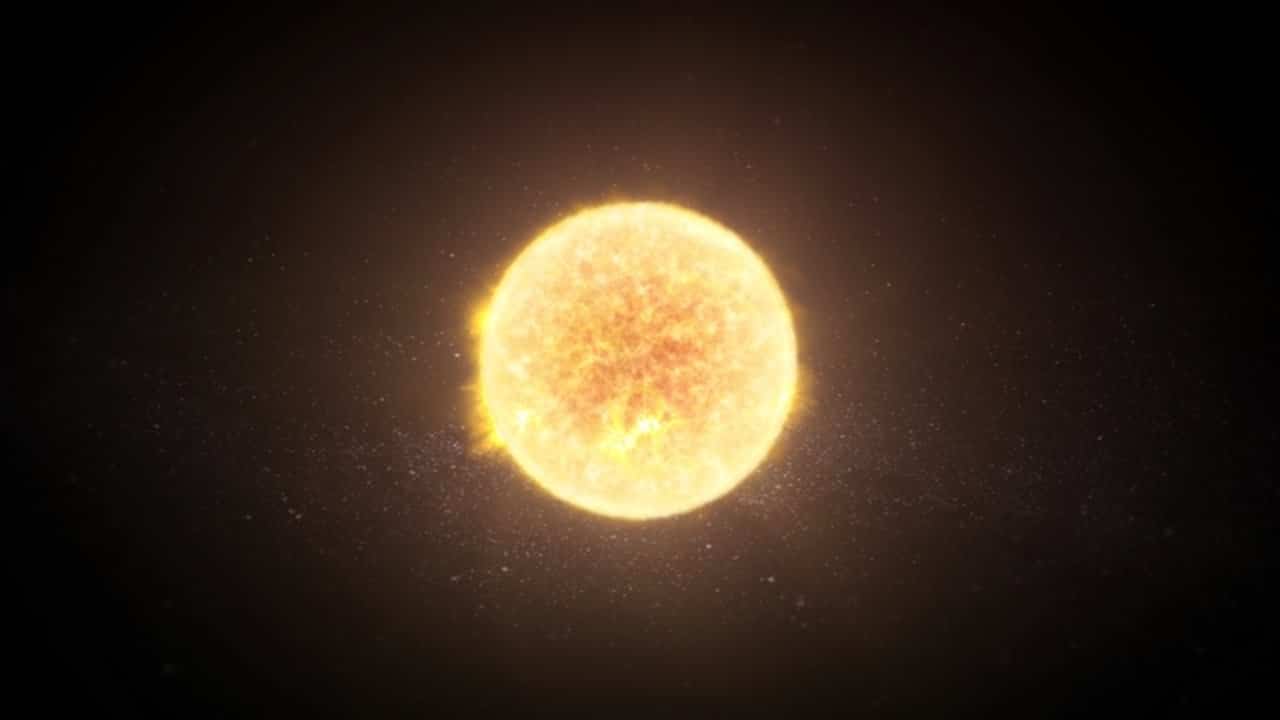
The disturbance results from streams of solar wind leaving coronal holes, regions where the Sun’s magnetic field opens into space, and pressing against the protection of Earth’s magnetic field. The Space Weather Prediction Center, the NOAA unit that issues alerts, follows the activity closely. Its effects are indirect and short-lived, mainly on systems that depend on the ionosphere.
Satellites, GPS and aviation radio in the storm window
- Forecast days: Tuesday, November 17 and Wednesday, November 18, 2026
- Storm level: G1, the first step on NOAA’s geomagnetic scale
- Planetary Kp index: 5 on each of the two days
- Systems at risk: satellite equipment, GPS precision and aeronautical radio communication
- Estimated risk: 45% chance of degraded radio signals
- Origin: solar wind emission and activity in sunspot region AR4566
Tools that rely only on signals sent from space may show short deviations, which is why pilots and air traffic controllers on the sunlit side of the planet should stay alert. Those who depend on precise positioning should expect occasional drift rather than a complete loss of service. NOAA’s forecast covers the period in advance, but the agency can change it as conditions develop.
Phones and internet networks should keep running normally
NOAA’s reports do not support the idea that a G1 storm can damage smartphones directly. Land-based mobile networks and cable internet providers operate normally under storms of this category, the lowest on the five-level scale. People do not need to switch off their devices or change their browsing routine.
Weak fluctuations in the power grid can occur at high latitudes during G1 storms, but grid operators routinely manage them. The effects on the ground are therefore limited, and the forecast does not point to a generalized blackout.
Check out: NOAA puts 83% odds on a historic El Niño in October–December 2026
NOAA flags more G1 days in late November and early December
The 27-day outlook issued by the Space Weather Prediction Center at 02h58 UTC on November 9, 2026 keeps G1 levels in view beyond the first event. The model predicts G1 conditions again on November 27 and 28, and on December 4 and 5, 2026, with unsettled to active periods from November 16 to 19 and from November 26 to 28. Activity on the other days is expected to stay mostly quiet.
Forecasters point out that these estimates can change. New solar eruptions can alter the schedule, and the impacts weaken if the emissions slow down during the trip through space. The agency will keep revising the outlook as new data arrive.
Follow: NOAA projects 90% chance of historic El Niño across Pacific
Sunspot AR4566 fires M1.7 and C7.0 flares
Sunspot region AR4566 has produced a series of flares in recent days and is the main source of the activity. On Wednesday, November 11, 2026, the region fired a moderate flare classified as M1.7, followed by a C7.0 flare on Thursday, November 12. The bursts add material to the space around Earth, which is why operators of telecommunications have received safety warnings.
NOAA’s evaluations confirm there is no massive coronal mass ejection aimed at Earth’s path. The chance of R3 events, the strongest radio blackouts on the agency’s scale, stands at 5%. The region is expected to rotate off the visible face of the Sun around November 14 and return around November 28, 2026.