NASA’s Voyager 1 stops sending science data one light-day from Earth

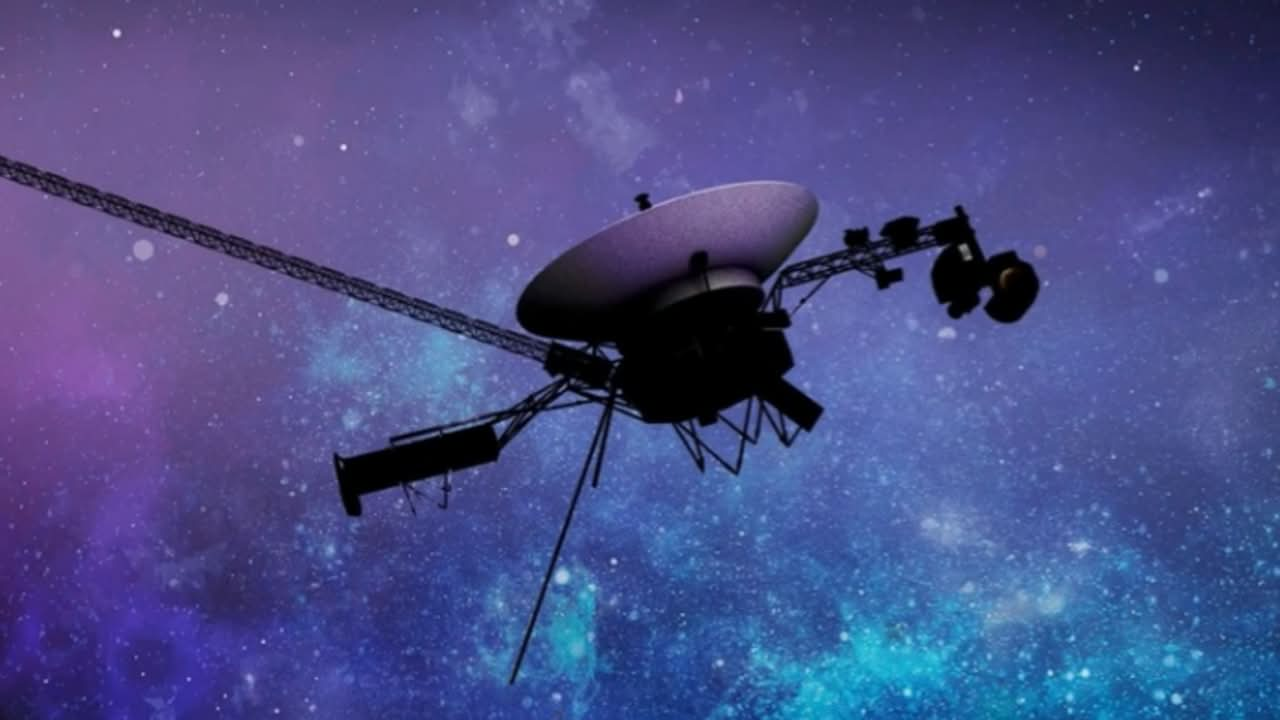
A communication fault has cut off the science and engineering data that NASA’s Voyager 1 probe sends home. The last usable readings arrived on November 14, 2026, four days before the craft reached one light-day from Earth, the distance a radio signal needs 24 hours to cover. Since then the probe has sent only an empty carrier wave, and NASA says the problem is still unresolved.
The milestone itself went ahead. Voyager 1 passed 16.1 billion miles, or 25.9 billion kilometers, from Earth at 2:16 a.m. Pacific time on Wednesday, November 18, 2026. NASA confirmed the crossing on November 19 by combining the carrier signal with trajectory calculations. The Jet Propulsion Laboratory (JPL) in Pasadena, California, which runs the mission, is investigating the root cause.
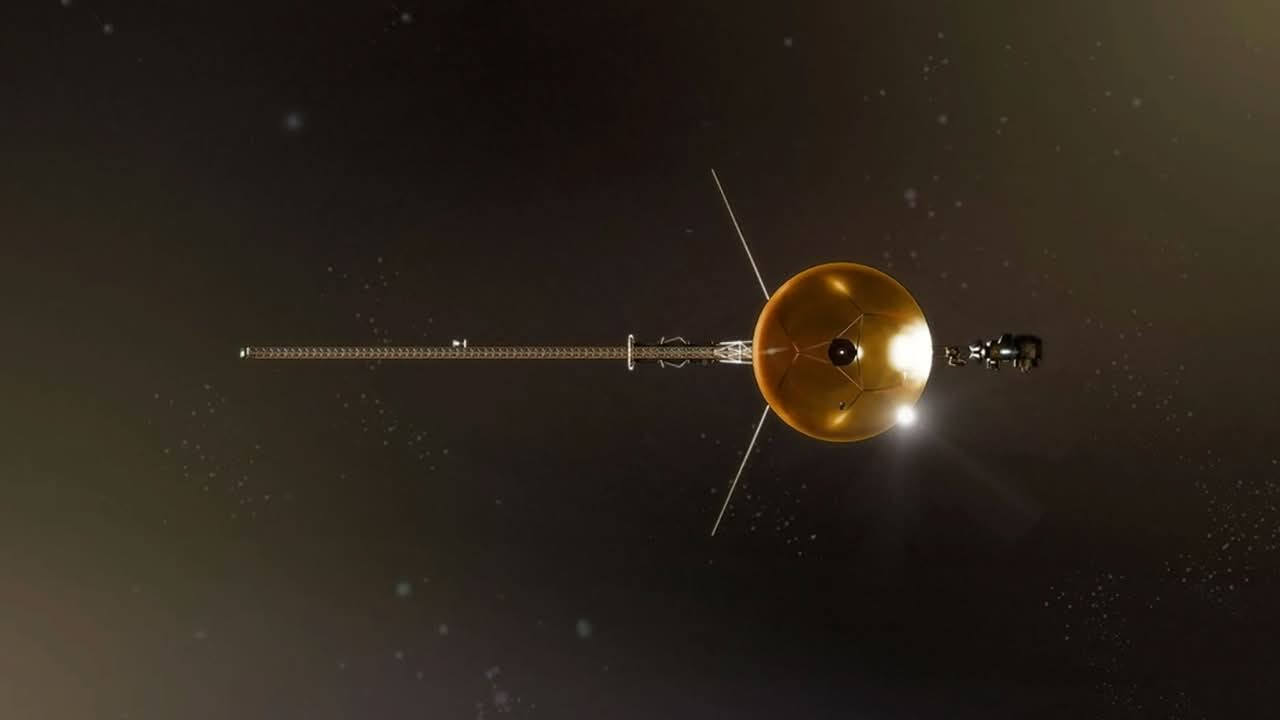
The carrier signal still tells engineers something useful. The navigation computer keeps the antenna aimed at Earth, and the radio transmitter is working. The silence points instead to the onboard computer that collects instrument readings and formats them for transmission. Because the probe has no way to change its speed, the electronic fault did not affect when it reached the milestone.
Every command now takes two days to round-trip
Distance turns each repair step into a long wait. A command from the JPL team needs 24 hours to reach the probe, and the reply needs another 24 hours to come back, so each test cycle lasts about 48 hours. No timeline has been set for restoring the data.
To pin down the position on November 18, the team measured the Doppler shift in the carrier wave picked up by the Deep Space Network and compared it with trajectory models. No other object built by humanity has ever been this far from the planet.
Follow: PRIMA space telescope earns NASA selection as first Probe Explorer mission
Fault echoes the 2023 chip failure
The outage mirrors a failure that began on November 14, 2023, exactly three years earlier. Back then a memory chip in the Flight Data Subsystem (FDS), one of the probe’s three onboard computers, stopped working, and Voyager 1 again sent only an empty carrier signal. JPL engineers needed months to work around the defect and restored science readings in 2024.
NASA has not confirmed whether the FDS or another aging circuit is behind the new blockage. In late October 2026 the probe also went roughly 48 hours without contact before its signal returned on its own. Engineers are checking whether that episode and the current outage share a cause.
Read also: NASA takes X-59 supersonic jet from Lockheed Martin in Edwards
Two instruments left on a 49-year-old probe
Voyager 1 launched from Kennedy Space Center in Florida on September 5, 1977, and has now operated for 49 years, nearly ten times its original life of four to five years. Three radioisotope thermoelectric generators, which run on plutonium, supply its power, and their output falls by about 4 watts a year. To stretch that power, NASA has switched off eight of the ten original science instruments.
Only the magnetometer, which measures magnetic fields, and the plasma wave subsystem remain active. The low-energy charged particle experiment was shut down on April 17, 2026. In early September 2026 engineers swapped three power-hungry devices for lower-consumption units, a change nicknamed the Big Bang, and NASA expects the remaining instruments to run until at least summer 2027. In August 2012 the probe became the first human-made craft to enter interstellar space, and NASA says its twin, Voyager 2, will not reach one light-day until November 2035.