Elon Musk unveils radical government overhaul plans on Joe Rogan podcast Por Luís Henrique Costa
7 min de leitura
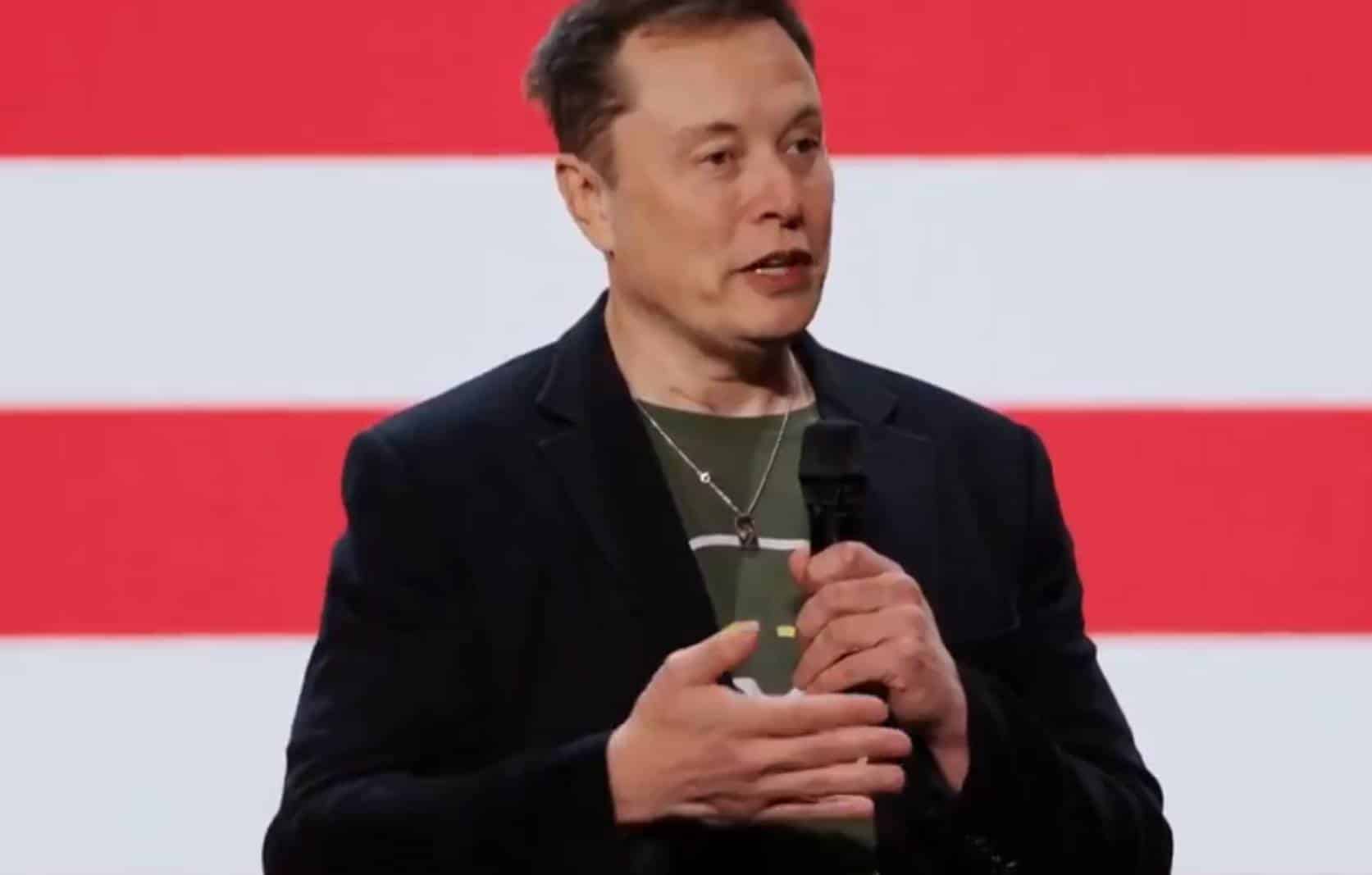 |
Elon Musk, the billionaire mastermind behind Tesla and SpaceX, sent shockwaves through American politics by outlining bold and contentious plans to overhaul the U.S. government during a three-hour interview on Joe Rogan’s podcast, recorded on March 2, 2025, and released the following day. At 53, Musk, now heading the newly formed Department of Government Efficiency (DOGE) under President Donald Trump’s administration, proposed slashing up to $2 trillion from the federal budget—currently $6.8 trillion—by eliminating what he called “bureaucratic fat” and outdated federal programs. The episode, viewed by over 10 million listeners in its first 24 hours, covered topics from massive civil service cuts to dismantling agencies like the Department of Education, reigniting debates about government’s role amid polarization and record deficits.
The interview, taped in Rogan’s Austin, Texas studio, came weeks after Musk took the helm of DOGE, a Trump initiative launched in January 2025 to streamline the federal system. Musk argued the U.S. could function with a government half its size, spotlighting inefficiencies like the $438 billion spent in 2024 on salaries for 2.1 million federal workers. He pitched replacing legacy systems with cutting-edge technology, such as artificial intelligence, to manage public services, vowing to save $200 billion annually from the $700 billion in government procurement. Rogan, whose 14 million monthly subscribers tuned in, pressed Musk on social impacts, but the billionaire insisted a “radical government diet” is essential to avert economic collapse, citing the $34 trillion national debt.
The podcast, one of the world’s most popular, amplified Musk’s vision at a time when his sway in the White House is surging, bolstered by $250 million in donations to Trump’s 2024 campaign. His proposals—like axing $20 billion in annual farm subsidies and rethinking $1.2 trillion in social programs—drew cheers from conservatives and ire from Democrats worried about cuts to vital services. With DOGE already shedding 10,000 federal jobs since February, Musk’s blueprint to turn the U.S. government into a “lean, tech-driven operation” dominates headlines and social media, as experts weigh the risks and rewards of such a daring shake-up.

Musk’s proposals stun and polarize
Musk laid out a sweeping vision on the podcast, advocating for a 30% cut to the 2.1 million federal jobs—roughly 630,000 positions—over the next four years. He slammed bureaucratic bloat, noting that of the $6.8 trillion spent in 2024, just 15% went to direct public services. The billionaire suggested scrapping the Department of Education, which employs 4,200 people and costs $79 billion yearly, handing its duties to states, and abolishing the IRS, replacing it with an AI-managed simplified tax system to save $12 billion annually in administration costs.
The discussion also tackled digitizing services, with Musk estimating 80% of federal interactions—like passport applications or benefits—could be automated, trimming $50 billion yearly. Rogan, known for his provocative style, challenged Musk on the fallout for low-income workers, to which he replied the economy would “adjust” with private-sector jobs. These ideas, fleshed out in a 20-page plan submitted to Congress on February 28, already face pushback from unions and Democrats, who warn of potential breakdowns in healthcare and education services.
DOGE drives rapid White House changes
Since taking charge in January 2025, Musk has turned DOGE into a disruptive force, axing 10,000 federal jobs in six weeks, targeting agencies like the EPA (Environmental Protection) and the Department of Transportation. On the podcast, he revealed DOGE pinpointed $500 billion in “avoidable waste” in the 2024 budget, including $100 billion in overpriced contracts and $50 billion in redundant programs. The goal is a $2 trillion cut by 2028, shrinking the annual deficit, which hit $1.8 trillion in 2024.
Musk cited SpaceX as a model, where he slashed launch costs by 70%, suggesting the government could save $300 billion on infrastructure with similar tactics. He also criticized the $1.5 trillion defense budget, proposing a 20% reduction via efficient tech like drones over traditional bases. DOGE’s moves have sparked 80 court-ordered job reinstatements, but Musk declared “the process is just starting,” aiming to ramp up reforms post-Congressional budget approval in April.
Public reaction erupts after podcast
The Rogan interview, racking up 10 million views in its first 24 hours, triggered 2.5 million Twitter/X mentions—Musk’s own platform—within a day. Conservatives hailed the “bold vision,” with figures like Sen. Ted Cruz (R-Texas) backing the $2 trillion cuts, while Democrats like Rep. Alexandria Ocasio-Cortez (D-NY) labeled them “dangerous for the vulnerable,” pointing to 47 million Americans reliant on social programs. Unions warn 1 million jobs could vanish by 2028, with protests planned in Washington for March 10.
Polls show 55% of Americans favor government cuts, but only 32% trust Musk to lead them, reflecting his polarizing image. The podcast, surpassing 15 million streams in 48 hours, also spawned memes and online debates, with #DOGECuts trending globally. Musk’s clout, boosted by his proximity to Trump—evident in his attendance at Trump’s March 4 Congress address—heightens the reform stakes, exposing deep divides over America’s governance future.
Timeline of Musk’s DOGE rise
Musk’s government ascent follows key milestones:
- November 2024: Musk donates $250 million to Trump’s campaign, securing influence.
- January 2025: Trump creates DOGE, appoints Musk post-inauguration.
- February 2025: DOGE cuts 10,000 federal jobs in six weeks.
- March 2, 2025: Musk details $2 trillion cuts on Rogan’s podcast.
This timeline highlights his swift rise and impact in the administration.
Radical plans target tech efficiency
Musk argued on the podcast that AI could replace 70% of federal administrative tasks, saving $100 billion yearly on staffing and legacy systems, like the $5 billion spent on outdated IT in 2024. He pitched a “digital government” where citizens access services via an app, slashing $40 billion in paperwork costs. Eliminating the Department of Education, Musk claimed, would save $79 billion, with states managing schools for $50 billion less using online platforms.
His vision includes trimming the $700 billion in federal procurement by $200 billion through data-driven deals, Tesla-style. Rogan questioned feasibility, but Musk countered that “technology fixes inefficiency,” noting the U.S. spends three times more per capita on government than Japan, with worse outcomes. If enacted, these plans could shrink the federal budget by 30%, though legal and political hurdles loom large.
Standout stats in Musk’s vision
Musk’s podcast ideas pack a punch:
- $2 trillion cut aims to trim $6.8 trillion budget by 30%.
- 630,000 federal jobs—30% of total—could go by 2028.
- DOGE identified $500 billion in waste, cut 10,000 jobs already.
- AI could save $100 billion in administration, per Musk.
These figures showcase the scale of his reformist ambition.
Political debate heats up over plans
Democrats warn $2 trillion cuts could gut programs like Medicare ($900 billion) and food assistance ($120 billion), impacting 47 million recipients. Republicans, like Senate Leader John Thune (R-SD), see a chance to shrink the $1.8 trillion deficit, though they fear pushback in farm states reliant on subsidies. Congress, set to review the budget in April, will be the battleground, with Musk vowing heavy lobbying.
The podcast upped the ante for Trump, who backs the cuts but skirts specifics, leaning on Musk as his “efficiency czar.” Unions plan lawsuits over layoffs, while polls show 55% of Americans want a smaller government, but only 32% trust Musk, hinting at a rocky road for his radical overhaul.