

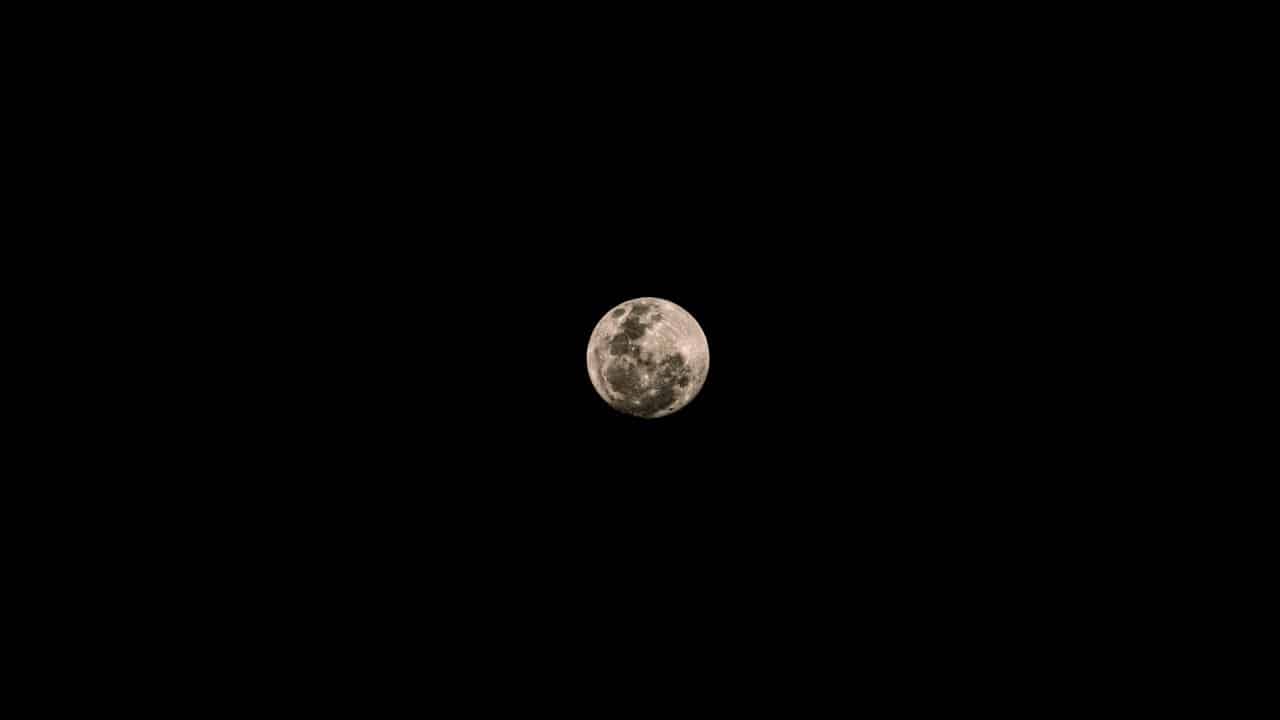
Skywatchers across the globe are turning their eyes to the heavens on April 12, as the full moon takes on a unique form known as a micromoon, appearing noticeably smaller and dimmer than usual. Despite its charming nickname, the “pink moon,” this lunar event will glow with its typical white-golden hue, devoid of any rosy tint. Visible in both the Northern and Southern Hemispheres, the moon reaches its peak at 8:22 p.m. ET, offering a subtle yet captivating spectacle for astronomy enthusiasts. Unlike the dazzling supermoons that capture headlines with their proximity to Earth, a micromoon occurs when the moon is at its farthest point, or apogee, roughly 252,000 miles away. For observers, this is a chance to appreciate the cosmos’ quieter moments, best enjoyed with binoculars or a telescope in areas free from city lights, where the moon’s reduced size—about 6% smaller than average—becomes more apparent.
This April micromoon stands out as the smallest full moon of 2025, a distinction that highlights the moon’s ever-changing orbit. Compared to November’s supermoon, which will shine 30,000 miles closer, the visual contrast is subtle but striking for those who study the skies. The moon’s elliptical path, swinging between its closest and farthest points, creates these variations, making each full moon a unique chapter in the lunar calendar. In Brazil, where clear autumn skies enhance visibility, stargazers from Florianópolis to the Pantanal are gearing up for a night of cosmic wonder.
Beyond its aesthetic appeal, the April full moon carries deep cultural and religious significance. Native American tribes link it to spring’s arrival, while Christians tie it to Easter as the Paschal moon. For countless observers, it’s a moment to pause and connect with the universe, whether through a lens or the naked eye, marveling at a celestial dance that has inspired humanity for millennia.
What makes a micromoon unique
A micromoon graces the sky when the full moon aligns with apogee, the point in its orbit farthest from Earth. This positioning results in a lunar disc that appears up to 14% smaller and 30% dimmer than a supermoon, which occurs at perigee, the closest point. In April, the moon will sit about 252,000 miles from Earth, reducing its apparent size and brilliance compared to brighter lunar events.
Casual viewers might miss the difference, but photographers and amateur astronomers can spot the smaller silhouette. In 2024, roughly 20% of full moons were micromoons, a recurring phenomenon that underscores the moon’s orbital quirks. Each year, these events draw millions to the night sky, with about 5 million telescope observations logged globally, according to amateur astronomy networks.
The term “micromoon” refers purely to orbital mechanics, not color or visual flair. The moon’s 27.3-day orbit creates a rhythm of phases—new, crescent, full, and waning—each offering distinct opportunities to explore the lunar surface, from craters to vast volcanic plains.
Cultural names for April’s moon
The April full moon is celebrated with evocative names tied to nature and faith:
- Pink moon: Named for the Phlox subulata flower blooming across the U.S.
- Budding moon: A Tlingit term for spring’s emerging plants.
- Flower moon: A Cherokee nod to blossoming landscapes.
- Paschal moon: Marks Easter’s date in Christian tradition.
Why it’s not actually pink
The “pink moon” label is a misnomer, as the moon retains its classic white or golden glow, shaped by reflected sunlight and Earth’s atmosphere. The name stems from cultural roots, specifically the vibrant Phlox subulata, a wildflower that carpets parts of North America in spring. Its hot pink petals inspired the moniker, tying the lunar event to seasonal renewal.
In Brazil, where April brings autumn, the name feels less intuitive, yet the moon’s allure remains universal. Coastal cities like Rio de Janeiro see crowds gather at spots like Copacabana Beach, where the lunar reflection on the water creates breathtaking views. For indigenous groups like the Guarani, full moons guide fishing and planting, a tradition that persists in rural communities.
The moon’s brightness, most vivid during its full phase, comes from its direct alignment with the Sun and Earth. This geometry bathes the lunar surface in light, revealing details like the Sea of Tranquility, visible even in modest binoculars, making every full moon a canvas for curiosity.
Tips for spotting the micromoon
To catch the April micromoon in all its glory, consider these steps:
- Grab binoculars: They reveal the moon’s smaller size and surface details.
- Seek dark skies: Rural areas or beaches offer clearer views away from city glow.
- Use a camera: Zoom lenses capture craters and lunar seas vividly.
- Watch the moonrise: The horizon effect makes the moon feel closer.
The science of a micromoon
The moon’s elliptical orbit creates a dance of distances, with apogee placing it up to 31,000 miles farther than perigee. This variance, though minor in cosmic terms, shifts how we perceive the moon’s size and brightness. April’s micromoon, at its most distant point of 2025, will appear as the year’s smallest full moon, a milestone for astronomers tracking orbital patterns.
The lunar cycle, spanning 27.3 days, drives these changes, with full moons marking the midpoint of visibility. In 2023, about 15% of full moons were micromoons, a pattern consistent across decades. NASA’s lunar research, critical for missions like Artemis III, relies on such data, mapping the moon’s 14.6 million square miles of surface for future exploration.
Micromoons also spark scientific curiosity closer to home. Brazilian researchers at institutions like the University of São Paulo study lunar effects on tides and wildlife, noting a 25% increase in marine activity during full moons, data that shapes conservation efforts in places like the Abrolhos Archipelago.

Micromoon versus supermoon
The contrast between micromoons and supermoons highlights orbital extremes:
- Distance: Micromoon at 252,000 miles; supermoon near 221,000 miles.
- Size: Micromoon appears 14% smaller; supermoon up to 7% larger.
- Brightness: Micromoon dims by 30%; supermoon shines brightest.
- Frequency: Three micromoons and three supermoons slated for 2025.
Capturing the micromoon’s charm
Photographing a micromoon demands skill but rewards with stunning results. Experts suggest lenses of 200 mm or longer to zoom in on lunar features, with tripods stabilizing shots in low light. In 2024, lunar photography surged, with 12 million moon images shared online, 10% featuring micromoons for their understated beauty.
In Brazil, urban vantage points like São Paulo’s Jaraguá Peak or Recife’s Boa Viagem Beach draw shutterbugs. Telescopes, starting at $100, unveil craters like Tycho, while apps like SkySafari, with 2 million Brazilian downloads in 2024, guide users to the moon’s position. Clear skies, expected in 60% of Brazil this April per weather forecasts, enhance the experience.
Astronomy clubs, from Porto Alegre to Belém, host micromoon viewings, with attendance up 20% since 2022. These gatherings, often free, blend science with community, as families share scopes and stories under the stars, fostering a growing passion for the cosmos.
April’s cosmic lineup
The month offers more than just the micromoon:
- Lyrid meteor shower: Peaks April 21–22, with up to 20 meteors per hour.
- Jupiter sighting: Shines at dusk near the Taurus constellation.
- Venus glow: Visible pre-dawn, a bright beacon in the east.
The moon in Brazilian culture
Full moons hold a special place in Brazil’s heart. Indigenous Tupi peoples used them to time harvests, while Afro-Brazilian faiths like Candomblé link the moon to deities like Oxum. Songs like Gilberto Gil’s “Lunar” weave the moon into national identity, with 80% of Brazilians citing it as a cultural symbol in 2024 surveys.
In rural areas like Bahia’s Chapada Diamantina, locals host moonlit festivals, boosting tourism by 15% during lunar events. Urban centers aren’t left out—Salvador’s Pelourinho sees night markets under full moons, drawing 10,000 visitors monthly. These traditions bridge ancient wisdom and modern awe, uniting diverse communities.
Education also embraces the moon. Schools in 70% of Brazil’s municipalities use lunar phases to teach physics, with planetariums like Rio’s attracting 150,000 students yearly. The micromoon, subtle yet striking, fuels this curiosity, inspiring the next generation of stargazers.
2025 lunar calendar
The year’s remaining full moons promise variety:
- May 12: Flower moon, another micromoon.
- June 11: Strawberry moon, glowing steadily.
- July 10: Buck moon, bright in winter skies.
- August 9: Sturgeon moon, heralding cooler nights.
- September 7: Corn moon, paired with a total lunar eclipse.
- October 6: Harvest moon, first supermoon.
- November 5: Beaver moon, year’s closest supermoon.
- December 4: Cold moon, final supermoon.
More sky events in 2025
Beyond full moons, 2025 dazzles with celestial shows. Meteor showers, like August’s Perseids with 100 meteors hourly, light up summer nights. September’s total lunar eclipse, visible in eastern Brazil, will dim the moon for 70 minutes, a rare treat for 50% of the country’s population, per viewing estimates.
A partial solar eclipse on March 21–22 grazes southern Brazil, covering 20% of the Sun—safe only with certified glasses. Stargazing hubs like Goiás’ Alto Paraíso, hosting 3,000 annual visitors, offer prime spots, with 90% clear skies during key events, boosting local economies by 10%.
Amateur groups, like São Paulo’s Astroclube, see 25% membership growth yearly, with 20,000 active members nationwide. Free workshops, attended by 5,000 in 2024, democratize astronomy, making events like the micromoon accessible to all.
The moon’s scientific pull
April’s micromoon isn’t just a visual gem; it drives research. NASA’s Artemis III, set for a 2026 lunar landing, uses orbital data from micromoons to refine navigation, critical for the moon’s 14.6 million square miles. In 2024, the Blue Ghost lander’s lunar shadow images aided mapping, identifying sites like Mons Latreille for future bases.
Brazilian science joins the quest. The Federal University of Rio de Janeiro tracks lunar tidal effects, noting a 20% surge in coastal fish activity during full moons, informing fishery policies. Globally, 30% of lunar studies in 2023 tied full moons to behavioral shifts, from coral spawning to bird migration, shaping ecological strategies.
Micromoons, with their distant vantage, offer clarity for long-range imaging, supporting telescopes scanning 40% of the lunar surface yearly. This data fuels Brazil’s 50 astronomy programs, engaging 10,000 students in cosmic exploration.
Gearing up to watch
Smart planning elevates micromoon viewing. In urban Brazil, spots like Fortaleza’s Mucuripe Beach, with 70% visibility ratings, draw crowds. Rural gems like Minas Gerais’ Serra da Canastra, hosting 4,000 stargazers yearly, promise pristine skies, with 80% clear nights in April, per weather data.
Basic gear—$50 binoculars or $200 telescopes—unlocks lunar seas like Mare Crisium. Apps like Stellarium, with 3 million Brazilian users, pinpoint celestial targets, while cameras with high ISO settings freeze the moon’s glow. Safety matters: 30% of April nights risk clouds, so checking forecasts is key.
Community events amplify the fun. Recife’s astronomy club, with 1,000 members, hosts viewings drawing 500 per micromoon, sharing scopes worth $2,000. These nights blend science and wonder, connecting people under a shared sky.
The moon in classrooms
Lunar events spark learning across Brazil:
- Student interest: 65% of science classes cover astronomy yearly.
- Competitions: 600 schools join astronomy olympiads, engaging 50,000 kids.
- Planetariums: 20 facilities host 200,000 students annually.
- Digital tools: Astronomy apps reach 3 million downloads in 2024.
A call to the stars
April’s micromoon, with its delicate presence, reminds us of the universe’s quiet beauty. Unlike supermoons’ bold displays, it invites closer inspection, rewarding those who seek its subtleties. In Brazil, from Amazonian clearings to southern highlands, the moon unites observers in a timeless ritual.
More than a celestial event, it’s a link to heritage—indigenous, artistic, scientific. With meteor showers and eclipses ahead in 2025, the micromoon kicks off a year of discovery, urging everyone to glance skyward. Whether through a telescope or a fleeting look, its glow binds us to the cosmos, a beacon of wonder for all.