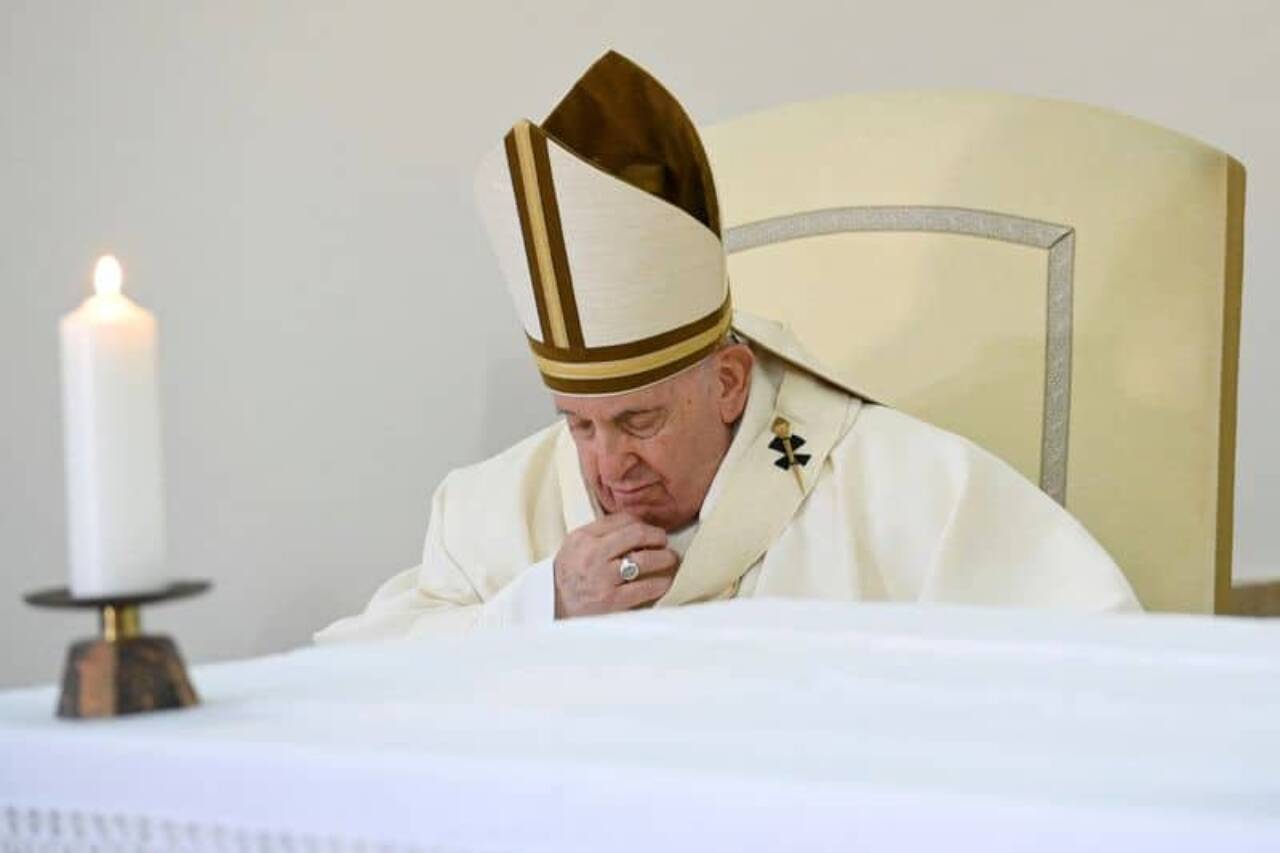
The death of Pope Francis, at 88, on the morning of April 21, 2025, shook the Catholic world and marked the end of a 12-year pontificate defined by gestures of compassion and defense of the vulnerable. Jorge Mario Bergoglio, the first Jesuit and Latin American pope, passed away at Casa Santa Marta, his Vatican residence, after leading Easter celebrations despite his frail health. The official cause of death remains unconfirmed, but Italian media points to a possible stroke (AVC) as the cause, with the Vatican set to release details in the afternoon. Meanwhile, the camerlengo, Cardinal Kevin Farrell, assumed administration of the Catholic Church, initiating a period of mourning, funeral rites, and preparations for the conclave to elect the next leader of 1.4 billion Catholics.
Francis had faced health issues for years, including bilateral pneumonia that led to a 37-day hospitalization at Gemelli Hospital in Rome until March 2025. Despite recovery, he required rest and ongoing care, which did not stop him from fulfilling duties like opening the 2025 Jubilee and delivering the Urbi et Orbi blessing at Easter. His death sparked global mourning, with faithful gathering in St. Peter’s Square to pray and pay respects. The camerlengo, now leading during the Sede Vacante, faces the task of coordinating the funeral, maintaining Holy See stability, and paving the way for the election of a new pontiff amid internal divisions and global challenges.
The possible stroke, reported by Italian newspapers like Corriere Della Sera and La Repubblica, is a plausible hypothesis given Francis’s advanced age and medical history. A stroke can strike suddenly, impairing brain functions due to lack of oxygen or hemorrhage, and is a leading cause of death in the elderly. The Vatican’s official statement will clarify the circumstances, but the transition is already underway, with the camerlengo playing a central role in preserving Church continuity as the Catholic world reflects on the legacy of a pope who prioritized mercy and social justice.
Camerlengo’s duties in the transition
The camerlengo assumes critical responsibilities during the papal vacancy, ensuring order in the Church. His main tasks include:
- Vatican administration: Manages finances, communications, and daily operations.
- Funeral organization: Coordinates funeral ceremonies, honoring Francis’s wish for simplicity.
- Conclave preparation: Oversees logistics for the papal election in the Sistine Chapel.
- Destruction of the Fisherman’s Ring: Conducts the ritual marking the pontificate’s end.
- Protection from interference: Ensures the election process remains free of external pressures.
Legacy of a transformative pontificate
Jorge Mario Bergoglio, who became pope in 2013, redefined the Catholic Church’s image with his pastoral approach and focus on the poorest. He promoted synodality, encouraging greater local community involvement, and championed causes like environmental protection through the encyclical Laudato Si’ and welcoming migrants. His criticism of leaders who ignored the vulnerable, voiced even in his final Good Friday homily, garnered support among the faithful but sparked resistance from conservative factions, particularly in Europe and the United States, who questioned his openness to issues like divorce and minority inclusion.
Francis’s death comes at a time of global challenges, with conflicts in Gaza and Ukraine, rising antisemitism, and migration crises. His voice, which called for peace and solidarity, leaves a void in a polarized world. The next pope will face the task of maintaining the Church’s relevance amid secularization, especially in regions like Europe, where the number of faithful is declining. The camerlengo, meanwhile, ensures the transition is conducted calmly, preserving the institution’s stability.
Context of the suspected stroke
The hypothesis that a stroke caused Francis’s death gains traction due to his fragile health history. He suffered severe bilateral pneumonia in February 2025, which compromised his respiratory capacity and required continuous oxygenation. A stroke, which can be ischemic (caused by vessel blockage) or hemorrhagic (due to artery rupture), is a sudden complication affecting the elderly with risk factors like hypertension, diabetes, or recent infections. About 80% of strokes are ischemic, while hemorrhagic ones, though less common, have a higher mortality rate.
A stroke’s effects depend on the brain area impacted. If it hits regions controlling speech, it may cause communication difficulties, while damage to motor areas results in paralysis. In the elderly, like Francis, recovery is tougher due to lower resilience. Italian media reported the death was sudden, supporting the stroke theory, especially after the physical strain of Easter celebrations. The Vatican, promising clarification, may detail whether symptoms like dizziness or weakness preceded the event, common in strokes.
The camerlengo’s historical role
The camerlengo, a role dating back to the Middle Ages, is vital in times of Church crisis. Kevin Farrell, appointed by Francis in 2019, is an Irish-born cardinal with extensive administrative experience, having led the Dicastery for Laity, Family, and Life. His mission is to ensure the Holy See operates smoothly, managing an annual budget of about 300 million euros and coordinating communications with the faithful and world leaders.
In the past, camerlengos like Eduardo Martínez Somalo, in 2005, organized funerals drawing millions to Rome, while Tarcisio Bertone, in 2013, handled Benedict XVI’s rare resignation. Farrell faces a unique context, with the Church split between progressives upholding Francis’s legacy and conservatives seeking stricter doctrine. His neutrality will be crucial to prevent internal disputes from disrupting the conclave, set for May 2025.
Beyond administration, the camerlengo oversees symbolic rituals, like destroying the Fisherman’s Ring, marking the pontificate’s official end. This act, performed before cardinals, symbolizes the transition to a new papal government. During Sede Vacante, no major decisions, like appointments, can be made, and Farrell ensures these rules are upheld, safeguarding the process’s integrity.
Conclave preparations
The next pope’s election will occur in the conclave, gathering 129 cardinal electors under 80 in the Sistine Chapel. The camerlengo coordinates logistics, ensuring cardinals stay at Domus Sanctae Marthae and the voting site is secure from interference. The process may last days, with up to four daily votes until a candidate secures two-thirds, signaled by white smoke.
Francis appointed 67% of electors, many from regions like Africa and Asia, increasing the chance of a non-European pope. Names like Filipino Luis Antonio Tagle, known for empathy, and Italian Pietro Parolin, current secretary of state, are considered. However, conservative cardinals, like Hungary’s Péter Erdő, may draw support from those seeking a traditional Church. The camerlengo, though not voting, ensures process impartiality, allowing the choice to reflect the global Church’s priorities.
The election will address issues like clerical celibacy, women’s ordination as deacons, and the Church’s stance on the LGBTQ+ community. The conclave, expected to start in May, will be a defining moment, with the camerlengo playing a discreet but vital role in its organization and security.
Challenges for the next pontificate
The new pope will face complex issues testing the Church’s adaptability. Key challenges include:
- Internal divisions: Uniting progressives and conservatives on topics like synodality and doctrine.
- Global secularization: Attracting youth in regions where Catholicism wanes, like Europe.
- Humanitarian crises: Promoting peace in conflicts like Gaza and Ukraine.
- Financial management: Consolidating reforms to prevent Vatican Bank scandals.
- Interfaith dialogue: Strengthening ties with other religions in a world marked by extremism.
Funeral ceremonies and mourning
Francis’s funeral, organized by the camerlengo, will follow his wish for simplicity. His body will be displayed in St. Peter’s Basilica for up to five days, allowing the faithful worldwide to pay respects. The funeral Mass, presided by Cardinal Giovanni Battista Re, dean of the College of Cardinals, will draw world and religious leaders. After the ceremony, Francis will be buried in the Vatican Grottoes, as per his 2023 wishes.
The ceremonies will mobilize millions, as seen in John Paul II’s funeral, which drew 4 million pilgrims to Rome. The camerlengo will ensure the event is dignified but modest, reflecting Francis’s stripped-down style. In St. Peter’s Square, the faithful already pray the rosary and share memories of the pope who visited slums, embraced refugees, and apologized for Church abuses.
The mobilization also reflects Francis’s impact on marginalized communities. In Brazil, where 50% of the population is Catholic, parishes hold special Masses, while in the Amazon, Indigenous groups recall his environmental advocacy. The camerlengo, managing Vatican communications, ensures these tributes are amplified, strengthening the faithful’s unity.
Global reaction to the death
Francis’s death sparked responses from leaders and communities worldwide. Heads of state, like the U.S. president and Italy’s Prime Minister Giorgia Meloni, offered condolences, highlighting his role as a peace advocate. Muslim and Jewish leaders praised his interfaith efforts, while organizations like Caritas International lauded his commitment to the poor.
In conflict zones like the Middle East, his absence is felt by communities who saw him as a voice against violence. On social media, millions share excerpts of his homilies, like his call for a world without “walls of indifference.” The camerlengo, coordinating official communications, ensures these messages reach the faithful, reinforcing Francis’s global impact.
The outpouring also reflects the universality of his pontificate, which touched even non-Catholics with gestures like visiting prisons and refugee camps. His death, possibly due to a stroke, closes a chapter, but his legacy endures, as the camerlengo guides the Church forward.
Francis’s health and risk factors
Francis’s health was a concern since his pontificate began. He lost part of a lung in his youth due to infection and faced issues like bronchitis, intestinal hernia, and mobility problems, requiring a wheelchair since 2022. In February 2025, bilateral pneumonia led to two critical moments, with a risk of death, though he partially recovered.
Factors like advanced age, recent infections, and physical strain during Easter heightened stroke risk. The condition can be triggered by hypertension, common in the elderly, or complications from lung infections, which stress the cardiovascular system. The lack of prior symptoms, like pain, is typical in strokes, which may cause sudden weakness or confusion, as reported in similar cases.
The Vatican, confirming the cause on April 21 afternoon, will likely clarify whether the stroke was ischemic or hemorrhagic, shedding light on the rapid outcome. Transparency, demanded by Francis during his hospitalization, reflects his wish to keep the faithful informed, even in tough times.
Papal transition timeline
The Church follows a strict schedule post-Francis’s death, coordinated by the camerlengo:
- April 21, 2025: Death announcement and Sede Vacante begins.
- April 23–27, 2025: Body displayed in St. Peter’s Basilica and funeral.
- May 2025: Conclave to elect the new pope, within 20 days.
- May or June 2025: New pontiff elected and announced.
- 2026: New papacy consolidated with initial decisions.
Profile of the next pope
The next pope’s choice will be shaped by cardinals appointed by Francis, who make up 85 of the 129 electors. His focus on geographic diversity favors non-European candidates, like Ghana’s Peter Turkson or Filipino Luis Antonio Tagle, both aligned with his pastoral vision. However, conservative figures, like American Raymond Burke, may draw support from those wanting a more orthodox Church.
The conclave will tackle issues like synodality, lay inclusion in governance, and responses to global crises. The camerlengo, ensuring neutrality, guarantees a pressure-free process, letting the new pope reflect the needs of a transforming Church. The election will be a turning point, with Francis’s legacy as a backdrop.
The next pontiff will face the mission of leading in a fractured world, where the Church must engage youth, counter secularization, and promote peace. Uniting diverse factions will be key, while the camerlengo maintains stability until white smoke announces the new leader.
Memory and tributes to Francis
Francis’s memory will be preserved through initiatives honoring his legacy. A Vatican museum, planned for 2026, will display items like his cassock and encyclical documents. In Buenos Aires, a statue will be unveiled, while global communities name schools and community centers after him.
In the Amazon, Indigenous groups recall his environmental advocacy, while in Brazil, his 2013 World Youth Day visit inspires youth. The camerlengo, managing communications, highlights these tributes, reinforcing Francis’s influence. His message of welcoming the marginalized continues to resonate, challenging the Church to follow his lead.
Francis’s impact is also seen in reforms like greater female participation in administration and addressing sexual abuse. These changes, though controversial, shaped a more open Church, whose future hinges on the next pope’s vision and the camerlengo’s transition efficiency.