

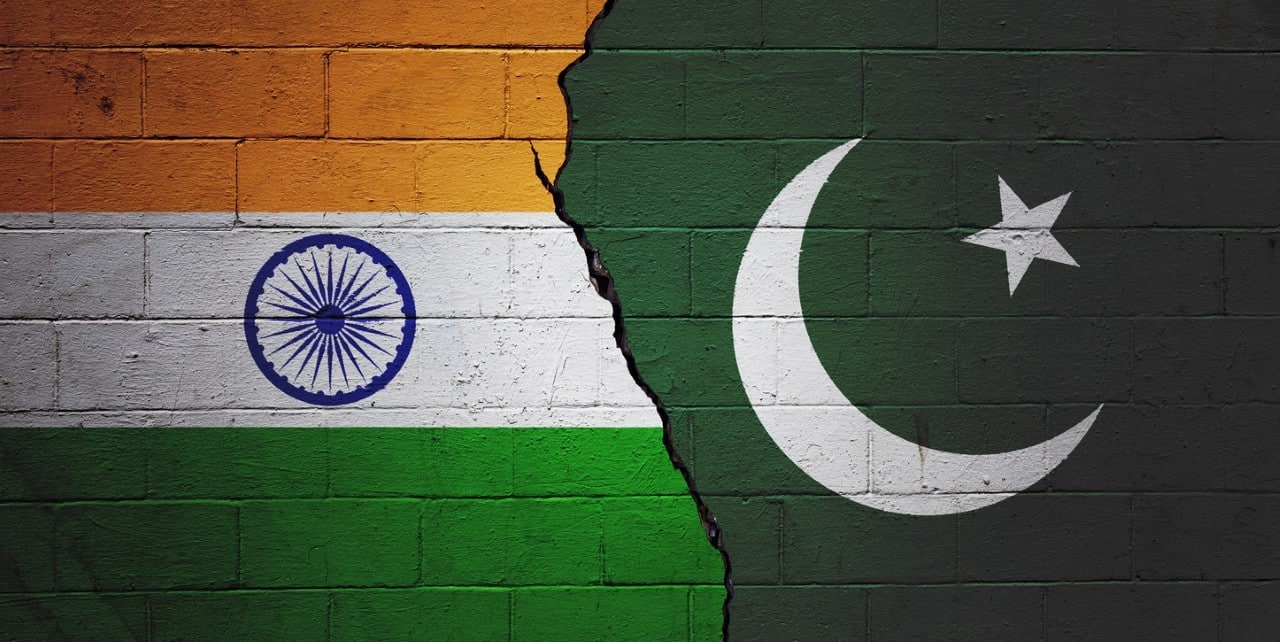
India launched Operation Sindoor on May 7, 2025, targeting terrorist infrastructure in Pakistan and Pakistan-administered Kashmir, a response to a deadly April 22 attack in Pahalgam that killed 26 civilians. The 25-minute operation, executed in the early hours, marked a significant escalation in the decades-long rivalry between the two nations. Pakistan, denying involvement in the Kashmir massacre, claimed to have downed 25 Indian drones and reported missile strikes on its military bases. Both countries have since exchanged accusations, with tensions gripping the region as global leaders urge restraint.
The operation has drawn international attention, with airlines rerouting flights to avoid Pakistani airspace and social media platforms buzzing with competing narratives. Indian officials, including Ambassador Vinay Kwatra, have defended the strikes as a precise response to terrorism, while Pakistan’s Defense Minister Khawaja Asif faced scrutiny for unsubstantiated claims of downing Indian jets. The conflict, rooted in the disputed Kashmir region, has reignited debates over sovereignty and security.
- Key developments: India’s strikes targeted Lashkar-e-Tayyiba and Jaish-e-Mohammed bases.
- Pakistan’s response: Claims of downed drones and missile attacks on military sites.
- Global impact: Airlines avoid Pakistan’s airspace; U.S. and China monitor closely.
This article explores the latest updates as of May 9, 2025, detailing the military actions, diplomatic responses, and regional consequences of the escalating India-Pakistan conflict.
Roots of the conflict
The Kashmir region, divided between India and Pakistan since 1947, remains a flashpoint for both nations. The April 22, 2025, attack in Pahalgam, a picturesque valley in Indian-administered Kashmir, killed 26 tourists, including 25 Indian citizens and one Nepali national. India swiftly blamed Pakistan-backed militant groups, specifically Lashkar-e-Tayyiba and Jaish-e-Mohammed, for orchestrating the massacre. Pakistan denied these allegations, escalating tensions further.
Operation Sindoor, named after the red vermilion powder symbolizing marriage in Hindu tradition, was India’s retaliatory strike. The operation targeted nine terror sites across Pakistan and Pakistan-administered Kashmir, aiming to dismantle militant infrastructure. Indian officials emphasized that no civilian or military sites were hit, focusing solely on terrorist bases. The strikes, lasting from 1:05 a.m. to 1:30 a.m. local time, involved advanced drones and precision weaponry, showcasing India’s military capabilities.
- Attack details: The Pahalgam massacre unfolded in a valley accessible only by foot or horseback.
- India’s stance: The strikes were a “calibrated and measured” response to terrorism.
- Pakistan’s denial: Islamabad rejected claims of supporting the militant groups.
Military escalation unfolds
Pakistan reported significant military activity following India’s strikes. On May 8, Islamabad claimed to have downed 25 Indian loitering munition drones, describing the action as a “serious provocation” that wounded four soldiers and killed one civilian. The following day, Pakistan accused India of launching missile strikes on key military bases, including one near Islamabad. Pakistani officials vowed retaliation, with their air force deploying Chinese-made J-10C fighter jets, which reportedly engaged Indian aircraft.
India, however, refuted Pakistan’s claims of downing five Indian Air Force jets, calling them baseless. A press conference on May 7, led by Wing Commander Vyomika Singh and Colonel Sophia Qureshi alongside Foreign Secretary Vikram Misri, confirmed that all Indian pilots involved in Operation Sindoor were safe. The operation reportedly killed over 80 terrorists, including 10 family members and four aides of Jaish-e-Mohammed leader Masood Azhar, a significant blow to the group’s leadership.
The rapid exchange of military actions has heightened fears of a broader conflict. Both nations, nuclear-armed since 1998, have a history of skirmishes over Kashmir, including wars in 1947, 1965, and 1999. The current escalation, marked by advanced weaponry and disinformation campaigns, underscores the volatile nature of their rivalry.

Diplomatic fallout intensifies
Diplomatic relations between India and Pakistan have deteriorated sharply. India downgraded ties with Pakistan after the Pahalgam attack, suspending participation in a critical water-sharing treaty. New Delhi also blocked social media accounts of Pakistani actors and cricketers, extending trade restrictions and halting postal services. Pakistan responded with a training launch of a surface-to-surface missile, signaling its military readiness.
Indian Ambassador to the U.S., Vinay Kwatra, defended Operation Sindoor in a CNN interview, accusing Pakistan of harboring terrorists responsible for the Pahalgam attack. Kwatra emphasized India’s resolve to combat terrorism, drawing parallels to the 2008 Mumbai attacks that killed 166 people, including Americans. His remarks, praised for their clarity, countered Pakistan’s narrative of victimhood, with Kwatra firmly rejecting references to “Indian-administered” Kashmir.
Pakistan’s Defense Minister Khawaja Asif, in a separate CNN interview, struggled to substantiate claims of downing Indian jets, citing social media as evidence. The exchange, widely circulated online, drew mockery, with commentators questioning Pakistan’s credibility. The diplomatic sparring reflects deep-seated mistrust, complicating efforts to de-escalate the situation.
- Diplomatic measures:
- India suspended trade and cultural exchanges with Pakistan.
- Pakistan conducted a missile test to assert its military strength.
- Kwatra’s CNN appearance bolstered India’s global narrative.
Global powers weigh in
The international community has responded cautiously to the crisis. U.S. Secretary of State Marco Rubio has engaged with officials from both nations, urging restraint. President Donald Trump, in comments on May 7, expressed hope for a quick resolution but showed little enthusiasm for direct mediation, calling the situation “a shame.” The U.S., historically a key player in India-Pakistan diplomacy, faces challenges in navigating the conflict amid its own geopolitical priorities.
China, Pakistan’s “all-weather strategic partner,” has emerged as a significant player. Pakistan’s use of Chinese J-10C jets, which reportedly downed Indian Rafale aircraft, has boosted Chinese defense stocks, with AVIC Chengdu Aircraft shares rising 40% in a week. The conflict offers China a chance to test its military technology against Western hardware, raising concerns about a broader geopolitical realignment. China’s Belt and Road Initiative, which includes Pakistan as a key participant, adds another layer of complexity to its involvement.
- Global responses:
- U.S. calls for de-escalation but avoids deep involvement.
- China’s military tech gains attention amid Pakistan’s claims.
- Airlines reroute flights, citing risks in Pakistani airspace.
Civilian toll and regional disruption
The human cost of the conflict is mounting. The Pahalgam attack left families devastated, with victims including a retiree and a man traveling with his semi-paralyzed wife. Operation Sindoor, while targeting terrorists, resulted in civilian casualties, with Pakistan reporting at least 31 deaths from India’s strikes. A civilian was also killed in Pakistan’s drone defense operations, and four soldiers were wounded.
The Line of Control (LoC), the de-facto border in Kashmir, remains tense. Pakistani violations at the LoC killed three civilians, according to Indian sources. Farmers like Malik Khadim, living near the LoC on the Pakistani side, are grappling with grief, with Khadim mourning his brother, killed in the crossfire. The picturesque Kashmir valleys, once a tourist haven, are now permeated with fear, with schools reopening cautiously as missile strikes subside.
Air travel has been disrupted, with major airlines avoiding Pakistani airspace. The Indian Premier League (IPL), a major cricket tournament, faces scheduling uncertainties, with its season running from March 22 to May 25. The conflict’s ripple effects highlight the broader regional instability caused by the escalation.
Role of disinformation
Disinformation has fueled confusion in the conflict. Pro-Pakistan social media accounts circulated misleading visuals claiming to show downed Indian jets, prompting widespread debunking. Indian officials have accused Pakistan of spreading fake news to bolster its narrative. Satellite images, however, confirmed damage at a terror site in Bahawalpur, Pakistan, lending credibility to India’s claims of successful strikes.
Pakistan’s reliance on social media as evidence, as seen in Asif’s CNN interview, has drawn criticism. Indian sources, including India Today, reported that Operation Sindoor was a joint operation involving multiple branches of the military, with precise intelligence guiding the strikes. The information war underscores the challenges of discerning truth amid competing narratives.
- Disinformation tactics:
- Pakistan cited social media to claim jet downings, later debunked.
- India released satellite imagery to validate its strikes.
- Both nations use media to shape public perception.
Cultural and symbolic significance
The name “Operation Sindoor” carries deep cultural resonance in India, referencing the red vermilion powder worn by married Hindu women. The Pahalgam attack, which widowed several women, imbued the operation with symbolic weight. Arathi R. Menon, daughter of victim N. Ramachandran, noted her mother’s approval of the name, seeing it as a tribute to Indian women affected by terrorism. The operation’s framing reflects India’s intent to project strength and solidarity.
Pakistan, meanwhile, has leveraged its own cultural symbols, with military displays and missile tests reinforcing national pride. The blocking of Pakistani celebrities’ social media accounts in India highlights the cultural dimension of the conflict, severing ties that once bridged the two nations. These actions underscore the deep emotional and symbolic stakes for both sides.
Economic and geopolitical ripples
The conflict has economic implications, particularly for Pakistan, which faces trade restrictions from India. The suspension of postal services and cultural exchanges further isolates Islamabad. India’s Reliance Industries, owned by Mukesh Ambani, faced scrutiny after a junior employee mistakenly filed to trademark “Operation Sindoor,” prompting the company to retract the application. The incident highlighted the sensitivity of the operation’s branding.
Geopolitically, the crisis tests alliances. Pakistan’s deepening ties with China, evident in its use of Chinese jets, contrast with India’s alignment with Western powers, including France, which supplies its Rafale aircraft. The conflict’s escalation could reshape regional dynamics, with China’s growing influence challenging U.S. dominance. The involvement of nuclear-armed states raises global stakes, prompting calls for diplomacy.
Military technology in focus
The use of advanced weaponry has drawn attention to the military capabilities of both nations. India’s deployment of loitering munition drones showcased its precision-strike technology, while Pakistan’s J-10C jets highlighted China’s growing role in its defense strategy. The reported downing of Indian Rafale jets, though unverified, has sparked debates about the efficacy of Chinese versus Western military hardware.
India’s operation relied on real-time intelligence, with satellite imagery guiding strikes on terror camps. Pakistan’s air defense systems, bolstered by Chinese technology, managed to intercept drones, though at the cost of civilian lives. The technological showdown underscores the evolving nature of warfare in the region, with both sides investing heavily in modernization.
- Military highlights:
- India’s drones targeted terror camps with precision.
- Pakistan’s J-10C jets engaged Indian aircraft, boosting Chinese stocks.
- Satellite imagery confirmed damage at terror sites.
Voices from the ground
Civilians in Kashmir bear the brunt of the conflict. Malik Khadim’s story, shared from the Pakistani side of the LoC, reflects the personal toll of the violence. His brother, Malik Farouk, was killed after being reported missing, identified later by Pakistani authorities. Indian families, too, mourn the Pahalgam victims, whose deaths sparked the current crisis. The human stories highlight the urgent need for de-escalation to prevent further loss.
Local communities in Kashmir, accustomed to tension, face renewed fear. Schools, briefly closed during the strikes, have reopened, but parents remain cautious. The tourism industry, a lifeline for the region, has suffered, with Pahalgam’s reputation as a serene destination tarnished by the massacre. The voices of ordinary citizens underscore the human cost of geopolitical rivalries.
Ongoing military operations
As of May 9, Operation Sindoor remains active, with Indian officials withholding operational details until the mission concludes. Sources suggest India may target additional terror camps, with speculation about “Operation Sindoor 2.0” circulating on platforms like India Today. Pakistan’s military, meanwhile, has vowed to respond to further provocations, maintaining a high state of alert.
The Indian Air Force’s successful execution of the initial strikes, with no reported pilot losses, has bolstered national confidence. Pakistan’s claims of retaliatory strikes, including attacks on Kotli and Muzaffarabad, have escalated the situation, with both sides preparing for potential further clashes. The ongoing operations keep the region on edge, with global observers monitoring closely.