

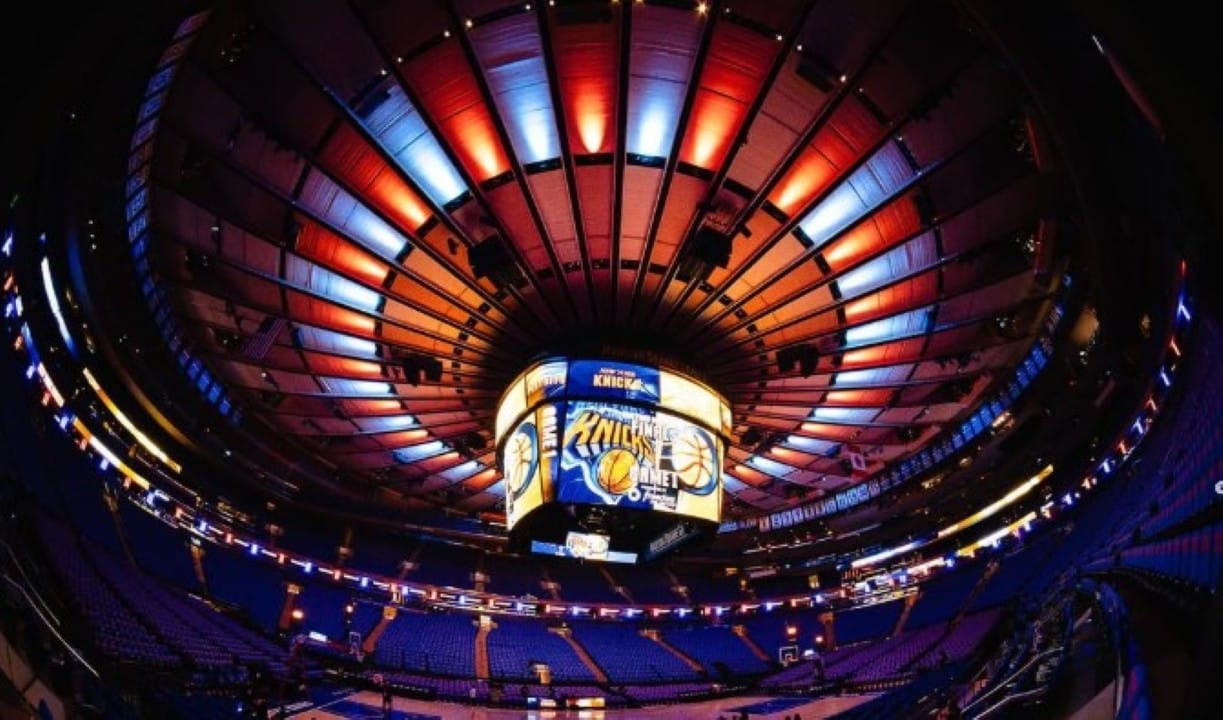
The roar of Madison Square Garden echoed through New York City on May 21, 2025, as the Knicks faced the Indiana Pacers in Game 1 of the Eastern Conference finals. This matchup, steeped in a storied rivalry, marked the Knicks’ first appearance in this stage since 2000, a milestone that electrified fans. The Pacers, coming off a dominant postseason run, aimed to spoil the homecoming. Both teams delivered a high-octane performance, setting the tone for what promises to be a fiercely contested series.
The game showcased star power, with Jalen Brunson and Tyrese Haliburton trading blows in a battle of playmaking maestros. Key moments, like Obi Toppin’s missed dunk and Mikal Bridges’ clutch tip-in, kept the crowd on edge. The Knicks’ grit on the glass and the Pacers’ relentless pace made every possession critical.
Here’s a snapshot of the game’s defining elements:
- Jalen Brunson’s 18 first-half points, including a floater to close the second quarter.
- Indiana’s 74% shooting in the first quarter, yet trailing by two.
- New York’s five offensive rebounds by the second quarter, slowing Indiana’s transition game.
- Pascal Siakam’s transition layup, briefly giving the Pacers the lead.
With celebrities like Dave Chappelle courtside and the TNT broadcast capturing every angle, the atmosphere was electric. The Knicks led at halftime, but the Pacers’ resilience ensured the outcome remained uncertain.
Star performances set the stage
The game’s opening minutes saw both teams flex their offensive prowess. Jalen Brunson, the Knicks’ clutch performer, wasted no time asserting himself. By halftime, he had 18 points on 6-of-11 shooting, including a floater that left Pascal Siakam in his wake. His ability to navigate Aaron Nesmith’s defense, particularly in isolation, drew attention from analysts. If Brunson continues to earn favorable calls, Indiana may struggle to contain him without double-teaming.
Tyrese Haliburton, Indiana’s dynamic point guard, matched Brunson’s intensity with 14 points on 6-of-11 shooting in the first half. His playmaking shone, but a moment of frustration surfaced when he complained about actor Jon Hamm holding the ball too long after a turnover, delaying an inbound. Haliburton’s ability to push the pace and create in transition kept the Pacers competitive, though New York’s physicality disrupted their rhythm at times.
Pascal Siakam also made his presence felt, particularly in transition. A layup after an OG Anunoby turnover gave Indiana a brief lead, showcasing Siakam’s knack for punishing defensive lapses. However, the Knicks’ defensive adjustments, led by Mikal Bridges and OG Anunoby, limited Siakam’s impact in key moments.
New York’s rebounding edge
One of the game’s defining factors was the Knicks’ dominance on the offensive glass. By the second quarter, they had secured five offensive rebounds, with Mikal Bridges’ tip-in after a missed Anunoby three-pointer forcing an Indiana timeout. This hustle play highlighted New York’s strategy to slow the Pacers’ fastbreak attack by crashing the boards.
The Knicks’ rebounding prowess stems from their physical lineup, featuring players like Josh Hart and Karl-Anthony Towns. Hart, who played all 48 minutes in previous playoff games, continued his relentless energy, while Towns capitalized on mismatches. This approach disrupted Indiana’s transition game, which thrives on quick outlets and open-floor opportunities.
- New York’s offensive rebounds: Five by the second quarter, leading to eight second-chance points.
- Indiana’s transition points: Limited to 12 in the first half due to New York’s board work.
- Key play: Bridges’ tip-in, which extended the Knicks’ lead to three points.
This rebounding battle will likely remain a focal point, as Indiana’s poor postseason rebounding rate—last among playoff teams at 43.2%—could prove costly against New York’s aggressive frontcourt.
Pacers’ hot start fades
Indiana came out firing, shooting an astounding 74% from the field in the first quarter and making their first nine field goals. Myles Turner led the way, going 5-for-5 for 11 points, including a three-pointer. Despite this efficiency and only two turnovers, the Pacers trailed 36-34 after 12 minutes, a testament to New York’s paint dominance and timely shooting.
The Pacers’ early success was driven by their balanced attack. All five starters scored in double figures in their previous series, and Game 1 saw contributions from Turner, Siakam, and Haliburton. However, New York’s defensive intensity, particularly in the paint, forced Indiana to rely on perimeter shots as the quarter progressed. The Knicks’ 20 points in the paint compared to Indiana’s 14 underscored this shift.
As the game wore on, Indiana’s shooting cooled, and their inability to secure defensive rebounds allowed New York to maintain control. The Pacers’ depth, with players like T.J. McConnell and Obi Toppin off the bench, kept them in striking distance, but critical misses—like Toppin’s wide-open dunk—shifted momentum.
Knicks’ defensive adjustments
New York’s defensive strategy focused on clogging the paint and disrupting Indiana’s pick-and-roll attack. Coach Tom Thibodeau, known for his defensive schemes, deployed Bridges and Anunoby to stunt passing lanes and challenge Haliburton’s drives. This approach paid dividends, as Indiana struggled to generate clean looks in the halfcourt.
OG Anunoby’s versatility was on display, though he missed a wide-open corner three. His ability to switch onto multiple positions and recover on defense disrupted Indiana’s flow. Mikal Bridges, the NBA’s minutes leader this season, added a highlight-reel tip-in and locked down Haliburton on several possessions. These efforts helped New York maintain a slim lead despite Indiana’s early shooting barrage.
- Defensive stops: Knicks forced six missed shots in the second quarter.
- Haliburton’s turnovers: Two in the first half, both on pressured drives.
- Bridges’ impact: Two steals and a tip-in by halftime.
The Knicks’ ability to adjust defensively will be crucial, as Indiana’s pick-and-roll-heavy offense, led by Haliburton and Turner, has torched opponents in the playoffs.
Celebrity presence and atmosphere
Madison Square Garden was a spectacle, with celebrities adding to the playoff buzz. Comedian Dave Chappelle, courtside, drew cheers, while Jon Hamm’s interaction with Haliburton sparked chatter on the TNT broadcast. The celebrity presence underscored the game’s cultural significance, as New York City embraced its team’s return to the conference finals.
The crowd’s energy was palpable, erupting for every Knicks bucket and defensive stop. Fans, many of whom hadn’t seen the Knicks reach this stage in their lifetime, created an atmosphere that rattled the Pacers at key moments. The noise level peaked during Bridges’ tip-in, which forced Indiana to burn an early timeout.
This vibrant setting contrasted with the Pacers’ home games at Gainbridge Fieldhouse, where they’ve won nine straight in the playoffs. As the series shifts to Indiana for Game 3, the Pacers will lean on their raucous crowd to counter New York’s home advantage.
Historical rivalry reignited
The Knicks-Pacers rivalry, a hallmark of the 1990s, added layers to this matchup. The teams met in the second round last season, with Indiana prevailing in seven games after OG Anunoby’s hamstring injury and Jalen Brunson’s hand fracture. This history fueled both teams’ intensity, as players and coaches referenced past battles in pregame pressers.
New York’s last Eastern Conference finals appearance in 2000 was against these same Pacers, who won in six games. The Knicks’ current roster, led by Brunson and bolstered by Towns and Bridges, feels different—more resilient and versatile. Meanwhile, Indiana’s fearless approach, honed by coach Rick Carlisle, mirrors the grit of their Reggie Miller-led teams.
- Past encounters: Six playoff meetings since 1993, with Indiana leading 4-2.
- Key injuries last year: Anunoby missed four games, Brunson broke his hand in Game 7.
- Current form: Pacers lost only two games this postseason; Knicks beat Boston in six.
This historical backdrop makes every game a chance to add to the rivalry’s lore, with both fanbases hungry for bragging rights.
Indiana’s depth tested
The Pacers’ depth has been a strength, with seven players averaging double figures in the regular season. Against Cleveland, their bench outscored opponents by 35.7 points per game, led by Obi Toppin and T.J. McConnell. In Game 1, however, New York’s starters played heavy minutes, challenging Indiana’s reserves to keep pace.
Toppin’s missed dunk was a microcosm of the bench’s struggles. Despite his athleticism, he failed to convert a fastbreak opportunity, allowing Karl-Anthony Towns to answer with a contested three. McConnell, known for his pesky defense, couldn’t disrupt Brunson’s rhythm, and starter Andrew Nembhard was quiet offensively.
Indiana’s ability to lean on its depth will be critical in Game 2. With New York’s starters logging big minutes—Brunson and Hart often play 40-plus—the Pacers’ bench could exploit fatigue if they find their rhythm.
Brunson’s clutch gene
Jalen Brunson’s reputation as the NBA’s Clutch Player of the Year was on full display. His first-half performance, particularly the floater over Siakam, showcased his ability to deliver in high-pressure moments. Brunson’s 30 points and six assists per game against Indiana last season suggest he’s primed for another big series.
His playmaking opened opportunities for teammates. Josh Hart, who nearly recorded a triple-double in last year’s Game 1, attacked the glass, while Towns stretched the floor. Brunson’s ability to draw fouls against Nesmith could force Indiana to adjust their defensive assignments, potentially exposing weaker defenders.
- Brunson’s first half: 18 points, 6-of-11 shooting, three assists.
- Foul calls: Drew two fouls on Nesmith, leading to four free throws.
- Playmaking: Set up Towns for a three-pointer in the second quarter.
Brunson’s leadership will be pivotal as the Knicks aim to hold serve at home before heading to Indiana.
Pacers’ transition game stifled
Indiana’s fast-paced offense, which led the playoffs in two-point (56.5%) and three-point (40.6%) shooting, was curtailed by New York’s physicality. The Pacers thrive in transition, but the Knicks’ rebounding and halfcourt defense limited their opportunities. Haliburton’s transition layups were fewer than usual, as Bridges and Anunoby contested his drives.
Siakam’s layup after Anunoby’s turnover was a rare highlight, but Indiana struggled to sustain their early momentum. Myles Turner’s hot start faded as New York packed the paint, forcing him to settle for jumpers. The Pacers’ 12 transition points in the first half were well below their playoff average of 18.3.
As the series progresses, Indiana will need to exploit New York’s occasional miscommunications, seen in their Boston series, to regain their offensive flow.
Knicks’ home court advantage
Madison Square Garden’s raucous environment has been a factor throughout the playoffs. The Knicks were 1-3 at home in the postseason before Game 1, but their Game 6 rout of Boston showed their potential when the crowd is engaged. Fans’ energy, amplified by celebrity sightings and historical significance, gave New York a psychological edge.
The Knicks’ ability to feed off this atmosphere was evident in their second-quarter run, sparked by Bridges’ tip-in. Indiana, accustomed to their own hostile home crowd, appeared unfazed but couldn’t match New York’s intensity in crunch moments. Game 2, set for May 23, will test whether the Knicks can maintain this advantage.
Looking ahead to Game 2
Both teams left Game 1 knowing adjustments are needed. The Knicks will aim to sustain their rebounding and defensive pressure while getting more from Anunoby, who was quiet offensively. Indiana, meanwhile, must shore up their rebounding and capitalize on their bench’s potential to wear down New York’s starters.
The series schedule, with Game 2 on Friday and Games 3 and 4 in Indiana, promises more drama. The Pacers’ nine-game home winning streak at Gainbridge Fieldhouse looms large, but New York’s resilience—evident in their comeback wins over Boston—makes them a formidable foe.
- Game 2: May 23, 8 p.m. ET at Madison Square Garden, TNT broadcast.
- Pacers’ home record: 9-0 in the playoffs at Gainbridge Fieldhouse.
- Knicks’ road wins: Two in Boston, including a 119-81 Game 6 rout.
This opening salvo sets the stage for a series that could redefine both franchises’ legacies.