

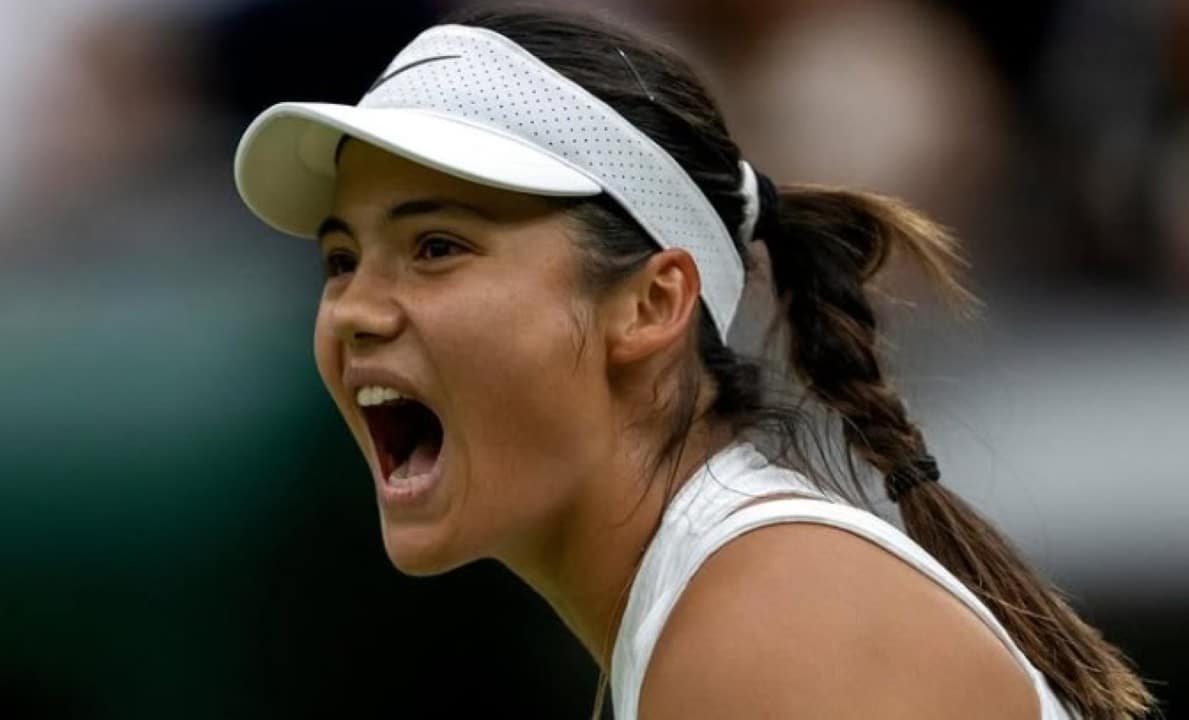
The French Open 2025 delivered a gripping showdown on May 28 at Court Philippe-Chatrier, where world number one Iga Swiatek asserted her dominance over Britain’s Emma Raducanu in their second-round match. Swiatek, the defending champion, claimed the first set 6-1 and secured an early break in the second, leaving Raducanu struggling to find her rhythm on the Parisian clay. The match, marked by Swiatek’s relentless aggression, highlighted the Pole’s bid for a fourth Roland Garros title, while Raducanu fought to stay competitive against one of tennis’s brightest stars. The encounter drew significant attention, with fans and analysts noting the stark contrast in form between the two players.
Raducanu, the 2021 US Open champion, faced an uphill battle from the start. Swiatek’s precision and intensity overwhelmed the Brit, who managed only one game in the opening set. Despite flashes of brilliance, Raducanu’s defensive play couldn’t counter Swiatek’s barrage of winners. Key moments of the match include:
- Swiatek’s commanding 6-1 first-set win in under 30 minutes.
- Raducanu’s struggle to hold serve, facing multiple break points.
- Swiatek’s forehand winners, which dictated the match’s tempo.
The match, broadcast live on BBC Radio 5 Live, captivated audiences as Swiatek continued her quest for another Grand Slam title. Meanwhile, other results on day four, including Carlos Alcaraz’s four-set victory and Casper Ruud’s upset loss, added to the tournament’s drama.
Swiatek’s commanding start
Iga Swiatek wasted no time establishing control against Emma Raducanu. The Polish star, known for her clay-court prowess, opened the match with a series of punishing groundstrokes, breaking Raducanu’s serve twice in the first set. Her 6-1 victory in the opener came in just 28 minutes, showcasing her ability to dictate rallies with precision and power. Swiatek’s aggressive baseline play left Raducanu scrambling, unable to find openings to mount a counterattack.
In the second set, Swiatek maintained her momentum, securing an early break to lead 3-1. Raducanu, visibly frustrated, struggled with unforced errors, particularly on her forehand side. Commentators, including former British number one Annabel Croft, noted Swiatek’s “ruthlessness,” describing her ability to move Raducanu corner-to corner as a masterclass in intensity. The match highlighted Swiatek’s status as a favorite to reclaim the Roland Garros crown.
Raducanu’s fight to stay alive
Emma Raducanu, ranked 70th in the world, showed moments of resilience despite the one-sided scoreline. In the second set, she managed to hold serve at 2-3 after a hard-fought game, pouncing on a Swiatek error to sling a forehand winner down the line. The hold, which brought her to deuce and forced Swiatek to swipe a shot wide, offered a glimmer of hope for the British number two. Raducanu’s effort to stay in the set was met with encouragement from fans, with some expressing optimism about her chances on social media.
However, Raducanu’s defensive approach struggled against Swiatek’s relentless pressure. Croft observed that Raducanu appeared “intimidated,” a rare sight for a player known for her composure under pressure. The Brit’s attempts to shift to a more aggressive style were thwarted by Swiatek’s ability to neutralize rallies with looping forehands and precise serves. Raducanu’s fatigue was evident as she occasionally gave up on sprints, unable to keep up with Swiatek’s pace.
Key moments in the second set
The second set saw Raducanu battle to avoid another lopsided score. At 1-2, she earned three break-point opportunities against Swiatek, capitalizing on a double fault and a net-cord stroke that went her way. Despite these chances, Swiatek responded with an ace and a forehand winner to hold serve, maintaining her 3-1 lead. The nine-minute game was a testament to Raducanu’s determination, though Swiatek’s ability to deliver under pressure underscored her experience as a three-time French Open champion.
Raducanu’s forehand briefly shone, with a cross-court winner that drew applause from the Paris crowd. Yet, Swiatek’s consistency prevailed, as she countered with a series of winners, including a looping forehand to the back corner that left Raducanu stranded. The defending champion’s ability to shift gears, as noted by Croft, kept Raducanu on the back foot, highlighting the gap in their current form.
Swiatek’s clay-court dominance
Iga Swiatek, at 23, has established herself as a clay-court titan, with three French Open titles since 2020. Her 2025 campaign began with a straight-sets win in the first round, and her performance against Raducanu further solidified her status as a top contender. Swiatek’s movement, spin-heavy groundstrokes, and mental toughness make her a formidable opponent on the red dirt of Roland Garros. Her ability to “up the ante,” as Croft described, has been a hallmark of her game, particularly in high-stakes matches.
The Pole’s preparation for the tournament included a rigorous training block, focusing on maintaining her physical edge. Her 2024 season, which saw her reclaim the world number one ranking, included titles in Madrid and Rome, boosting her confidence heading into Paris. Swiatek’s performance against Raducanu, marked by 12 winners in the first set alone, sent a strong message to her rivals in the women’s draw.
Raducanu’s journey back to form
Emma Raducanu, now 22, has faced challenges since her breakthrough US Open win in 2021. Injuries, including wrist and ankle surgeries, disrupted her 2023 and 2024 seasons, causing her ranking to drop. Her 2025 French Open appearance marked a return to Grand Slam competition after a first-round exit in 2024. Despite the loss to Swiatek, Raducanu’s participation in Paris reflects her ongoing efforts to rebuild her career under new coaching guidance.
Raducanu’s clay-court experience remains limited, with her best Roland Garros result being a second-round appearance in 2022. Her match against Swiatek exposed areas for improvement, particularly her ability to handle top-tier opponents on slower surfaces. Fans on social media urged Raducanu to adopt a more aggressive stance, with one user, Matt, suggesting she “get inside the baseline” to pressure Swiatek. Her resilience in holding serve under pressure, however, offers a foundation to build upon.
Other results on day four
Day four of the French Open saw significant action across Roland Garros. Defending men’s champion Carlos Alcaraz advanced to the third round with a four-set victory over Hungary’s Fabian Marozsan. The Spaniard, seeking his second French Open title, showcased his versatility on clay, overcoming a challenging third set to seal the win. Alcaraz’s performance drew praise for its maturity, setting up an intriguing third-round clash.
In a surprising upset, former finalist Casper Ruud fell to Portugal’s Nuno Borges in four sets. Borges, ranked outside the top 50, capitalized on Ruud’s inconsistent serving to secure his biggest Grand Slam win. The result opened up the men’s draw, with players like Jannik Sinner and Alexander Zverev eyeing the opportunity to reach the later stages. These outcomes, combined with Swiatek’s dominance, kept fans engaged throughout the day.
Controversy over women’s night matches
Tunisian star Ons Jabeur, a former Wimbledon finalist, publicly criticized French Open organizers for the lack of women’s singles night matches. No women’s matches have been scheduled in the evening session at Roland Garros since 2023, a decision Jabeur attributed to gender bias. She remarked that tournament officials “don’t have daughters,” highlighting the disparity in scheduling. Jabeur’s comments, made after her second-round win, sparked discussions about equality In tennis, with players like Coco Gauff echoing her concerns.
The absence of women’s night matches contrasts with the men’s draw, where high-profile clashes, such as Rafael Nadal’s potential farewell match, have dominated prime-time slots. The French Tennis Federation has yet to respond to Jabeur’s criticism, but the issue has gained traction on social media, with fans calling for fairer representation. Jabeur’s outspokenness adds to her reputation as a vocal advocate for change in the sport.
French Open’s unique terminology
The French Open’s distinct traditions extend to its on-court language, which intrigued fans during the Raducanu-Swiatek match. The umpire’s use of “quarante-A” for the first deuce (meaning “forty all” in French) and “egalite” for subsequent deuces (meaning “equality”) reflects the tournament’s cultural heritage. These terms, explained by BBC Sport’s Ask Me Anything team, added a layer of charm to the broadcast, with viewers like Jill seeking clarity on their meaning.
Such linguistic quirks, combined with the tournament’s red-clay aesthetic, distinguish Roland Garros from other Grand Slams. The terms, rooted in French, underscore the event’s deep ties to Parisian culture, enhancing the experience for global audiences. The Raducanu-Swiatek match, with its intense rallies and deuce-heavy games, provided ample opportunity to hear these phrases in action.
Social media buzz
The Raducanu-Swiatek clash generated significant online engagement, with #bbctennis trending on X. Fans praised Swiatek’s “ruthless” performance, with one user, Dave M, expressing hope that Raducanu could “hold on to her serve” to stay competitive. Others, like Matt, critiqued Raducanu’s defensive approach, urging her to play more aggressively. The match’s intensity, coupled with Swiatek’s commanding display, fueled discussions about her dominance and Raducanu’s potential for a comeback.
Posts on WhatsApp and text submissions to BBC’s coverage reflected the emotional investment of British fans, many of whom rallied behind Raducanu despite the scoreline. The viral nature of the match, amplified by Getty Images’ striking shots of both players, underscored the French Open’s ability to captivate global audiences. Swiatek’s winners and Raducanu’s tired expression became focal points for online memes and commentary.
Roland Garros’s evolving landscape
The 2025 French Open continues to evolve, with new faces and storylines emerging. Alcaraz’s rise as a clay-court force contrasts with the absence of veterans like Nadal, who may have played his final Roland Garros in 2024. Swiatek’s pursuit of a fourth title places her alongside legends like Justine Henin, while Raducanu’s journey reflects the challenges of sustaining early success. The tournament’s blend of tradition and modernity keeps it at the forefront of tennis.
Day four’s results, including Borges’s upset over Ruud, signal a shifting guard in the men’s game. Emerging players like Borges, combined with established stars like Sinner, are reshaping the draw. On the women’s side, Swiatek’s dominance faces potential tests from players like Aryna Sabalenka and Elena Rybakina, who are yet to face off in Paris. The tournament’s unpredictability adds to its allure.
Broadcasting and fan engagement
BBC Radio 5 Live’s coverage of the Raducanu-Swiatek match, available to UK listeners, provided real-time insights from commentators like Croft. The broadcast, complemented by live text updates, kept fans informed of every point, from Swiatek’s aces to Raducanu’s forehand winners. The interactive element, with submissions via WhatsApp and text, allowed viewers to share their reactions, fostering a sense of community among tennis enthusiasts.
The French Open’s global reach, amplified by streaming platforms and social media, ensures that matches like Raducanu-Swiatek resonate far beyond Paris. The tournament’s ability to blend high-stakes competition with cultural elements, such as its French terminology, enhances its appeal. Fans tuning in from the UK, US, and beyond remained glued to the action, eager for the next twist in the 2025 narrative.
Swiatek’s path forward
Swiatek’s performance against Raducanu positions her as a frontrunner for the 2025 title. Her ability to maintain intensity, even against a resilient opponent, bodes well for her third-round match. The Pole’s focus on recovery and mental preparation, honed through years of Grand Slam experience, gives her an edge in the grueling two-week tournament. Her rivalry with players like Sabalenka looms as a potential highlight in later rounds.
For Raducanu, the match serves as a learning experience. Her ability to compete against the world’s best, even in defeat, signals progress in her comeback. The French Open, with its demanding clay surface, remains a proving ground for the Brit, who will look to build on her performance in upcoming tournaments like Wimbledon. The contrast between Swiatek’s polish and Raducanu’s grit defined their clash, captivating fans worldwide.