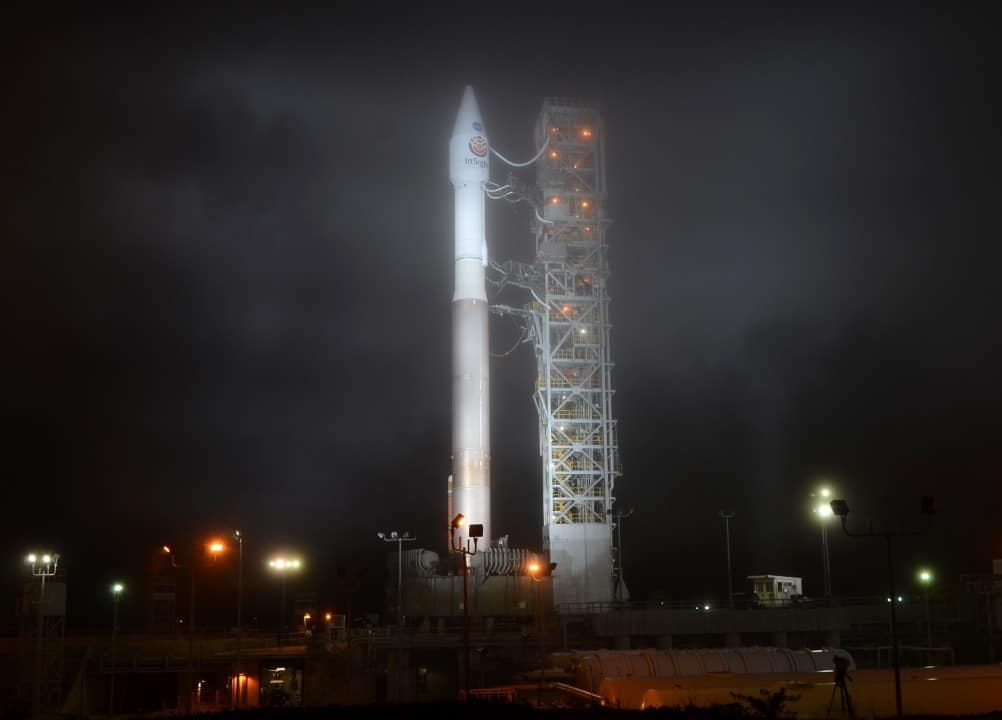
Amazon took a major step toward building its low Earth orbit internet constellation by launching 27 satellites for its Project Kuiper from Cape Canaveral Space Force Station, Florida, on June 23, 2025, at 6:54 a.m. EDT. The mission, powered by a United Launch Alliance (ULA) Atlas V rocket, marked the second significant deployment for the ambitious project aimed at providing high-speed global internet. Originally scheduled for June 16, the launch was delayed due to an engine issue with the Atlas V, but it proceeded successfully after technical adjustments. Competing directly with SpaceX’s Starlink, Project Kuiper seeks to connect millions in underserved areas, with Amazon planning to begin internet services later in 2025. The company expects to deploy over 3,200 satellites through approximately 80 additional launches in the coming years.
This mission followed a similar launch on April 28, 2025, which also sent 27 satellites aloft using an Atlas V, building on two prototype satellites launched in October 2023. Project Kuiper’s full constellation will require dozens more launches, supported by historic contracts with ULA, SpaceX, Blue Origin, and Arianespace to secure the necessary launch capacity.
The Kuiper satellites operate in low Earth orbit (LEO) at about 600 km altitude, ensuring low latency and high-speed connectivity. Amazon emphasized that the project supports thousands of jobs across the United States and Europe, involving suppliers in technology and infrastructure.
Key mission details:
- Rocket used: Atlas V 551, operated by ULA.
- Payload: 27 broadband satellites for Project Kuiper.
- Location: Cape Canaveral, Florida.
- Objective: Expand global internet coverage.
Technical aspects of the launch
The June 23 mission utilized the Atlas V 551 configuration, equipped with five solid rocket boosters for enhanced payload capacity. The launch occurred under favorable weather conditions, with the satellites deployed into their initial orbits about an hour after liftoff. ULA confirmed that all 27 satellites were successfully placed, marking a critical milestone for Amazon’s project.
The one-week delay, caused by an issue with the Atlas V’s main engine, required additional testing to ensure mission safety. ULA engineers addressed the problem in the RD-180 engine, a Russian-made component known for its reliability in high-precision missions. The successful resolution reinforced ULA’s track record of managing technical challenges effectively.
Amazon underscored the role of strategic partnerships in the mission’s success. In addition to eight Atlas V launches, the company has secured 38 missions with the Vulcan Centaur, the Atlas V’s successor, which offers greater efficiency and lower costs.
Scope of Project Kuiper
Project Kuiper is one of the largest commercial space initiatives ever, aiming to deploy over 3,200 satellites across 98 orbital planes to provide global internet coverage between 56 degrees north and south latitudes, reaching about 95% of the world’s population. Each satellite is designed to deliver broadband speeds of up to 400 Mbps, according to Amazon.
The company has invested billions in the project, including the development of affordable user terminals for homes and businesses. These terminals, similar to those used by Starlink, enable customers to connect to the satellite network using compact equipment. Amazon is also building a network of ground stations to manage data traffic between satellites and users.
To achieve this scale, Amazon secured the largest commercial launch capacity procurement in history, including:
- 38 Vulcan Centaur launches (ULA).
- Nine Ariane 6 launches (Arianespace).
- 12 Falcon 9 launches (SpaceX).
- 18 New Glenn launches (Blue Origin).
These agreements ensure redundancy and flexibility, allowing Amazon to accelerate the constellation’s deployment.
Competition in satellite internet
Project Kuiper enters a competitive market dominated by SpaceX’s Starlink, which operates over 7,600 satellites and serves customers globally. Starlink has launched 55 missions in 2025 alone, showcasing robust operational capacity. Amazon, however, leverages its global infrastructure and logistics expertise to carve out a significant market share.
Other players are also emerging. China has launched satellites for two megaconstellations: Guowang, with around 13,000 planned satellites, and Qianfan, targeting over 10,000. These efforts highlight the growing demand for global connectivity, particularly in regions with limited terrestrial infrastructure.
Amazon emphasized that Project Kuiper prioritizes affordability, with plans to offer competitive pricing for consumers, businesses, and governments. The company is also exploring partnerships with telecommunications providers to expand service reach.
Economic and social benefits
Project Kuiper has far-reaching impacts beyond connectivity. Amazon estimates it supports thousands of direct and indirect jobs, particularly in aerospace, technology, and logistics. In the United States, suppliers across 47 states contribute to satellite and rocket production. In Europe, Arianespace and its partners benefit from launch contracts.
The project also aims to bridge the digital divide. Approximately 2.7 billion people lack internet access, according to the International Telecommunication Union (ITU). Project Kuiper seeks to connect rural communities, schools, and small businesses, fostering access to education, e-commerce, and digital services.
Supporting infrastructure
To operate the constellation, Amazon is building a global network of ground stations, or gateways, to manage data traffic between satellites and terrestrial internet. These stations are being deployed in strategic locations, including the United States, South America, Asia, and Australia, to ensure low latency and high reliability.
Additionally, Amazon developed low-cost user antennas with a compact design, allowing easy installation at homes or businesses. Initial tests with the 2023 prototypes showed promising results, with download speeds exceeding expectations.
Orbital space concerns
The rise of megaconstellations like Kuiper and Starlink raises concerns about orbital sustainability. Low Earth orbit is increasingly crowded, posing risks of collisions and space debris. Amazon stated that Project Kuiper adheres to international guidelines for debris mitigation, including deorbiting satellites at the end of their roughly seven-year lifespan.
Another issue is the impact on astronomical observations. LEO satellites reflect sunlight, creating bright trails that interfere with ground-based telescopes. Amazon is collaborating with the scientific community to reduce these effects, such as using less reflective coatings on satellites.
Key orbital sustainability measures:
- Planned deorbiting: Satellites are designed to reenter the atmosphere at end-of-life.
- Collision monitoring: Automated systems track orbital objects to prevent impacts.
- International cooperation: Amazon works with space agencies to meet regulations.
- Reduced reflectivity: Newer satellites will have less reflective surfaces.
Technological advancements
Project Kuiper satellites incorporate cutting-edge technology, including electric propulsion systems for orbital adjustments and high-efficiency solar panels. Each satellite, weighing about 400 kg, features phased-array antennas for high-speed communications without moving parts, reducing maintenance costs and improving durability.
Amazon is also investing in artificial intelligence to optimize constellation management. AI algorithms route data between satellites and ground stations, minimizing delays and enhancing network efficiency. Tests with the 2023 prototypes validated these technologies in real-world conditions.
ULA’s role in the launch
The United Launch Alliance plays a pivotal role in Project Kuiper, with a perfect success rate for Atlas V missions. The June 23 launch strengthened confidence in the partnership, which includes seven more Atlas V missions and dozens with the Vulcan Centaur. The Vulcan, still in early operations, promises to lower costs and increase payload capacity, benefiting projects like Kuiper.
ULA is also expanding its Cape Canaveral infrastructure to meet growing commercial launch demand. The company announced investments in new launch platforms and payload integration facilities for future Kuiper missions.
Amazon’s next steps
Amazon plans additional satellite launches in the coming months, aiming to begin commercial services by late 2025. The company expects to have around 1,600 satellites in orbit by mid-2026, enabling initial coverage in select regions. Full constellation deployment is targeted for 2029, per Federal Communications Commission (FCC) requirements.
For consumers, Amazon promises a seamless internet experience with quick installation and integrated support. The company is also exploring applications for Kuiper in sectors like aviation, maritime, and agriculture, where real-time connectivity can transform operations.
Global implications
Project Kuiper has the potential to redefine global internet access. Regions like Sub-Saharan Africa and Southeast Asia, with limited broadband infrastructure, stand to benefit significantly. Amazon is in talks with local governments to provide services in underserved areas, aligning with sustainable development goals.
The constellation could also support critical applications, such as environmental monitoring and disaster response. During hurricanes or earthquakes, when terrestrial networks often fail, Kuiper satellites can provide essential connectivity for rescue teams and affected communities.