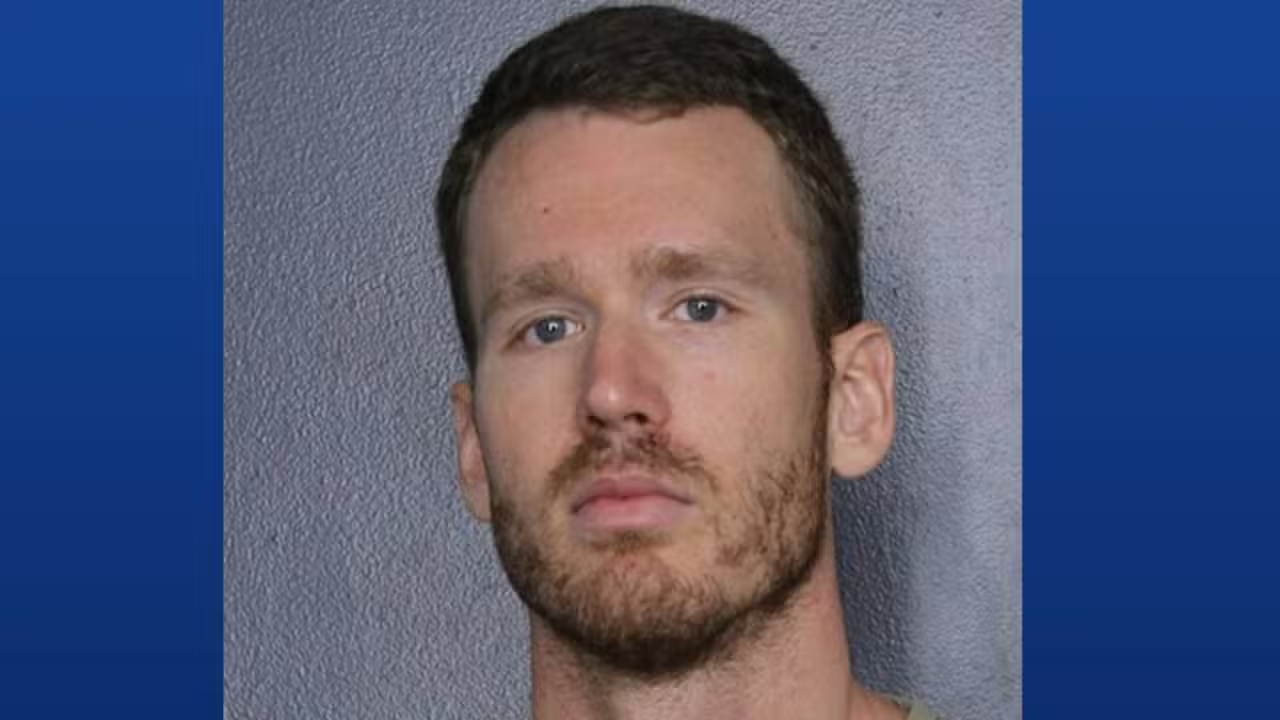
Federal authorities in the United States announced on Wednesday, October 8, 2025, the arrest of 29-year-old Jonathan Rinderknecht, a former Uber driver, accused of starting the Palisades fire in January in the Pacific Palisades area of Los Angeles. The blaze, which began in an apparently contained manner, reignited due to strong winds and caused the deaths of 12 people, in addition to destroying more than 6,800 structures. The arrest took place on Tuesday in Orlando, Florida, where Rinderknecht had been residing since the incident.
The suspect faces charges of destruction of property by means of fire, a federal crime that carries a minimum sentence of five years in prison. Investigators from the Bureau of Alcohol, Tobacco, Firearms and Explosives (ATF) determined that Rinderknecht set the fire around midnight on January 1, 2025, shortly after dropping off a passenger as an app driver.
Los Angeles Mayor Karen Bass issued an official statement highlighting the progress in seeking justice for the affected families. Firefighting teams and local authorities worked for 24 days to contain the fire, which consumed more than 23,000 acres.
- The initial fire, known as the Lachman Fire, covered 8 acres and was controlled using helicopters and manual containment lines.
- No evidence of fireworks, despite initial speculation.
- AI-generated images, attributed to the suspect, were displayed at the press conference.
Initial investigation details
Federal agents began the inquiries in January, shortly after the fire spread. The underground fire persisted for days until it surfaced with wind gusts on January 7. Rescue teams faced extreme conditions during the firefighting efforts.
Rinderknecht lived in Pacific Palisades before moving to Florida. Authorities did not disclose a motive for the act but confirmed intentionality through evidence collected at the scene.
Palisades fire context
The fire erupted around 10:30 a.m. amid a windstorm in Southern California. Firefighters patrolled the burned area to prevent reignitions, but the moist soil retained embers that reignited the disaster. Post-incident reports pointed out shortcomings similar to those in the 2018 Woolsey fire, with recommendations for improvements in emergency responses.
Charges and legal proceedings
Rinderknecht was detained based on a federal criminal complaint. Acting U.S. Attorney Bill Essayli detailed at the press conference that the suspect started the fire on a hillside in the neighborhood. The sentence could exceed the five-year minimum, depending on aggravating factors.
The U.S. Department of Justice is coordinating the case, with the suspect’s transfer to California scheduled soon. Initial hearings will take place in the federal court in Los Angeles.
Local authorities’ reactions
Mayor Karen Bass emphasized the ongoing efforts to relocate displaced families. “Every day of displacement is too long,” she stated in an official release. Local and federal agencies collaborated on the nine-month investigation.
Governor Gavin Newsom issued a statement supporting the action, highlighting the impact on the region. Reconstruction teams are working to restore the affected area.
Fire technical aspects
The fire consumed 23,000 acres over 24 days of full containment. More than 937 structures suffered partial damage, in addition to those destroyed. Strong winds accelerated the initial spread, complicating the work of planes and helicopters.
Forensic analyses confirmed the ignition point near a road used by vehicles. Fire experts emphasize the importance of post-containment patrols in dry areas.
Investigators used AI images generated by the suspect himself to reconstruct events. Digital tools assisted in identifying patterns in the burned terrain. The case reinforces the use of technology in environmental investigations.
Preventive measures under discussion
California authorities are reviewing protocols following the event. Sheriff and fire departments are implementing suggestions from previous reports. Focus includes training for detecting latent fires.
- Updates to building codes in risk zones.
- Expansion of aerial monitoring teams.
- Educational campaigns on proper disposal of hot materials.
The Los Angeles Fire Department plans more annual simulations. Interstate collaboration is gaining emphasis for cross-border cases.
Advances in area reconstruction
Recovery work began in February, with federal support. More than 11,000 residents were initially evacuated. Housing assistance programs benefit victims.
Contracted construction companies are accelerating repairs in affected neighborhoods. State budgets allocate funds for future prevention. Residents report gradual progress in returning to normalcy.