Bolsonaro aide Filipe Martins faces house arrest as Brazil tightens legal net after Vasques’ escape Por Luís Pereira
6 min de leitura
 |
Bolsonaro aide Filipe Martins faces house arrest as Brazil tightens legal net after Vasques’ escape
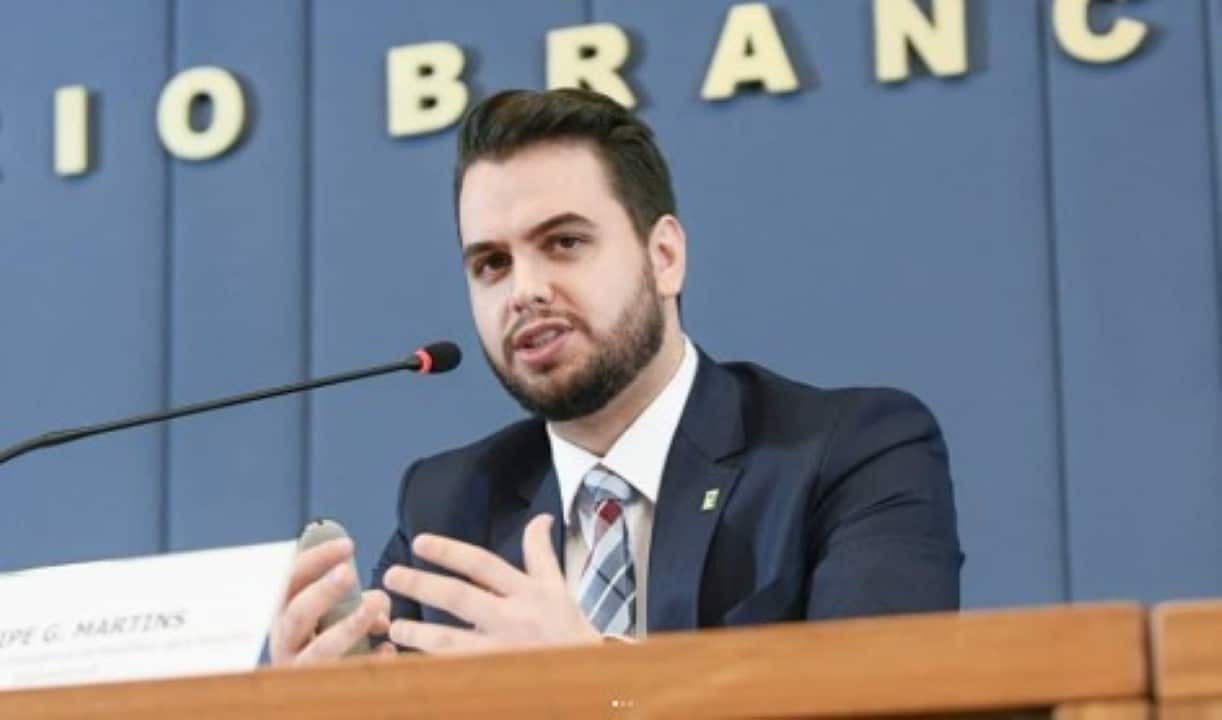
The Federal Police placed Filipe Martins, former international advisor to then-President Jair Bolsonaro, under house arrest early this Saturday, January 27, 2025. This escalation of measures comes after a Supreme Court ruling converted his existing precautionary conditions, which included an ankle monitor, to full home detention.
The decision by Justice Alexandre de Moraes follows the recent dramatic flight and subsequent arrest of Silvinei Vasques, the former director-general of the Federal Highway Police (PRF). Vasques, who was also under judicial restrictions, attempted to evade authorities by fleeing to Paraguay before being apprehended and returned to Brazil, highlighting persistent challenges in Brazil’s high-profile investigations.
Martins’ lawyer, Jeffrey Chiquini, publicly condemned the new measure, arguing it represents a further violation of Brazil’s Code of Criminal Procedure and the Federal Constitution. The legal community is closely watching the developments, given the sensitive nature of the ongoing inquiries and the political figures involved.
The expanding legal crackdown
Federal agents carried out the warrant for Martins’ house arrest at his residence, marking another significant development in the broader investigation into alleged anti-democratic actions. Authorities have maintained a heightened level of vigilance regarding individuals implicated in these probes, especially after recent events involving other figures.
Vasques’ flight and recapture
Silvinei Vasques’ attempted escape to Paraguay underscored the gravity with which authorities are treating cases involving individuals under judicial supervision. He was under precautionary measures, similar to Martins, and his flight prompted an immediate international response, demonstrating the government’s commitment to ensuring legal processes are followed.
After a brief period in Paraguay, Vasques was located and handed over to Brazilian authorities, who immediately proceeded with his detention. This incident likely played a crucial role in the Supreme Court’s decision to stiffen the measures against other individuals, including Martins, to prevent similar evasion attempts.
Filipe Martins’ legal status evolves
Before this weekend’s development, Filipe Martins was already subject to a series of precautionary measures, which included the mandatory use of an electronic ankle monitor. These initial restrictions aimed to ensure his compliance with judicial orders while allowing him a degree of freedom, but his situation has now intensified significantly.
The conversion of these existing measures to house arrest reflects a perceived increased risk of flight or obstruction of justice, as assessed by the Supreme Court. This shift places Martins under more restrictive conditions, requiring him to remain at home except for specific, court-authorized circumstances.
Attorney’s challenge and defense strategy
Jeffrey Chiquini, Martins’ legal representative, swiftly voiced strong opposition to the new mandate. He labeled the conversion of precautionary measures into house arrest as an “act that violates the Code of Criminal Procedure and the Federal Constitution,” suggesting the defense will pursue all available legal avenues to contest the decision.
The defense’s argument centers on the contention that the legal grounds for such a severe alteration of Martins’ status are insufficient or improperly applied. They are expected to highlight any perceived procedural irregularities or lack of new evidence justifying the heightened restriction.
Legal experts suggest that such a robust defense will likely challenge the necessity and proportionality of house arrest, particularly since Martins had already been complying with an ankle monitor. The legal battle is anticipated to be complex, navigating intricate points of constitutional law and criminal procedure.
Broader implications of federal operations
The Federal Police confirmed that Martins’ arrest is part of a wider operation, with other measures against various individuals implicated in STF-related inquiries reportedly underway. These additional actions, many of which remain under strict secrecy, signal a concerted effort by law enforcement to address ongoing investigations comprehensively.
These operations are intricately linked to broader probes into alleged efforts to undermine democratic institutions, often referred to by analysts as the “coup plot” investigations. The scope of these inquiries extends to several high-profile figures, including politicians, former officials, and allies of the previous administration.
The secrecy surrounding some of these ongoing measures underscores the sensitive nature of the investigations and the need for operational discretion to ensure their effectiveness. Authorities are working to gather evidence and enforce judicial orders while maintaining public order and confidence in the justice system.
The continuous unfolding of these legal actions is reshaping the political landscape and impacting public perception of accountability for those in power. It emphasizes a determined push by the judiciary and law enforcement to address allegations of misconduct at the highest levels.
The ongoing “coup plot” investigation
The “coup plot” investigation has continued to uncover layers of alleged conspiratorial activities, drawing in a diverse array of figures from the political and security sectors. This extensive inquiry probes accusations of attempts to subvert the electoral process and challenge the legitimate transfer of power, with numerous individuals facing legal scrutiny. Reports have consistently linked several former government officials to schemes designed to create instability or prevent the democratic transition. The investigation has meticulously pieced together communication records, financial transactions, and witness testimonies to build a comprehensive picture of the alleged coordinated efforts. The judiciary, led by the Supreme Court, has taken a firm stance, emphasizing the need to uphold constitutional norms and penalize any actions deemed to threaten the democratic state, with ongoing arrests and restrictive measures serving as clear indicators of this resolve.
Future legal developments
The legal landscape surrounding these high-profile cases remains highly dynamic, with further judicial decisions and police actions anticipated in the coming months of 2025. The Supreme Court continues to oversee these sensitive investigations, and additional measures against other implicated individuals could be announced as evidence is processed.
Observers anticipate that the defense teams for Martins and other figures will intensify their legal challenges, potentially leading to further appeals and prolonged court proceedings. These developments are poised to keep the national spotlight on the interplay between political power and judicial oversight in Brazil.
Filipe Martins, Federal Police arrest, Silvinei Vasques, house arrest, Alexandre de Moraes, Brazil political investigation, coup plot, Bolsonaro aide, STF decision, judicial measures