Rare solar eclipse in Antarctica will create ring of fire in event with complex logistics for observers
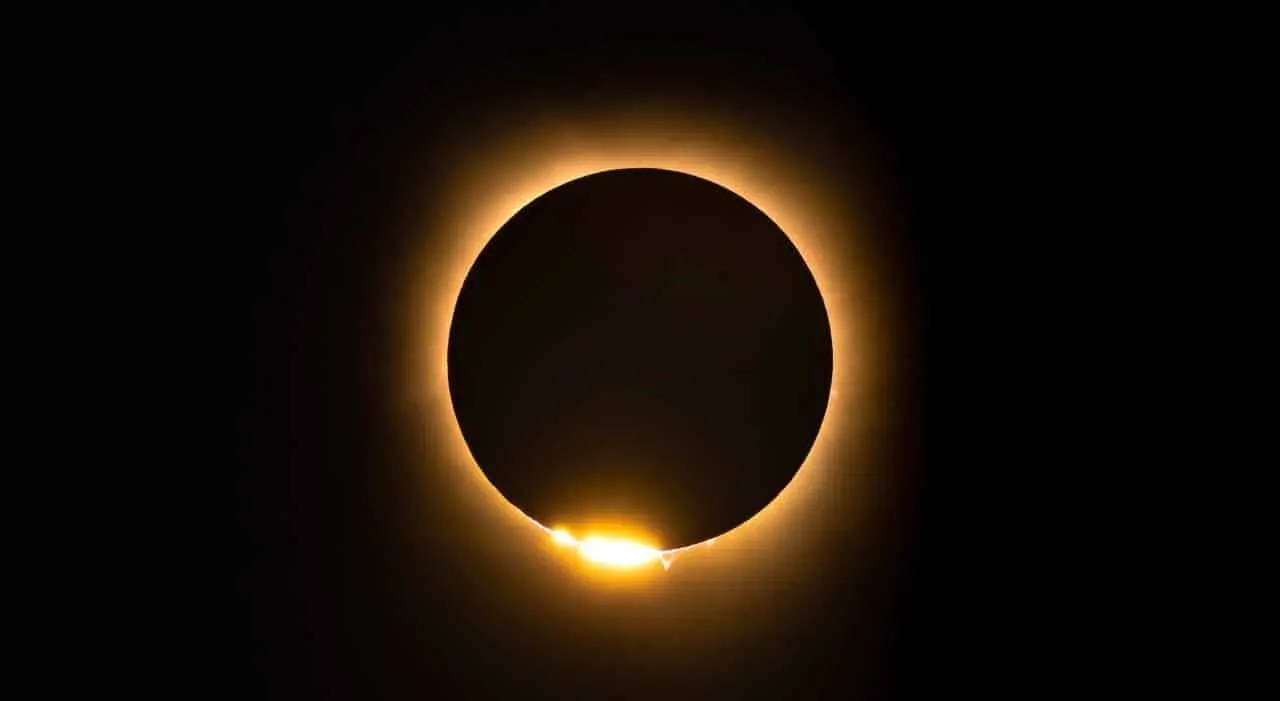
A rare astronomical event is scheduled for February 17, 2026, when an annular solar eclipse will cast the shadow of Lua over the Antarctic continent. The phenomenon, popularly known as the “ring of fire”, will be visible in its entirety only in a narrow band that crosses one of the most remote and coldest regions on the planet, presenting an unprecedented logistical challenge for scientists and observers.
This type of eclipse happens when Lua passes between Terra and Sol, but is at a point in its orbit further away from our planet. For this reason, its apparent diameter is smaller than that of Sol, resulting in the formation of a luminous rim around the dark lunar disk. Viewing the entire event is restricted to a few locations, making it an exclusive opportunity.
The trajectory of the antumbral shadow, the lightest part of the lunar shadow, will cover approximately 4,282 kilometers, starting at Oceano Índico and ending at Pacífico. The route will pass directly over international research bases and difficult-to-access areas, where extreme temperature and climate conditions require highly specialized preparation and equipment to record the phenomenon.
BREAKING🚨: A ring of fire eclipse is coming─ on Feb 17, 2026 a rare solar eclipse will occur. The Moon will block the Sun, creating a bright ring of fire!pic.twitter.com/sphsLYNvmH
— All day Astronomy (@forallcurious)January 15, 2026
Privileged observation points on the Antarctic continent
Two scientific stations stand out as strategic locations for observing the eclipse. Estação Concordia, a collaboration between França and Itália located at Planalto Antártico, is considered one of the best spots due to its altitude and extremely dry air, which reduce atmospheric distortion. Ali, the annular phase will last precisely 2 minutes and 1 second, with Sol just 5 degrees above the horizon, creating a unique opportunity for astrophotography. In contrast, Estação Mirny, a Russian base on the coast of Antártida Oriental, is also on the path to annulment and will witness the phenomenon for 1 minute and 52 seconds. Nesta location, the Sol will be slightly higher at 10 degrees, but coastal weather instability poses a greater risk of overcast skies compared to the interior of the continent, adding an element of uncertainty for research teams.
More on this story: Ring of fire phenomenon appears in Antarctica this Tuesday and attracts attention from research centers
The climate challenge and polar instability
The success of any expedition to observe the 2026 eclipse depends critically on weather conditions. Historical Dados favors Estação Concordia, which presents a probability of just 35% of overcast skies during the month of February, one of the reasons why the base has become a hub for terrestrial astronomy. In-situ atmospheric clarity is critical to the operation of advanced telescopes that capture sensitive space data.
At Estação Mirny, the situation is more challenging. The proximity to the ocean and the influence of katabatic winds increase the average cloudiness to around 65%. Cientistas, however, rely on the possibility of a cooling dissipation phenomenon, in which the drop in temperature during the eclipse can alter local atmospheric pressure and open temporary clearings in the clouds. Temperatures can reach -80°C, requiring all equipment and observers to be protected by heating systems and advanced thermal clothing to avoid technical failures and health risks.
Partial visibility on other southern continents
Although the complete view of the “ring of fire” is a privilege for few in Antártida, the event can be partially seen by millions of people in other regions of the southern hemisphere.
In the city of Durban, in África of Sul,
At Ushuaia, at the southern end of Argentina, solar coverage will be less than 10%, still an event of interest for local observatories and enthusiasts.
On the same topic: Astronomical phenomenon creates ring of fire in the Antarctic sky and attracts attention from global scientists
Experts reinforce the importance of eye safety, as even with a small portion of the Sol visible, direct observation without adequate filters can cause permanent and irreversible damage to the retina.
See Also



Scientific opportunities in extreme conditions
The low altitude of Sol during the eclipse at Antártida provides a rare chance to study the ionosphere and light refraction in extreme cold conditions. Pesquisadores plan to use the sudden interruption of solar radiation to analyze its effects on the upper layers of the atmosphere at high latitudes. Esses data is vital to improving the accuracy of GPS and satellite communications systems, which often suffer from interference in polar regions.
Expedition tourism in search of the shadow of Lua
Despite limited infrastructure, expedition cruise companies are already planning routes to position their ships in the path of the lunar shadow.
These vessels, with reinforced hulls to navigate in icy waters, offer the advantage of mobility, allowing them to bypass areas with bad weather to find clear skies, something impossible for fixed stations on land.
The high cost of these trips reflects the logistical complexity of operating in such a remote area, but demand is driven by growing interest in combining adventure tourism with unique astronomical events, often with the presence of astronomers on board to enrich the passenger experience.
Photographic recording techniques under intense cold
Professionals planning to document the eclipse face significant technical challenges. Extremely low temperatures can freeze the cameras’ internal lubricants, jamming delicate mechanisms such as the shutter and compromising the recording of the event.
Learn more: Celestial event in Antarctica projects ring of fire this Tuesday and starts astronomical calendar
To overcome this problem, many use modified equipment or protected by thermal covers with active heating. Além Furthermore, the stability of tripods on ice is crucial, requiring the use of wide bases and weights to prevent the equipment from moving due to wind or small variations in the frozen surface.
Context of previous eclipses in the polar region
Solar eclipses on Antártida are rare, but not unheard of. The last major event that mobilized the scientific community was the total solar eclipse of December 2021, which also attracted expeditions to the icy continent, leaving an important legacy of data for science.
The 2026 event is different because it is an annular event, providing a distinct visual spectacle. Enquanto a total eclipse reveals the solar corona, the annulus fascinates with the geometric precision of the ring of light that surrounds the Lua, changing the colors of the landscape in a unique way.
Safety protocols for solar observation
The main safety recommendation is to never observe Sol directly without adequate protection. Durante an annular eclipse, at no point is the solar disk completely blocked, meaning ultraviolet and infrared radiation remains intense and dangerous to vision.
The use of certified solar filters, such as those found in special eclipse glasses, is mandatory. Para telescopes and binoculars, the filter must be positioned on the front of the equipment, in the opening that points to the Sol, and never in the eyepiece, to avoid overheating and breaking the filter, which could cause instant blindness.