
Rare astronomical phenomenon blocks sunlight for more than six minutes in African and European countries
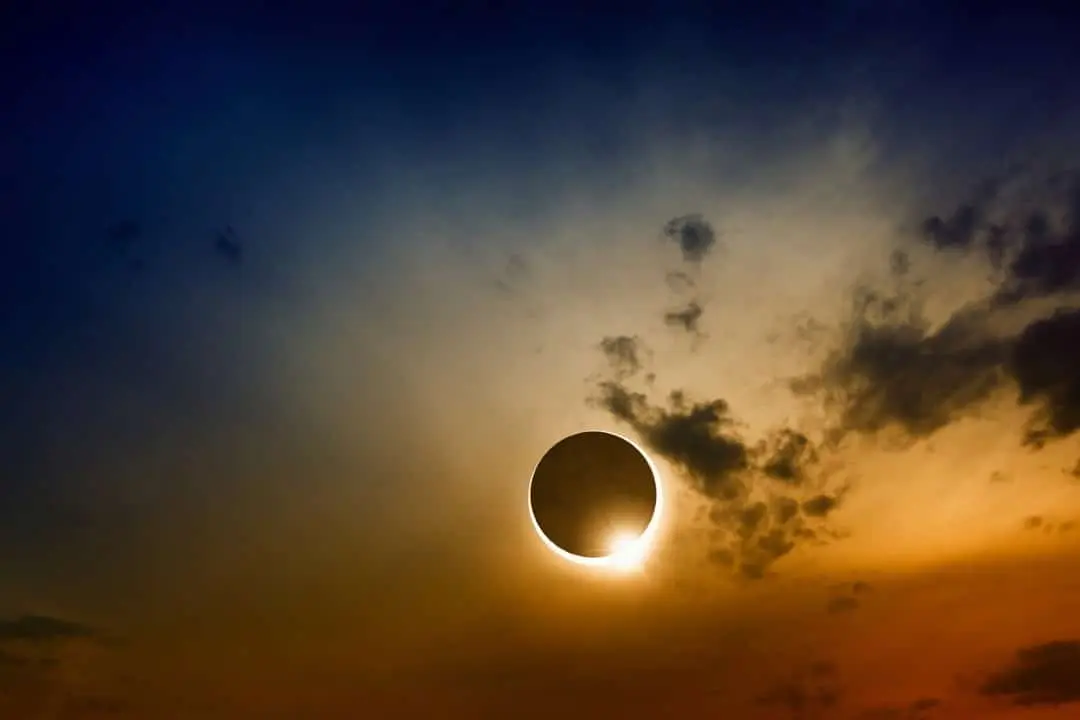
The perfect alignment between Terra, Lua and Sol will provide one of the most anticipated astronomical events of the current decade. In the month of August, a large swath of the planet will experience darkness in broad daylight due to the passage of the lunar umbra. The phenomenon stands out for its exceptional duration, reaching a peak of six minutes and twenty-three seconds of totality, a milestone rarely observed in continental areas and which mobilizes the international scientific community.
The shadow’s path will span ten nations, connecting the European continent to Oriente Médio, passing through much of northern África. Especialistas in celestial mechanics point out that the magnitude of this specific event is directly linked to the orbital position of the Earth’s natural satellite. Durante the occurrence, Lua will be at perigee, the point of its orbit closest to Terra, which significantly increases its apparent diameter in the sky.
This visual enhancement allows the lunar disk to completely cover the solar photosphere for an extended period. Observadores positioned in the central band will have the opportunity to view the solar corona, the star’s outer atmosphere, which normally remains hidden by the intense brightness. The event attracts the attention of space agencies, independent researchers and astronomy enthusiasts around the world, requiring advance logistical preparation.
Lunar shadow trajectory spans three continents
The path of total darkness begins in the waters of the subtropical Atlântico ocean, advancing rapidly towards the east. The first contact with dry land occurs on the Ibérica peninsula, specifically in the southern region of Espanha, encompassing coastal cities such as Cádiz and Málaga, in addition to the territory of Gibraltar. Quase simultaneously, the shadow reaches the north of Marrocos, marking the beginning of its journey across the African continent with great visual impact.
After crossing Moroccan territory, the band of totality follows vast extensions of Argélia, Tunísia and Líbia, before entering Egito and Sudão. The progression continues across the sea Vermelho, reaching the Arabian peninsula through Arábia Saudita and Iêmen, also touching a small portion of Somália. The route ends its passage over the ocean Índico, totaling a coverage area of approximately two million and five hundred thousand square kilometers of absolute darkness.
Orbital conditions favor prolonged darkness
The mechanics behind a total solar eclipse require precise three-dimensional alignment during the new moon phase. Como the lunar orbit has an inclination of about five degrees in relation to the orbital plane of Terra, eclipses do not occur every month, making each event a unique opportunity for study.
Learn more: Six-minute total solar eclipse crosses three continents and draws scientists to Egypt
The anomalous duration of this event is explained by the coincidence of the alignment with the lunar perigee. The physical proximity makes Lua appear considerably larger than Sol in the celestial vault, changing the perspective of those observing the phenomenon from the Earth’s surface.
This difference in apparent proportion ensures that the umbra, the densest and darkest part of the shadow, requires more time to transit the solar disk. The result is an extended observation window for researchers seeking to collect data on radiation emission and the behavior of solar plasma.
Cycle Saros and the predictability of celestial phenomena
The event is part of the well-known cycle Saros 136, a series of eclipses that share similar geometries and occur at regular intervals of eighteen years and eleven days. Esta specific family of eclipses is famous in the scientific community for producing exceptionally long totalities of great academic value.
Historically, the Saros 136 cycle has been responsible for notable events in the past and will continue to generate long-lasting eclipses until it begins to weaken in future centuries. Mathematical predictability allows astronomers to calculate these occurrences with millimeter precision, making it easier to schedule observation missions.
Point of maximum duration attracts scientific expeditions
Totality reaches its peak at six minutes and twenty-three seconds in Egyptian territory. The exact point of maximum duration is located approximately sixty kilometers southeast of the historic city of Luxor, transforming the region into the global epicenter of astronomy during the event.
Read also: On August 28, Brazil will have a privileged view of a total lunar eclipse
This specific region of Egito has an extremely favorable meteorological history for the month of August. The probability of clear skies and absence of clouds approaches totality, guaranteeing ideal conditions for viewing and capturing high-resolution images.
Scientific expeditions from several universities already organize the transport of heavy equipment to the Egyptian desert. The main objective is to study the dynamics of the solar corona, variations in the magnetic field and particle emissions during the blocking of direct light from Sol.
In addition to Luxor, other locations such as Tarifa, at the southern end of Espanha, and the coastal regions of Tunísia also offer excellent observation points. Embora with slightly shorter durations, these places have infrastructure that is easily accessible to the general public.
Atmospheric and visual effects during totality
During the minutes of total darkness, observers located in the central band will experience a series of unique atmospheric and optical phenomena. The sky will take on deep twilight tones, allowing the viewing of bright planets and stars of great magnitude in broad daylight, completely changing the perception of the environment. The luminosity drops drastically, but the horizon in all directions remains visible, displaying orange and reddish colors due to the sunlight that continues to be scattered by the atmosphere outside the zone of totality. Além of the visual changes, there is a noticeable drop in local temperature, which can vary significantly depending on the humidity and geography of the region. Esses combined factors temporarily alter the behavior of local fauna, with birds returning to their nests and nocturnal insects beginning their activities, reacting instinctively to the sudden absence of direct solar radiation.
Security Protocols for Direct Observation
Safe observation of the phenomenon requires the strict use of certified protective equipment during all partial phases. Especialistas warn that looking directly at the Sol without adequate filters, even when most of the disc is covered, can cause permanent and irreversible damage to the retina. The use of glasses with specific international certification for eclipses or the use of indirect projection methods are the only safe ways to monitor the progress of Lua.
Only during the exact minutes of totality when the solar disk is completely hidden is it safe to remove eye protection. Neste brief period, naked-eye observation is permitted and necessary to view the solar corona. Fotógrafos and cameramen should also equip their lenses, telescopes and binoculars with appropriate solar filters to avoid burning out digital sensors and protect vision when focusing equipment before and after the total phase.
On the same topic: Intense solar storm brings northern lights to German cities
Logistical impact and travel planning
Astronomical tourism boosts the economy of regions located on the shadow route, requiring government preparation. Travel planning requires reservations years in advance, as the hotel infrastructure in cities such as Luxor, Benghazi and Jeddah quickly reaches maximum capacity due to the international flow of visitors.
Areas of partial visibility and magnitude of the event
Locations outside the central band of totality will only experience a partial solar eclipse. The magnitude of the light blockage will gradually decrease the greater the distance from the observer in relation to the central axis of the shadow projected by Lua.
In much of sub-Saharan Europa, África, and parts of Ásia, the event will be seen as an incomplete overlay on the solar disk. Instituições astronomical data reinforce that awareness campaigns are essential to avoid misinformation about the exact areas of darkness and the precise times of the phenomenon.
Future perspectives for long-lasting phenomena
The rarity of an eclipse lasting more than six minutes in continental areas makes this event a landmark in contemporary astronomy. Projeções orbitals indicate that a phenomenon lasting longer on dry land will only occur again in the year 2114, highlighting the scientific importance of the current occurrence for the collection of primary data.
The detailed mapping of the trajectory and the advance preparation of the nations involved demonstrate the progress in global scientific dissemination. The event not only provides crucial information for heliophysics, but also acts as a catalyst for public interest in space science and understanding the mechanics of the solar system as a whole.
More news in News (EN)
See more → Samsung releases new system update with new features for Galaxy Watch 4 users
 Digital retail reduces the value of the Galaxy S25 5G smartphone with bank bonuses and device exchange
 Amazon’s wireless CarPlay adapter has a 50% discount and high approval ratings from drivers
 Zach Cregger’s new Resident Evil ignores games and focuses on an unprecedented story with new characters
 Rumor suggests that Nintendo is preparing a special edition of the Switch 2 with a remake of Ocarina of Time
 Apple accelerates production of the iPhone 17e and develops new Air model with dual camera system
 Epic Games platform releases twelve high-budget games at no permanent cost for PC users
 PlayStation 5 Pro price drop accelerates digital retail sales and eliminates global stocks
 New Galaxy Watch 9 firmware appears on server and confirms progress in software development
 Apple’s commemorative project tests cell phone with 1.1 millimeter edge and curved screen for 2027
 New Apple system update optimizes urgent task management for iPhone users
 Leak details hardware of the new portable PlayStation with superior graphics to the Xbox Series S
More news on Mix Vale
- 1Oppo officially launches the Find X9 Ultra worldwide with Hasselblad lenses and robust battery
- 2Tim Cook reveals new iPhone and iPod prototypes in celebration of Apple’s fiftieth anniversary
- 3New edition of foldable smartphone brings gold finish to Winter Games competitors
- 4Android system receives native Gemini Nano 4 integration for offline processing on smartphones
- 5Samsung updates QuickStar module and expands visual control of the panel in the One UI 8.5 interface
- 6Leak reveals Lords of the Fallen and Sword Art Online in April’s PS Plus Essential catalog
- 7New Xiaomi 18 Pro Max smartphone integrates two 200 MP cameras and latest generation processor
- 8Manufacturers update premium smartphone photo sensors with focus on zoom and artificial intelligence
- 9Apple develops new foldable iPhone and prepares special edition to celebrate 20 years of the brand
- 10Manufacturer OPPO confirms official date to reveal new Find X9 Ultra and Pro smartphones with a focus on cameras