
Japan x Australia: Japanese team beats Australia by a minimum score and wins the Women’s Asian Cup cup
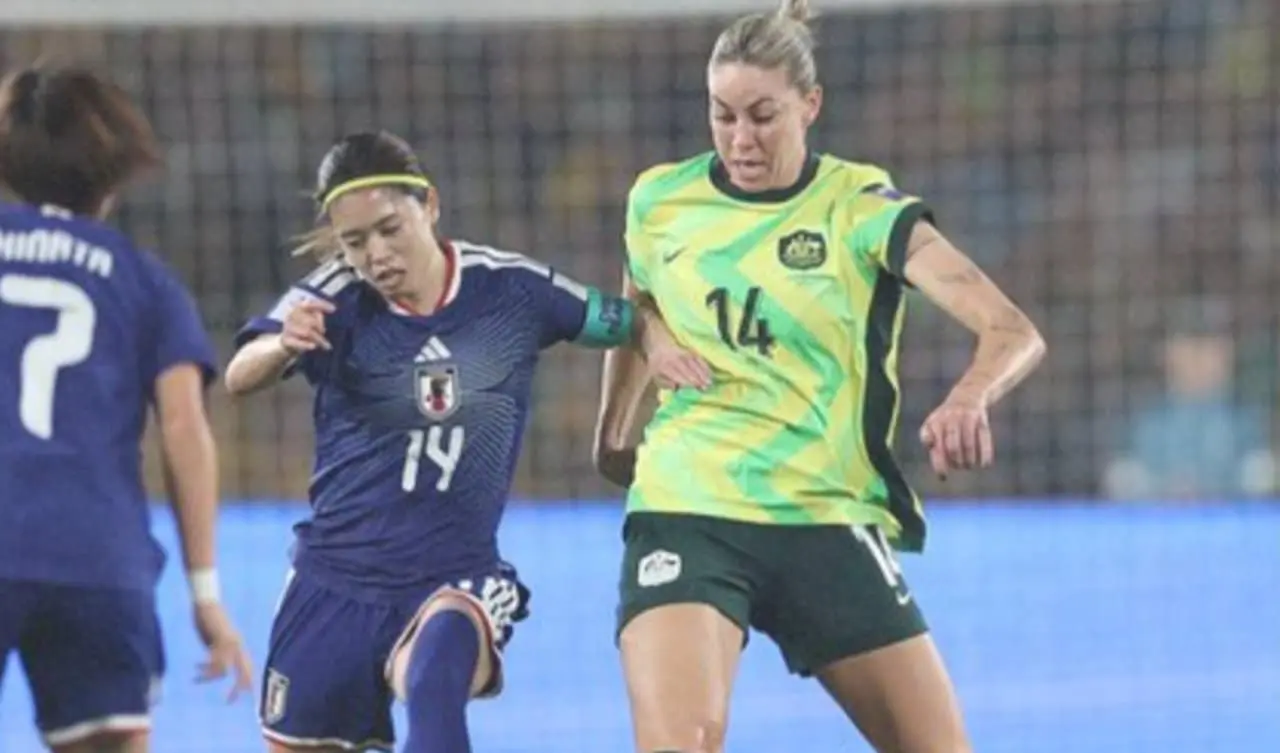
The Japão women’s football team, traditionally known as Nadeshiko Japan, secured the Copa Asiática Feminina trophy after a high-intensity clash. The team beat the host team of Austrália, nicknamed Matildas, with a tight score of 1-0 in the big decision of the continental tournament. The match took place on March 21, in a packed stadium awaiting a local celebration.
The decisive duel kept fans on alert until the final moments, with both teams demonstrating tactical rigor and physical commitment on the pitch. The only goal of the match defined the score and secured yet another important title for the Japanese federation on the international sporting scene, consolidating the country’s position as a powerhouse in Asian football.
For the Australian team, the score represented a painful setback in front of their own fans, especially after the country recently hosted Mundial. The expectation of ending the current cycle with a cup at home did not materialize, generating immediate frustration among the athletes and the public in the stands, who turned out in force to support the national team.
Tactical balance and strategies on the pitch
The confrontation began with a notable technical level from the first movements, where the Japanese defensive discipline had to deal with the offensive pressure imposed by the home team. The opening minutes were marked by a mutual study between the formations, resulting in an initial stage with no clear chances of finishing and with strong marking.
The physical intensity in midfield dictated the pace of the actions, showing that the final would be decided in detail and by taking advantage of specific opportunities. The local fans tried to push the Matildas into the attacking field, looking for a higher volume of play to break through the opponent’s block and open the scoring in the first half.
Japão adopted a more restrained stance, prioritizing quick transitions and maintaining the solidity of its marking system. Essa defensive strategy remained irreducible throughout the competition and proved its maximum efficiency precisely in the most important match of the calendar, forcing Austrália to make passing errors in the middle.
More on this story: Ruy Ramos reveals conditions imposed by the coach in the first Japanese call-up
In the second stage, the dynamics of the match underwent changes with the increase in speed at the ends, requiring even more physical preparation from the athletes involved. As australianas passaram a cruzar mais bolas na área, enquanto as japonesas aguardavam o momento exato para contra-atacar, mantendo a organização de suas linhas defensivas intacta.
Defensive performance and possession control
The victory of the Japanese team was not just a triumph of individual skill, but served as a practical demonstration of collective cohesion and tactical obedience. The Japão players displayed remarkable control of the midfield sector, using precise exchanges of passes and constant movement to wear down the opponent’s marking and create empty spaces. The ability to retain possession of the ball, combined with immediate recovery in case of loss, was a determining factor in neutralizing Austrália’s attacks and dictating the pace of the game according to the convenience of its coaching staff. Goalkeeper Ayaka Yamashita played a fundamental role in this process, guiding the defense and ensuring the necessary security in moments of greatest opponent pressure.
Although the final did not record an elastic score, the Asian team’s efficiency in the only clear chance converted into a goal was enough to guarantee the cup. The Nadeshiko Japan team demonstrated coolness under pressure, executing the game plan established in training with surgical precision. The journey to the decision was built on consistent performances against high-level opponents, proving the country’s status as one of the dominant forces in women’s football on the continent and attesting to the quality of the groundwork developed by the national federation. Experience in knockout matches weighed in favor of the Japanese, who knew how to manage the minimum advantage with professional maturity.
Frustrated attacks from the host team
The Matildas entered the field with the mission of presenting their fans with an unprecedented achievement in their domains, directly clashing with the tactical organization of the visiting team. Apesar having created the best finishing opportunities throughout the ninety minutes, the lack of precision when shooting compromised the final result and prevented the score from being changed.
The player Alanna Kennedy, who stood out as one of Austrália’s main scorers during the tournament, had a clear header in the final minutes. The finish, however, came to a crucial save by goalkeeper Ayaka Yamashita, who avoided a draw and changed the fate of the match, ensuring her goal was unbeaten.
Other offensive attempts came from key players in the squad, such as Emily Van Egmond, Mary Fowler and Torpey, who found it extremely difficult to break through the Japanese defense line. The sequence of moves included dangerous rebounds in the penalty area, but the Japão defense managed to ward off the danger on every occasion, demonstrating a high level of concentration.
Decisive moments and additions
The final stretch of the match registered a high level of tension, with Australian goalkeeper Mackenzie Arnold abandoning her goal and venturing into the opponent’s area during set pieces. The tactical desperation highlighted the home team’s urgency in finding a saving goal before the referee’s final whistle, promoting total pressure on the attacking field.
Full coverage: News (EN)
The persistence of the Matildas resulted in a corner won in added time, setting up the last valid effort of the match. The shot did not find the back of the net, sealing the defeat and ending the dream of a continental title in front of thousands of frustrated spectators in the stands, who recognized the team’s effort with restrained applause.
Asian celebration at the final whistle
In direct contrast to the local disappointment, the Japanese squad burst into celebration on the pitch as soon as the match ended. The players, visibly moved, gathered in the center of the field to celebrate the victory, sharing the moment with the coaching staff and the few visiting fans present at the stadium, who insisted on accompanying the delegation.
Lifting the trophy represented the culmination of long-term work focused on renewing and strengthening women’s football in the Japão. Cada hug between the athletes reflected the relief and joy of an achievement obtained based on discipline, strategic planning and the perfect execution of the tactical guidelines given by the coach throughout the competition.
Farewell to a sports cycle
After confirming their defeat, the Austrália team performed the traditional Olympic lap around the pitch to thank their fans for their unconditional support, creating a moment of mixed feelings for the athletes involved. Para diversas jogadoras do atual elenco, esta edição da Copa Asiática Feminina pode ter representado o último grande torneio oficial disputado em território nacional. The generation of athletes who gained prominence in the recent Mundial and who led the campaign in this continental tournament now observes a future calendar without the prospect of large-scale competitions hosted in the country. Essa reality makes the setback in the final even more sensitive for the team’s veterans, who hoped to crown their journey with a gold medal at home. The image of captain Sam Kerr after the end of the match illustrated the general feeling of a nation that had complete confidence in winning the cup. The players say goodbye to this phase with a runner-up finish that does not erase the effort shown over the years, but which leaves a gap in the Australian federation’s trophy gallery, now requiring planning focused on renewing the squad for the next international commitments and global qualifiers.
Sports development in the region
The continental tournament ended its activities leaving a mark of high competitiveness and technical evolution among the participating teams. The organization of the event served as an essential platform for the visibility of the sport, showing that teams in the Asian region are improving their training and physical preparation structures to face the biggest challenges on the global calendar, with Japão reaffirming its leadership role in this process of continuous growth.
Follow: all about Asian Cup
More news in News (EN)
See more → Samsung releases new system update with new features for Galaxy Watch 4 users
 Digital retail reduces the value of the Galaxy S25 5G smartphone with bank bonuses and device exchange
 Amazon’s wireless CarPlay adapter has a 50% discount and high approval ratings from drivers
 Zach Cregger’s new Resident Evil ignores games and focuses on an unprecedented story with new characters
 Rumor suggests that Nintendo is preparing a special edition of the Switch 2 with a remake of Ocarina of Time
 Apple accelerates production of the iPhone 17e and develops new Air model with dual camera system
 Epic Games platform releases twelve high-budget games at no permanent cost for PC users
 PlayStation 5 Pro price drop accelerates digital retail sales and eliminates global stocks
 New Galaxy Watch 9 firmware appears on server and confirms progress in software development
 Apple’s commemorative project tests cell phone with 1.1 millimeter edge and curved screen for 2027
 New Apple system update optimizes urgent task management for iPhone users
 Leak details hardware of the new portable PlayStation with superior graphics to the Xbox Series S
More news on Mix Vale
- 1Oppo officially launches the Find X9 Ultra worldwide with Hasselblad lenses and robust battery
- 2Tim Cook reveals new iPhone and iPod prototypes in celebration of Apple’s fiftieth anniversary
- 3New edition of foldable smartphone brings gold finish to Winter Games competitors
- 4Android system receives native Gemini Nano 4 integration for offline processing on smartphones
- 5Samsung updates QuickStar module and expands visual control of the panel in the One UI 8.5 interface
- 6Leak reveals Lords of the Fallen and Sword Art Online in April’s PS Plus Essential catalog
- 7New Xiaomi 18 Pro Max smartphone integrates two 200 MP cameras and latest generation processor
- 8Manufacturers update premium smartphone photo sensors with focus on zoom and artificial intelligence
- 9Apple develops new foldable iPhone and prepares special edition to celebrate 20 years of the brand
- 10Manufacturer OPPO confirms official date to reveal new Find X9 Ultra and Pro smartphones with a focus on cameras