
South Korean manufacturer announces advanced modem with satellite calling for new Galaxy cell phones

The South Korean manufacturer officially presented the hardware component responsible for integrating the brand’s future generation of mobile devices and enabling voice communication through non-terrestrial networks. The development of this technology aims to solve the problem of connectivity in remote areas that do not have coverage from traditional cell towers, allowing users to stay in touch in different situations and in places that are difficult to reach geographically.
This innovation represents a considerable technical leap compared to systems previously implemented in the global mobile phone market. Até At the moment, most off-grid connectivity solutions available on commercial appliances were strictly limited to sending short text messages to emergency services and sharing global location coordinates, with no support for real-time voice or video interactions.
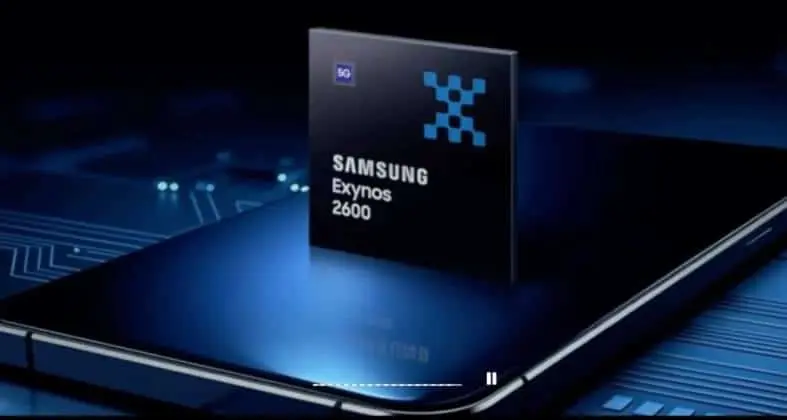
The new hardware unifies different communication standards on a single chip, optimizing the devices’ internal space and improving energy efficiency. Key features supported by the part include:
– Suporte real-time voice and video calls using low-orbit space infrastructure.
– Envio of text messages and location data with minimal bandwidth consumption.
Read also: Samsung’s New Chip Enables Satellite Voice Calling for Next Line of Smartphones
– Transmissão of high capacity data packets for continuous browsing and multimedia consumption.
The implementation of this hardware architecture must occur in conjunction with state-of-the-art processors, manufactured with extremely reduced lithography. Especialistas from the semiconductor sector point out that the separation between the communications modem and the central processing unit allows companies to maximize the performance of both parts without compromising the thermal control of high-end smartphones during intense use.
Learn more: Samsung releases new system update with new features for Galaxy Watch 4 users
Advancement in global mobile communication
The development of hardware capable of establishing direct connection with low Earth orbit satellites has become an absolute priority for the world’s main technology companies. The component recently announced by the Asian manufacturer uses the 3GPP Release 17 standard, a global technical specification that guarantees interoperability between mobile devices and space telecommunications networks. Essa padronização é fundamental para assegurar que os aparelhos funcionem de maneira confiável em qualquer região do planeta, desde desertos áridos até áreas de mar aberto, onde a instalação de antenas terrestres é inviável, perigosa ou economicamente insustentável para as operadoras locais.
The integration of three distinct non-terrestrial network standards on the same silicon demonstrates an approach focused on versatility of continuous use and signal stability. Support for transmission technologies allows the device to automatically switch between different data sending modes, depending on the user’s immediate need and signal availability at the exact time of the request. Essa fluid transition between terrestrial and space networks eliminates coverage shadow zones, providing a seamless user experience for professionals working in isolated areas, field researchers, natural disaster rescue teams and explorers.
Component technical specifications
The new modem’s manufacturing process uses 4-nanometer lithography technology with extreme ultraviolet radiation. Esse nanoscale production method allows a massive amount of transistors to be allocated in an extremely reduced physical space, optimizing the design of the cell phone’s motherboard.
The main advantage of this miniaturization is the drastic reduction in electrical energy consumption during signal search and data packet transmission operations. Componentes of communication are usually the biggest responsible for battery drain on mobile devices, especially in areas with weak signal where the device forces the device to search for networks.
By optimizing the chip’s energy efficiency, the manufacturer ensures that satellite calls can be made even when the device has critical load levels. Essa technical feature is vital in prolonged emergency scenarios, where access to electrical power sources or portable chargers is completely non-existent.
Understand the case: Samsung’s new Exynos Modem 5410 chip enables satellite voice calling on the Galaxy S line
The hardware architecture was also designed to dissipate heat more efficiently than previous generations of modems. Enhanced thermal control prevents the smartphone from overheating during heavy data transmissions, ensuring the physical integrity of internal components during prolonged calls.
Performance on high-speed networks
In addition to space communication capabilities, the hardware delivers robust specifications for everyday use in traditional 5G networks. The component is capable of achieving theoretical download speeds of up to 14.79 Gigabits per second in urban environments with ideal telecommunications infrastructure and without physical interference.
To achieve this massive data transfer rate, the system combines sub-6 GHz frequencies and short-range millimeter waves. Advanced carrier aggregation allows the device to maintain a stable, ultra-high-speed connection even in locations with high network congestion, such as crowded stadiums, international airports, and dense shopping centers.
The manufacturer also ensures full backwards compatibility with older network infrastructures, ranging from the 2G standard to 4G LTE. Essa feature ensures a smooth signal transition while the user physically moves between large technological metropolises and rural cities with telecommunications infrastructure still under development.
Data protection mechanisms
Information security has received priority attention in the development of this mobile communication hardware. The chip integrates a post-quantum hybrid encryption system and an isolated hardware-based architecture specifically designed to resist sophisticated cyberattacks and signal interceptions during packet transmission.
A dedicated security microprocessor acts completely independently to manage encryption keys and protect sensitive user and system data. Esses mechanisms defend cellular and satellite communications against future threats, establishing a new standard of privacy for the corporate and government telephony market.
Main processor architecture
The company’s engineering strategy involves pairing this external modem with the upcoming Exynos series central processing unit, which will mark the commercial debut of 2-nanometer lithography in off-the-shelf smartphones. By removing the modem from within the main processor, developers gain valuable physical space on the silicon to expand other critical areas of the chip, such as the Unidade of Processamento Neural dedicated to complex generative artificial intelligence tasks and the Unidade of Processamento Gráfico. Essa architectural separation allows the main processor, equipped with a high-performance multi-core structure, to focus exclusively on delivering maximum speed for the operating system, productivity applications and next-generation games with realistic graphics. Embora the use of an external modem may result in marginally higher energy consumption in communication between the parts of the board, the extreme efficiency of the 2 nanometer manufacturing process largely compensates for this technical difference, resulting in a device with high sustained processing capacity, without sudden drops in performance due to thermal throttling.
More on this story: Samsung Galaxy S26 revolutionizes connection with voice and video calls via satellite
Manufacturer’s market strategy
The adoption of proprietary components in high-end smartphone lines reflects the company’s industrial strategy of reducing dependence on external semiconductor suppliers and controlling the entire hardware ecosystem. The distribution of these chips usually follows a regional logistical model, being implemented first in specific markets with compatible infrastructure.
The inclusion of exclusive spatial communication technologies creates an immediate competitive advantage compared to other consolidated brands in the mobile phone sector. Analistas of the market point out that the ability to offer voice and video calls via satellite positions the hardware as an indispensable tool for consumers who demand maximum technological innovation in their daily use devices.
Availability to consumers
The commercial introduction of this advanced communications technology will occur with the launch of the brand’s next generation of mobile devices, which traditionally include different size and capacity variants. The arrival of these devices on global retail shelves will expand civilian access to non-terrestrial networks, definitively transforming the way society communicates in remote areas and redefining the geographic limits of modern cellular telephony.
More news in News (EN)
See more → Samsung releases new system update with new features for Galaxy Watch 4 users
 Digital retail reduces the value of the Galaxy S25 5G smartphone with bank bonuses and device exchange
 Amazon’s wireless CarPlay adapter has a 50% discount and high approval ratings from drivers
 Zach Cregger’s new Resident Evil ignores games and focuses on an unprecedented story with new characters
 Rumor suggests that Nintendo is preparing a special edition of the Switch 2 with a remake of Ocarina of Time
 Apple accelerates production of the iPhone 17e and develops new Air model with dual camera system
 Epic Games platform releases twelve high-budget games at no permanent cost for PC users
 PlayStation 5 Pro price drop accelerates digital retail sales and eliminates global stocks
 New Galaxy Watch 9 firmware appears on server and confirms progress in software development
 Apple’s commemorative project tests cell phone with 1.1 millimeter edge and curved screen for 2027
 New Apple system update optimizes urgent task management for iPhone users
 Leak details hardware of the new portable PlayStation with superior graphics to the Xbox Series S
More news on Mix Vale
- 1Colby Minifie confirms Ashley Barrett’s powers in The Boys season five
- 2Napoli x Milan in Serie A with confirmed lineups and where to watch live
- 3New battery test puts Galaxy S26 Ultra ahead of iPhone 17 Pro Max in global ranking
- 4Research reveals that parents are unaware of how their children use artificial intelligence
- 5Oppo officially launches the Find X9 Ultra worldwide with Hasselblad lenses and robust battery
- 6Tim Cook reveals new iPhone and iPod prototypes in celebration of Apple’s fiftieth anniversary
- 7New edition of foldable smartphone brings gold finish to Winter Games competitors
- 8Android system receives native Gemini Nano 4 integration for offline processing on smartphones
- 9Samsung updates QuickStar module and expands visual control of the panel in the One UI 8.5 interface
- 10Leak reveals Lords of the Fallen and Sword Art Online in April’s PS Plus Essential catalog