
Space agencies reveal unprecedented images of Saturn captured by the Webb and Hubble telescopes
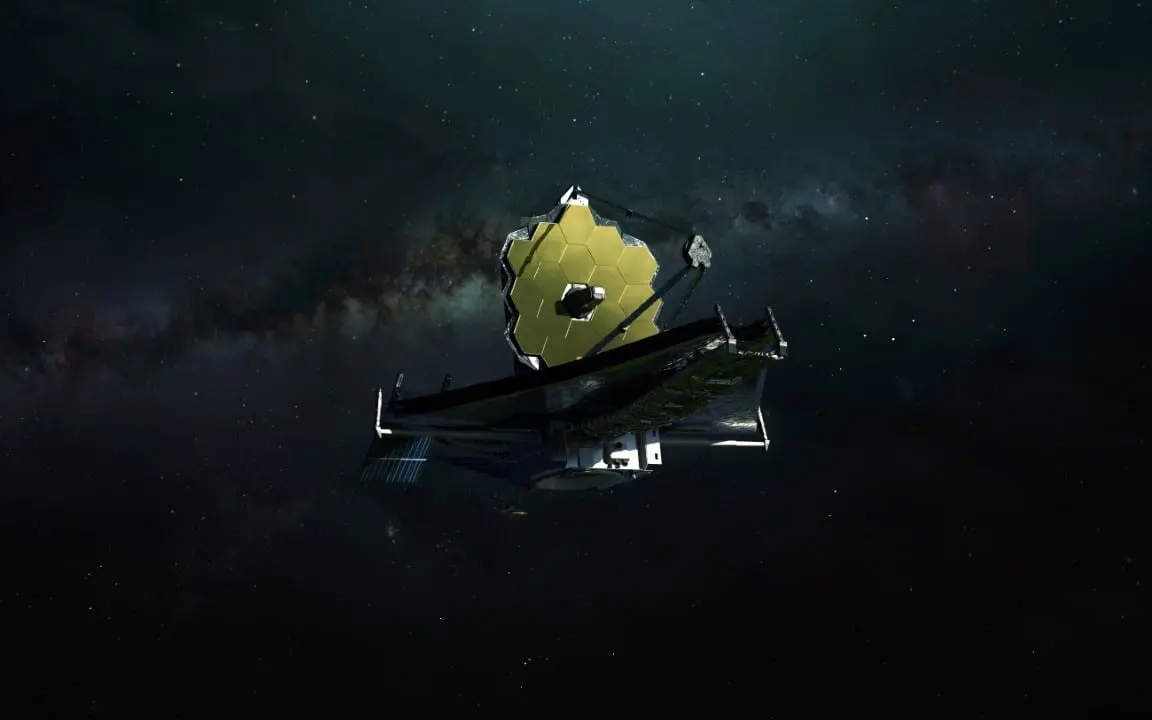
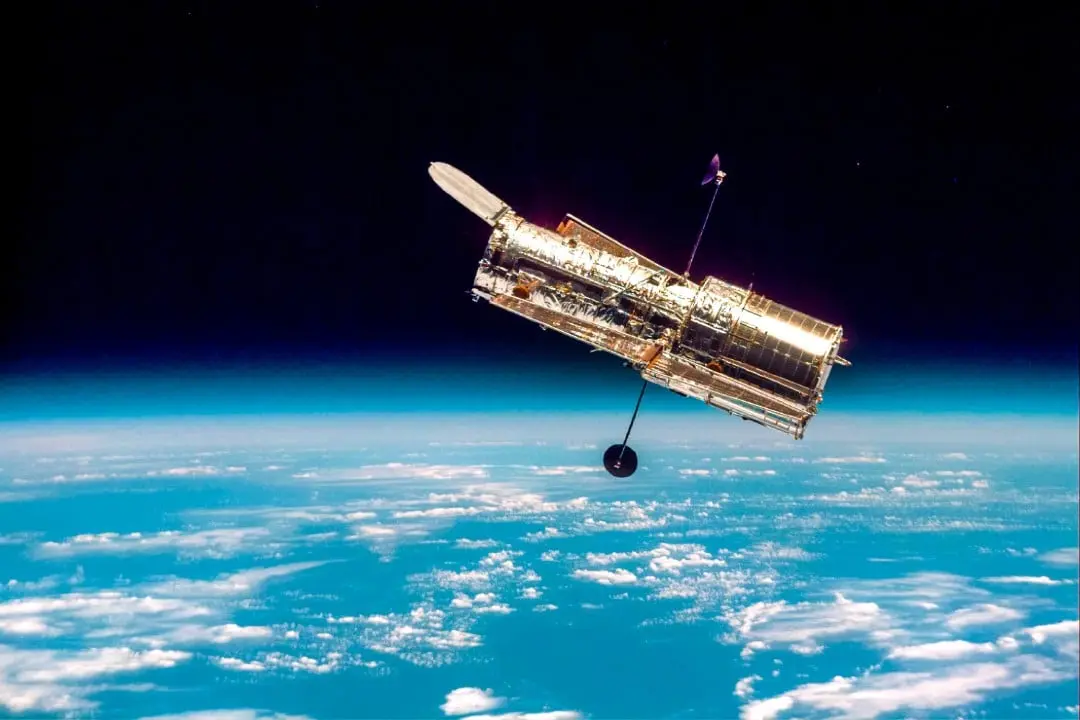
Space agencies Nasa, Esa and Csa recently made available a new set of visual records of Saturno, obtained through a joint operation between the space observatories James Webb and Coordinated work between the astronomy teams allowed data to be captured at different wavelengths, revealing unprecedented details about the turbulent atmosphere and the structure of the gas giant’s rings. The observations took place at a strategic interval of approximately 14 weeks, which allows scientists to monitor climate and seasonal changes in real time.
The combination of technologies offers a three-dimensional perspective on the planet’s chemical composition and fluid dynamics. Enquanto older equipment focuses on visible light, state-of-the-art machinery penetrates the densest layers using infrared radiation. Essa dual approach is fundamental to understanding the complex meteorological processes occurring billions of kilometers from Terra, providing a robust database for the international scientific community.
Key highlights of this new round of astronomical observations include specific technical points: – Detailed Mapeamento of cloud and mist bands at multiple altitudes; – Identificação of specific chemical compounds in the upper layers of the atmosphere; – Análise of the intense brightness of the rings, caused by the high reflectivity of pure ice; – Registro of seasonal transitions in the northern hemisphere of the celestial body. The structuring of this information allows a significant advance in the understanding of planetary physics.
These surveys are part of ongoing monitoring programs of the outer solar system, designed to create a historical archive on the evolution of the giant planets over the decades. Maintaining this data flow ensures that long-term variations are documented with pinpoint precision.
Learn more: Extreme heat from the Sun will disintegrate the third interstellar comet ever discovered
Multi-spectrum observation technology
The effectiveness of this planetary monitoring mission lies in the ability to unite two of the most powerful scientific instruments ever built by humanity. The Hubble space telescope, operating in low-Earth orbit for more than three decades, continues to provide crucial data in the visible and ultraviolet light spectrum. Suas lenses capture the subtle color variations caused by the cloud bands and photochemical mists that cover the apparent surface of Saturno, allowing the identification of surface storms and changes in the circulation of equatorial winds.
In contrast, the James Webb observatory, positioned at Ponto of Lagrange L2, uses its sophisticated infrared sensors to see beyond opaque cloud cover. The thermal radiation captured by its hexagonal mirrors reveals the thermal structure of the atmosphere, identifying convection currents and the distribution of hydrocarbons. Quando the data from both equipment are superimposed, the researchers obtain a complete atmospheric model, capable of demonstrating how solar energy interacts with gases at different levels of pressure and depth.
Climate dynamics and season transition
Saturn has an axial tilt similar to that of Terra, which results in the occurrence of well-defined seasons, although each lasts about seven Earth years due to its extensive orbit around Sol. The most recent images document the planet during the final phase of summer in its northern hemisphere, a period characterized by specific warming patterns.
Scientists closely observe changes in the color of atmospheric bands as the planet approaches the equinox. Durante this transition, the incidence of sunlight alters the production of aerosols in the stratosphere, modifying the global appearance of the gas giant and influencing the formation of polar vortices.
Understand the case: Extreme heat from the Sun threatens to destroy rare interstellar comet 3I/ATLAS
The 14-week interval between captures of Hubble and Webb proved to be the ideal time to record the evolution of local storms. Jet streams, which reach supersonic speeds, move these meteorological formations quickly, requiring constant monitoring to map their trajectory and dissipation.
Composition and brightness of the ring system
One of the most striking aspects of the new images is the extreme brightness of the Saturno ring system when observed in the infrared spectrum. Essa intense luminosity occurs because the frozen water particles that make up the rings reflect radiation highly efficiently at this specific wavelength.
The clarity achieved by the instruments makes it possible to distinguish the classic divisions between the main rings, as well as identify variations in the density of the orbital material. Researchers use this information to calculate the degradation rate of the rings, which continually lose mass due to gravitational attraction and the planet’s magnetic field.
The observations also help map the distribution of dust and rocks mixed with the ice. Elementos complex organics, although present in smaller quantities, alter the spectral signature of the rings, providing clues about the origin of this system and possible comet impacts in the distant past.
Furthermore, the interaction between sunlight and ice particles generates unique optical phenomena that vary depending on the viewing angle of the probes and telescopes. Continuous monitoring of these brightness changes is essential for refining physical models of orbital dynamics.
More on this story: NASA’s Hubble Telescope observes comet with unprecedented inverted rotation
Auroral phenomena in polar regions
Captures focused on the poles of Saturno revealed grayish and greenish tones that indicate intense magnetic activity. Esses visual patterns are directly linked to the formation of auroras, phenomena generated when charged particles from the solar wind collide with gases in the upper atmosphere, guided by the planet’s strong magnetic field.
The hexagonal structure present at the north pole, a gigantic geometrically shaped storm maintained by jet streams, was also recorded with unprecedented clarity. The thermal analysis of this region helps to explain how this formation remains stable over decades, resisting the violent turbulence that characterizes Saturnian meteorology.
Monitoring neighboring moons
The expanded field of view of space telescopes has allowed simultaneous recording of some of the major moons orbiting Saturno. Titã, the system’s largest natural satellite and the only celestial body besides Terra to have stable liquids on its surface, appears as a prominent point in the wide-field images.
The joint observation of the planet and its moons provides valuable context about the gravitational interactions in the Saturnian system. Studying the light reflected by these satellites helps calibrate instruments and provides preliminary data on the composition of their icy surfaces and nitrogen-rich atmospheres.
On the same topic: Hubble captures complex filamentary structure and unique dust lane in galaxy NGC 4696
Importance to modern astrophysics
The compilation and processing of data from multiple observatories represents a qualitative leap in contemporary astrophysical research methodology. By crossing information from visible, ultraviolet and infrared light, the scientific community is able to build highly accurate computer simulations on the formation and evolution of gas giants, not only in our solar system, but also in recently discovered exoplanetary systems. Saturno functions as a natural laboratory on a colossal scale, where theories about hydrodynamics, plasma chemistry and orbital mechanics can be tested and validated against rigorous empirical observations. The success of this joint observation campaign reinforces the need to maintain continuous investments in space infrastructure, ensuring that complementary telescopes operate simultaneously to cover the individual technical limitations of each equipment. The raw data generated by these missions is integrated into global public archives, allowing independent researchers and academic institutions around the world to perform data mining in search of atmospheric anomalies or new smaller satellites that may have gone unnoticed in initial analyses.
Planning future space missions
The discoveries provided by these detailed images serve as a fundamental basis for the design of future interplanetary probes. Precise mapping of atmospheric conditions and ring density guides space engineers in defining safe routes and selecting suitable scientific instruments for upcoming robotic expeditions planned to explore the Saturno system in the coming decades.
More news in News (EN)
See more → Samsung releases new system update with new features for Galaxy Watch 4 users
 Digital retail reduces the value of the Galaxy S25 5G smartphone with bank bonuses and device exchange
 Amazon’s wireless CarPlay adapter has a 50% discount and high approval ratings from drivers
 Zach Cregger’s new Resident Evil ignores games and focuses on an unprecedented story with new characters
 Rumor suggests that Nintendo is preparing a special edition of the Switch 2 with a remake of Ocarina of Time
 Apple accelerates production of the iPhone 17e and develops new Air model with dual camera system
 Epic Games platform releases twelve high-budget games at no permanent cost for PC users
 PlayStation 5 Pro price drop accelerates digital retail sales and eliminates global stocks
 New Galaxy Watch 9 firmware appears on server and confirms progress in software development
 Apple’s commemorative project tests cell phone with 1.1 millimeter edge and curved screen for 2027
 New Apple system update optimizes urgent task management for iPhone users
 Leak details hardware of the new portable PlayStation with superior graphics to the Xbox Series S
More news on Mix Vale
- 1Oppo officially launches the Find X9 Ultra worldwide with Hasselblad lenses and robust battery
- 2Tim Cook reveals new iPhone and iPod prototypes in celebration of Apple’s fiftieth anniversary
- 3New edition of foldable smartphone brings gold finish to Winter Games competitors
- 4Android system receives native Gemini Nano 4 integration for offline processing on smartphones
- 5Samsung updates QuickStar module and expands visual control of the panel in the One UI 8.5 interface
- 6Leak reveals Lords of the Fallen and Sword Art Online in April’s PS Plus Essential catalog
- 7New Xiaomi 18 Pro Max smartphone integrates two 200 MP cameras and latest generation processor
- 8Manufacturers update premium smartphone photo sensors with focus on zoom and artificial intelligence
- 9Apple develops new foldable iPhone and prepares special edition to celebrate 20 years of the brand
- 10Manufacturer OPPO confirms official date to reveal new Find X9 Ultra and Pro smartphones with a focus on cameras