

Researchers have identified an extremely massive and compact object that does not emit visible light and has a high density. The detection occurred through the distortion caused in light from distant sources, a technique known as gravitational lensing. Especialistas consider that the finding could represent an important piece in understanding dark matter, an invisible substance that accounts for a large part of the mass of the universe and influences the movement of galaxies.
The celestial body defies conventional explanations about the formation and evolution of cosmic structures. Sua presence was inferred from data processed with high precision by orbiting instruments and ground-based observatories. The scientific community is following the case closely, as it can connect current observations to conditions in the early universe.
- Millimeter precision in locating masses without their own emission of light.
- Measurement of total mass through the curvature of the light path.
- Exploration of distant regions that appeared empty in previous analyses.
Detection by gravitational lensing advances research
The gravitational lensing technique acts as a natural magnification caused by the intense gravity of the object. Ela allows you to calculate the mass without the need for direct emission of detectable radiation. Processamento Advanced imaging filtered noise and isolated the characteristic signal from distortion.
This approach has already been applied to other systems, but the current case stands out due to the combination of high mass and total absence of brightness. The data indicates that the object is in a position that significantly affects the light from background galaxies. Pesquisadores refine mathematical models to confirm initial measurements.
Suspicion about primordial black holes gains strength
The object presents characteristics compatible with bodies formed in the initial moments after Big Bang, from density fluctuations in the primordial plasma. Diferente of stellar black holes, these candidates would arise in extreme conditions of the young universe. The hypothesis gains relevance because such bodies could explain part of the invisible mass that holds galaxies together.
Observations of galactic rotation and the distribution of large-scale structures already point to the need for additional matter. If confirmed as a primordial black hole, the finding would help validate models of cosmic inflation and early evolution. The high density and compact size reinforce this possibility to the detriment of other explanations.
- Identification of gravitational seeds that influenced the formation of the first stars.
- Validation of simulations on the behavior of matter at high initial densities.
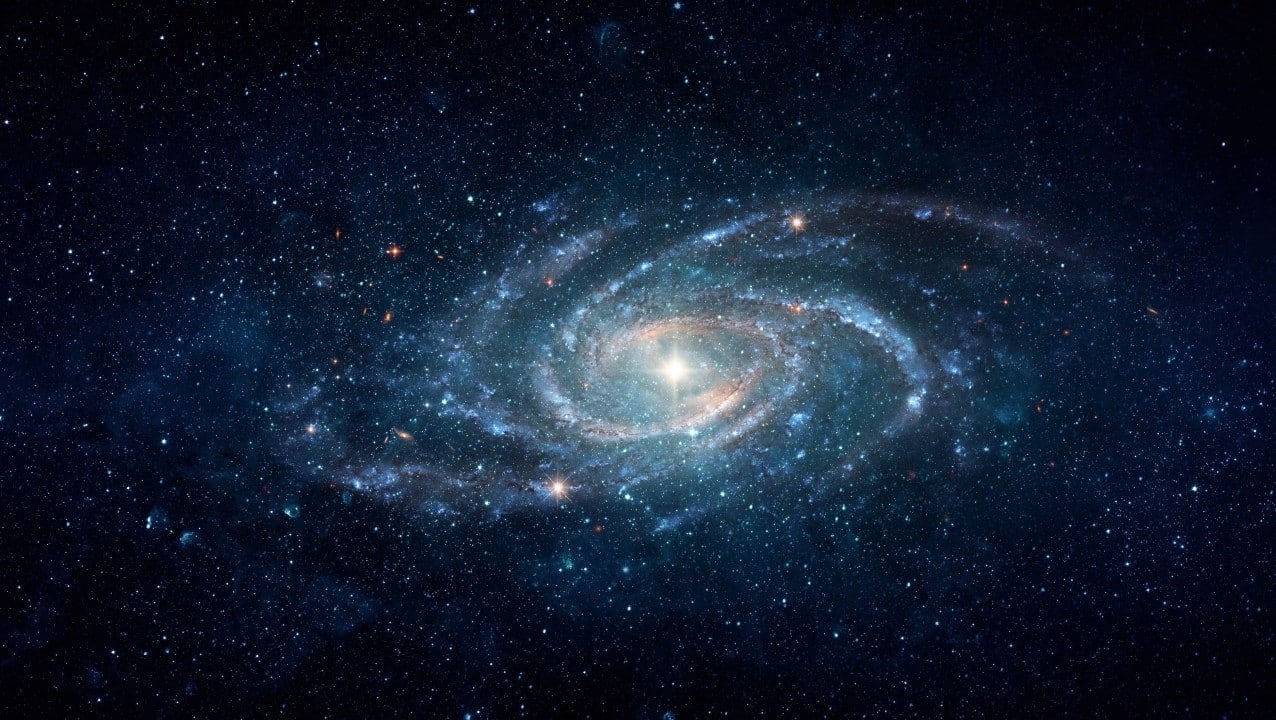
- Contribution to explaining velocities observed at the edges of spiral galaxies.
Next steps involve crossing data from multiple observatories
Analysts are now comparing information from different telescopes to rule out alternatives such as isolated neutron stars or other mass wandering bodies. Verification requires alignment between independent data sets obtained in different spectrum bands. Essa This step is essential to elevate the finding from suspicion to consolidated evidence.
The process requires time and high computational resources, as it involves filtering rare signals in extensive volumes of information. Equipes international participants participate in the collaborative analysis to increase the robustness of the results. Continuing monitoring should bring more clarity about the exact nature of the detected object.
Benefits of technology applied to observation
The use of sophisticated algorithms made it possible to separate the gravitational effect from common environmental interference. Equipamentos space contributed superior resolution at specific wavelengths. The combination of terrestrial and orbital sources increased the reliability of preliminary conclusions.
This technological integration represents an advance in the ability to detect invisible masses at cosmological distances. Futuras Observations with more sensitive instruments can map similar objects in other regions of the sky. The method paves the way for cataloging additional candidates more efficiently.
Comparative analysis rules out conventional explanations
Theoretical models were tested against the observed distortion profile and calculated mass. Nenhuma of hypotheses based on known objects fit perfectly to the extracted parameters. The persistence of the signal after multiple verifications reinforces the need to consider primordial origins.
Teams review past observation records to look for similar patterns that may have gone unnoticed. The refinement of calculations continues to reduce margins of uncertainty. Esse collective effort seeks to position the find within the broader context of current cosmology.
Importance of the finding for cosmological models
The compact, dark object offers an opportunity to test predictions about the distribution of mass in the early universe. Sua existence would align observations with simulations that predict formation of structures from dense seeds. Additional Dados will help quantify the possible contribution to the total invisible component.
The detection stimulates discussions about how gravity acted in the most remote phases of cosmic expansion. Pesquisadores adjust parameters in existing models to incorporate the new candidate. Continuing studies should generate publications that detail the implications for the general understanding of the composition of the cosmos.
Verification requires patience and high-precision tools
Recording rare events in the cosmos demands prolonged observations and cross-references between global networks. Qualquer Definitive conclusion depends on repetition of consistent signals in different conditions. The community maintains strict protocol to avoid hasty interpretations.
Advances in sensors and data processing speed up the analysis cycle, but still require cross-validation. Projetos Futures with greater sensitivity promise to increase the volume of similar detections. Gradual progress consolidates knowledge about phenomena that shape the observable architecture of the universe.



