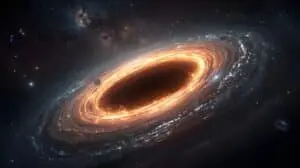
Milky Way’s black hole controls giant cosmic structures in perfect alignment
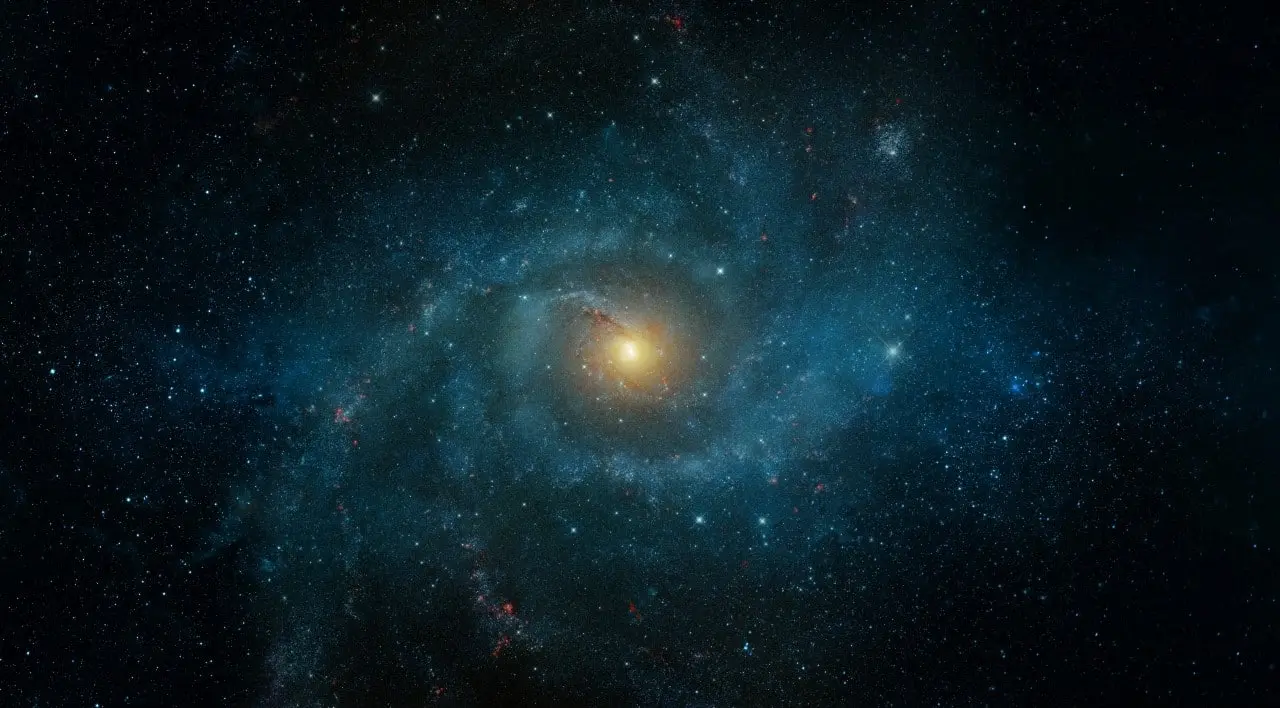
Astrônomos discovered colossal cosmic formations oriented with geometric precision toward Sagitário A*, the supermassive black hole at the heart of Via Láctea. The structures, mapped using global networks of radio telescopes, span tens of thousands of light years and converge on the galactic core. The non-random alignment reveals complex physical processes that rewrite previous models about galactic dynamics. Pesquisadores from multiple institutions independently confirmed the measurements. The finding suggests that the gravitational influence of the four-million-solar-mass black hole reaches regions much further away than previously imagined.
Dimensões that defy human understanding
The detected formations have scales that transcend any terrestrial reference. Cada structure extends tens of thousands of light years across intergalactic space, with density and composition varying depending on proximity to the central black hole. Simulações computational data indicates that these configurations took millions of years to reach their current state. Modern telescopes can detect the residual glow of these clusters using infrared radiation and radio waves, allowing mapping of details previously invisible to previous instruments.
On the same topic: Astronomers finally detect wind from the black hole at the center of the Milky Way after 50 years of searching
Astronomers measured orbital speeds and motion patterns that converge on a single point: the four-million-solar-mass black hole. Estudos spectroscopic images indicate that the constituent material of these structures has undergone gravitational acceleration over extraordinary periods. The composition includes intergalactic gas, cosmic dust and dark matter in varying concentrations. Modelos mathematicians predict that only such extreme gravitational influence could maintain such geometric alignment.
Full coverage: Latest News (EN)
Impacto on Understanding the Galaxy
The discoveries significantly expand knowledge about dynamic processes in the galactic nucleus. Previous Observações confirmed the existence of Sagitário A*, but its impact on large-scale structures remained partly mysterious. The new data connects the black hole to phenomena observable at much greater distances than previously thought. Essa connection suggests that the black hole’s gravity influences regions of the galaxy previously considered independent. Astrônomos now re-examines historical data in light of this new understanding.
Previous Observações of gas filaments and star clusters take on new significance with alignment discovered. The standard allows recalculation of the total masses involved and revises previous estimates of galactic dynamics. The observed structure implies a degree of symmetry and order that previous models did not fully predict.
See Also



More on this story: US study identifies cosmic winds emanating from the supermassive black hole Sagittarius A* in the Milky Way
Tecnologia and advanced observational methods
- Redes from globally distributed radio telescopes with milliarcsecond resolution.
- Interferometria enabling structure mapping in unprecedented detail.
- Satélites in Earth orbit capturing data at infrared wavelengths.
- Algoritmos of artificial intelligence improving the quality of reconstructed images.
- Câmeras infrared sensors detecting thermal emission from gas heated to temperatures millions of times higher than the solar surface.
- Espectroscopia revealing chemical signatures to identify specific elements.
- Análise of Doppler measuring radial speeds to the nearest kilometer per second.
The researchers validated each measurement through repeated observations over different periods. Instrumentos specialists measured magnetic fields present in the structures. Polarization Dados provided information about local magnetic fields and their interaction with cosmic material. Signal processing with advanced algorithms made it possible to extract information previously hidden in raw data.
Investigações future and international collaborations
Observatórios under construction will promise even higher resolution in the coming decades. Telescópio Espacial James Webb will contribute complementary far-infrared observations. Redes expanded radio telescopes will provide more complete three-dimensional data on the structures. Magnetohydrodynamic fluid dynamics Simulações will test theoretical models against concrete observations. International Equipes coordinate efforts to consolidate data from multiple observatories into a unified database, involving institutions on six continents.
Investigadores plan to look for similar structures in other nearby galaxies to determine whether the pattern is universal or specific to Via Láctea. Modelos theories make rapid progress based on new observational data. Publicações in specialized journals will present full analyzes in the following months. International Conferências will dedicate special sessions to the topic. Estudantes postgraduate students develop projects focused on specific aspects of discoveries, expanding scientific knowledge about the dynamics of supermassive black holes and their influence on cosmic scales.
Learn more: New discoveries from the James Webb Telescope indicate that supermassive black holes arose before galaxies