

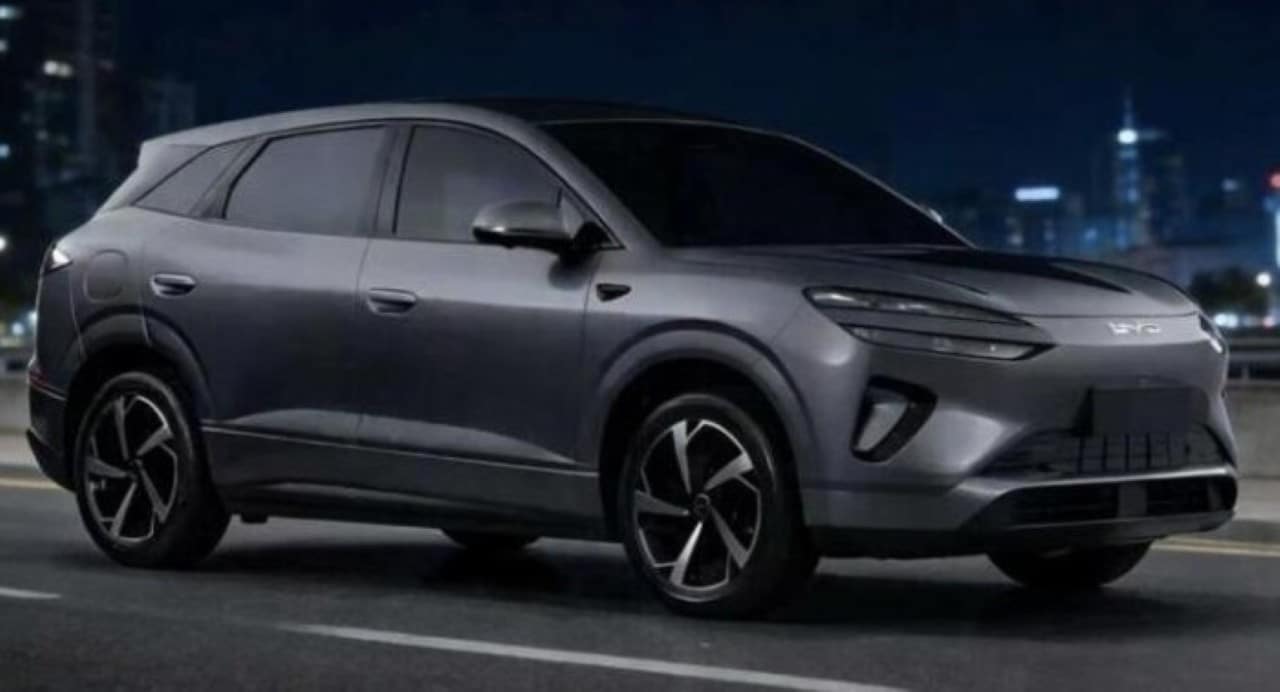
Chinese manufacturer BYD has implemented a new industrial strategy focused on component standardization to reduce production costs for its global fleet. The automaker started to use a single electric engine block to equip everything from more affordable urban vehicles to high-performance models. The decision centralizes the assembly on the TZ200XYAT propellant. The movement allows us to optimize manufacturing resources and maintain competitiveness in the international market. The initiative’s main objective is to democratize access to advanced electrification technologies for a broader consumer audience.
The transition process took around two years to complete and was made official with the registration of the component in Ministério of Indústria of China. The engine will be installed in at least six different cars in the company’s current lineup. The commercial results at Espanha during the first quarter of 2026 already reflect the effectiveness of this cost reduction policy. Standardization has a direct impact on the purchasing power of European drivers. Modular engineering transforms the brand’s manufacturing and distribution dynamics.
Especificações techniques and capacity of the new propellant
The TZ200XYAT engine represents a significant advance in terms of energy efficiency and versatility for the automotive sector. Trata is a permanent magnet synchronous thruster. Essa configuration is considered the current industry standard for medium and high-performance electric vehicles. The nominal power of the equipment is 120 kW, which is equivalent to 163 horsepower. Maximum power reaches 240 kW, or 326 horsepower. Essa wide capacity margin allows the same part to meet completely different acceleration requirements.
The component architecture is fully compatible with the 800 volt platform developed by BYD itself. The system also supports Megawatt Flash Charge technology. Esse ultrafast charging protocol gains prominence because the motor windings themselves help manage input current. The process considerably speeds up the time needed to recharge the battery at public stations.
In deeper technical aspects, the engine incorporates a direct cooling system. The structure features ten-layer flat wire stator windings and 0.2 millimeter thick silicon steel blades. Sensores lightweight eddy current and variable flux motors work together to optimize power consumption under partial loads. Essas technical characteristics place the block at a high level of modernity. The onboard technology matches or even surpasses the systems found in premium European electric cars.
Brand Veículos equipped with unified component
Documentos regulations confirm the integration of the TZ200XYAT engine in several cars in the BYD catalog. The application covers models from the Dynasty and Ocean series. Esses vehicles have starting prices in the range of 100 thousand yuan in the Chinese market. The value corresponds to approximately 12 thousand to 13 thousand euros. The automaker’s strategy proves that a central component can serve multiple purposes. Flexibility ranges from basic utility vehicles to luxury sedans.
The adaptive use of the engine supports the Asian manufacturer’s aggressive pricing policy. Modular engineering proves its direct influence on reconfiguring the global automotive market. The six confirmed models that already use this standardized engine have specific calibrations for each proposal.
- BYD Seal 07 EV: The midsize sedan operates with 240 kW of power and offers the inclusion of an optional LiDAR sensor on the roof for driving assistance systems.
- BYD Seal 06 GT: The vehicle reaches 326 horsepower with a single rear engine. The model surpasses previous 165 kW versions and appears as a strong candidate to reach Europa in 2026.
- BYD Seal 06 EV: The car has two different factory calibrations. The top-of-the-line version delivers 240 kW, while the entry-level model works with 120 kW.
- BYD Qin Max: The restyled version of the Qin L EV for 2026 uses the maximum capacity of 240 kW. The sedan is part of the brand’s traditional Dynasty family.
- BYD Ti3: The car replaces the old 170 and 200 kW engines with the new 326 horsepower unit. The design maintains an auxiliary engine at the front.
- BYD Han EV: The very high performance version combines two units of the same engine. The all-wheel drive configuration achieves an impressive 580 kW, equivalent to 788 horsepower.
Industrial standardization guarantees BYD substantial savings at various stages of the production process. Cost cuts occur in development, parts validation, tool purchasing, negotiation with suppliers and after-sales service. The real difference between a popular car and a luxury model from the brand is no longer the mechanical component itself. The difference becomes the number of engines installed, the electronic integration and the level of finish. The business model refers to practices established by other traditional automakers with combustion engines, but innovates by applying the concept to high-power electric drives.
Impacto commercial and sales growth at Europa
Most Chinese models are not yet officially sold on the European continent. However, the impact of the parts unification strategy is already visible in the financial and commercial balance sheets. The new engine was introduced on the assembly lines about five months ago. The relevance of this structural change gains strength with recent numbers released by BYD’s subsidiary Espanha. Data for the first quarter of 2026 attests to consumer acceptance and the effectiveness of the approach in the real world.
Entre In the months of January and March 2026, BYD registered 2,956 fully electric cars in Spanish territory. The volume guaranteed the brand a 13.7% share of the market for vehicles powered exclusively by batteries. Commercial performance represents a significant increase compared to previous periods of low penetration. Atualmente, the Asian manufacturer occupies the position of second largest electric vehicle brand in the Iberian country. The rapid rise allowed us to surpass traditional and consolidated competitors in the region.
The BYD Dolphin Surf model illustrates the success of the European operation. The car was launched at the end of last year with a starting price of 19,990 euros. The vehicle ended the quarter with 1,002 units delivered to Spanish customers. Trata is the first car outside the Tesla ecosystem to surpass the mark of a thousand units sold in a single quarter at Espanha. BYD’s general director for Espanha and Portugal, Alberto of Aza, set an ambitious goal of reaching 50,000 registrations by the end of 2026. The executive ruled out opening a factory on Spanish soil. The priority for local production continues to be concentrated at the Hungria industrial unit.
The Chinese brand’s aggressive move provoked immediate reactions from established competitors. The Stellantis group, for example, recently launched the Leapmotor B05 model. The vehicle manufactured by Espanha arrived at dealerships with a suggested price of 19,500 euros. The initiative works as a direct commercial response to the growth of the Dolphin Surf in the compact electric segment.
Próximos steps of the automaker and innovations for the future
BYD’s expansion in the European market with new engine technology still carries some strategic uncertainties. The first question involves the official launch schedule on the continent. The current line of vehicles offered at Espanha includes models such as Dolphin, Dolphin Surf, Atto 2, Atto 3, Seal and Seal U. Todos these cars still use engines from previous generations. The Spanish subsidiary has not confirmed exact dates for the fleet’s complete transition to the new standardized block. Especialistas points to the BYD Seal 06 GT as the most likely candidate to debut the component in the Europa in 2026.
The second point of attention falls on the technological innovations that the company is preparing for the short term. Durante At the last shareholders’ meeting, the company’s president and executive director, Wang Chuanfu, promised to present news to the market throughout 2026. Detalhes specifics about the projects were kept confidential to avoid leaking information to rival automakers. The brand had already announced the development of ultra-fast charging systems with a capacity of up to 1,000 kW. Power is equivalent to one megawatt per charging socket.
The TZ200XYAT engine leaves the factory with native compatibility for this extreme energy specification. Integration occurs through Megawatt Flash Charge technology. Maintaining Chinese quality standards in European operations changes the competitive scenario structurally. The standardization of engines combined with the continued use of Blade batteries guarantees BYD ample financial margin to apply further price cuts. The reduction in values at Spanish and European dealerships is happening at an accelerated pace that defies the projections of local manufacturers.