

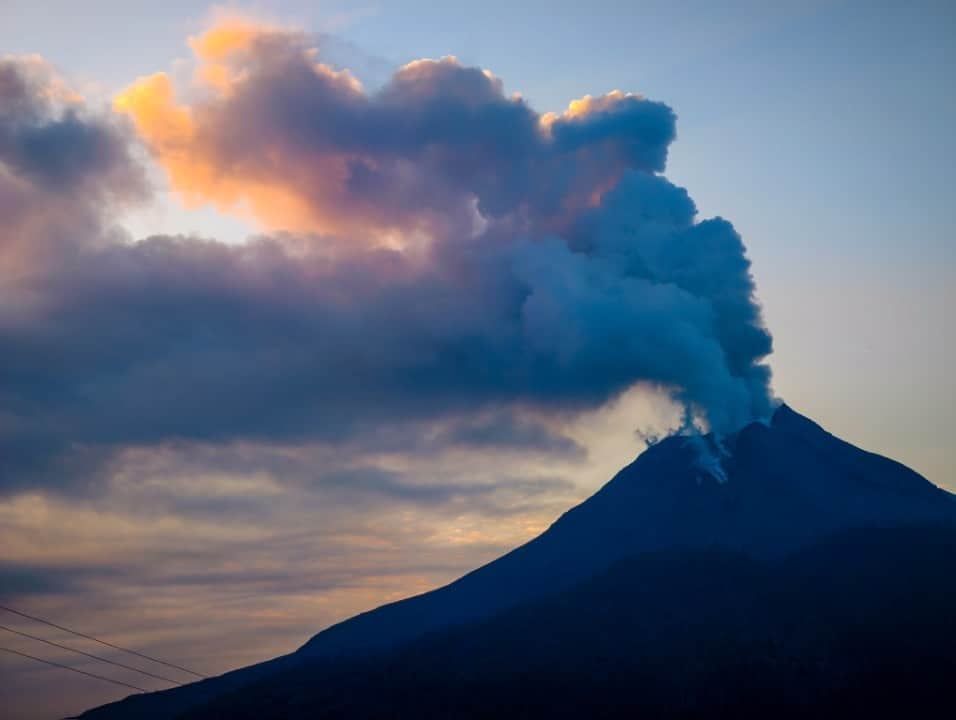
The massive eruption of the submarine volcano Hunga Tonga-Hunga Ha’apai, which occurred at Oceano Pacífico in January 2022, generated atmospheric consequences that continue to be mapped by the scientific community. A study published in May 2026 in the academic journal Nature Communications revealed that the natural event released chemical substances capable of breaking down methane molecules present in the air. Researchers identified an extensive cloud of formaldehyde, a direct byproduct of gas degradation, that formed shortly after the main explosion.
The phenomenon demonstrates how extreme geological events can temporarily alter the chemical composition of the stratosphere and interfere with the concentration of greenhouse gases. The discovery occurred based on the analysis of satellite data, which made it possible to track the movement of volcanic plumes around the globe. The large-scale methane oxidation process opens new fronts of investigation into the climate dynamics of Terra and fuels the debate about possible artificial interventions in the climate.
Monitoramento orbital details chemical reaction in stratosphere
Identification of the chemical process depended on the use of Terra’s advanced observation instruments. Scientists used information collected by the Sentinel-5P satellite, which monitors the composition of the atmosphere and tracks the presence of various gases in real time. The orbital equipment recorded the formation and displacement of the formaldehyde cloud with high precision. The shock wave generated by the eruption circled the planet twice completely and spread the volcanic compounds across vast geographic regions.
Researcher Martin van Herpen, representing the organization Acacia Impact Innovation, led the team responsible for decoding the satellite’s raw data. The working group counted on the collaboration of experts from Instituto Real Belga of Aeronomia Espacial and Universidade of Utrecht. The joint analysis confirmed that the formaldehyde cloud remained detectable in the atmosphere for more than ten consecutive days after the volcanic event.
The investigation detailed the exact mechanics of the reaction. The Hunga Tonga-Hunga Ha’apai volcano ejected approximately 58,000 tons of chlorine mixed with water vapor. Solar radiation interacted with this mixture and formed highly reactive chlorine radicals. Esses free atoms directly attacked the suspended methane molecules, breaking their structure and generating formaldehyde as a result visible to the satellite’s sensors.
Impacto directly on global greenhouse gas levels
Methane has a significantly greater heat retention capacity than carbon dioxide. The gas traps around 80 times more heat in the atmosphere over a 20-year period, making it a key target for global warming mitigation policies. The reduction in its concentration, even if temporary, generates measurable effects on short-term atmospheric temperatures. The eruption at Pacífico Sul acted as a natural laboratory to observe the destruction of this compound.
The numbers collected by the study measure the magnitude of the chemical event. The atmospheric cleaning process reached global proportions in a matter of hours. The data extracted from the research points to specific metrics on the speed and scope of the reaction:
- The chemical degradation reaction began less than an hour after the initial volcanic explosion.
- The formaldehyde cloud reached an altitude of 30 kilometers in the stratosphere.
- The concentration of the byproduct peaked at 12 parts per billion (ppb).
- At its peak, around 9,000 tons of methane were destroyed per day.
The amount of methane eliminated daily during the peak of the reaction is equivalent to the emissions generated by approximately 200,000 head of cattle. The total volume of gas processed by the volcanic cloud temporarily altered regional measurements over Oceano Pacífico. Scientists compared readings from Sentinel-5P with previous atmospheric models to confirm that the drop in methane levels was a direct and exclusive consequence of the volcano’s plume.
Magnitude of eruption and dispersion of compounds
The Hunga Tonga-Hunga Ha’apai explosion ranks as one of the most powerful volcanic events recorded in recent history. The column of ash, gases and water vapor exceeded 64 kilometers in height, breaking the limits of the mesosphere. The massive injection of material at such high altitudes allowed chemical compounds to travel via high-speed air currents, spreading chlorine radicals over a much larger area than would occur in a smaller eruption.
The presence of seawater was a determining factor for the scale of the reaction. As it is an underwater volcano, the interaction of the incandescent magma with the ocean generated a colossal amount of steam. Esse vapor acted as a catalyst for subsequent chemical reactions in the stratosphere. The specific combination of altitude, solar radiation, and humidity created the exact conditions for volcanic chlorine to become an atmospheric cleaning agent.
The researchers observed that the efficiency of the process gradually decreased as the cloud dispersed and the chlorine radicals stabilized. The ten-day observation window provided enough data to model the chemical behavior of the atmosphere under extreme stress. The information collected is now part of global databases on climate dynamics and serves as the basis for more accurate computer simulations.
Riscos climate change and the debate on artificial interventions
The discovery reignited discussions about geoengineering, a theoretical field that proposes the intentional manipulation of Earth’s climate to combat global warming. Alguns researchers suggest that artificially dispersing iron or chlorine compounds over the oceans could replicate the volcano’s effect and accelerate the destruction of methane. The technique would seek to imitate the natural process documented by Nature Communications to reduce the planet’s average temperature.
Especialistas from the climate area warns of the dangers of such interventions. Pete Edwards, Universidade scientist from York, expressed concern about geoengineering proposals based on the injection of chemicals. Ele pointed out that the artificial release of free radicals can alter the dynamics of air currents and cause irreversible damage to the ozone layer. The complexity of the atmosphere makes it impossible to predict all the side effects of an action on a global scale.
The scientific community maintains the consensus that the direct reduction of industrial and agricultural emissions remains the only safe method for controlling global warming. The Hunga Tonga-Hunga Ha’apai event demonstrated nature’s ability to process greenhouse gases, but it also highlighted the fragility of Terra’s chemical balance. Studies on the eruption are ongoing to map the long-term impacts of water vapor injection into the stratosphere.