

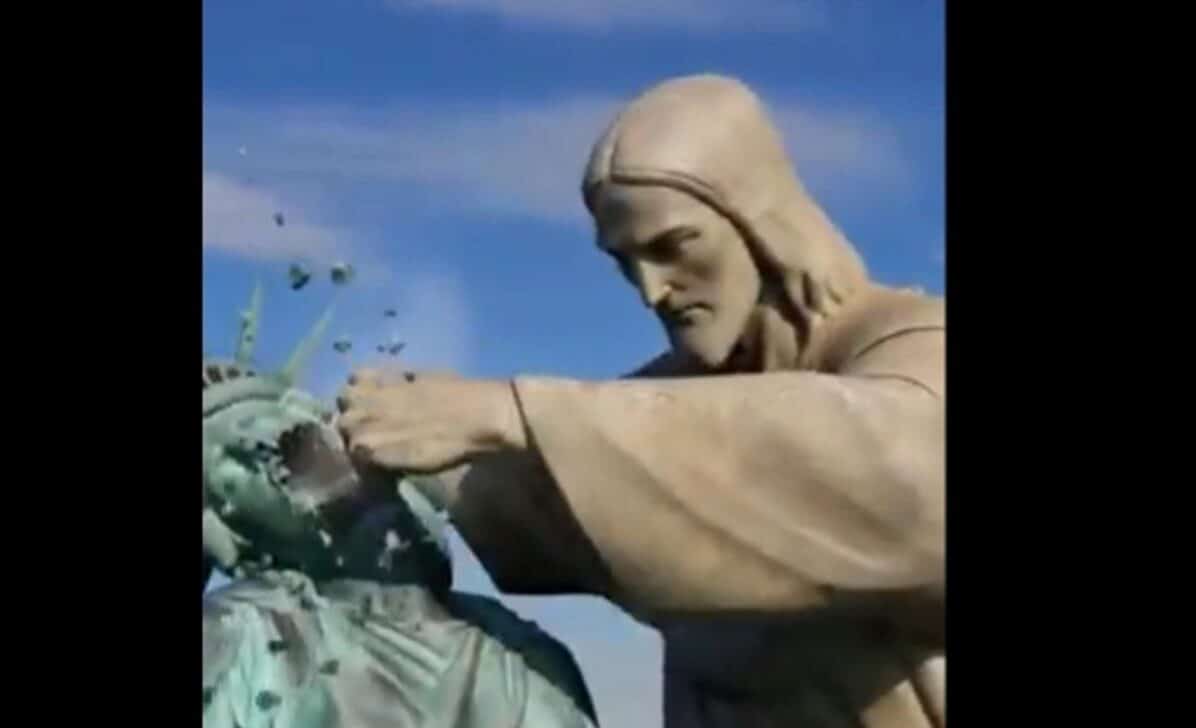
The diplomatic representation of Irã at Tunísia released an animation generated by artificial intelligence that simulates a physical clash between two of the most famous monuments in the world. The material published on June 1, 2026 shows Cristo Redentor, located in Rio of Janeiro, in a direct dispute against Estátua of Liberdade, symbol of Nova York. The sequence of virtual images culminates with the Brazilian structure knocking the North American figure down the hill. The content quickly circulated on social media and generated debates about the use of digital tools in communication between countries.
The approximately 25-second video was shared on the embassy’s official profile on platform X. The publication’s caption carries a symbolic message focused on the confrontation between opposing world views. Representantes Iranians described the fictional scene as a visual representation of faith’s victory over imperialism. The post comes at a time of realignment of global forces and diplomatic discussions involving the Brasil, the Estados Unidos and Oriente Médio nations.
Animação digital details confrontation at the top of Corcovado
The development of the material required the use of advanced artificial intelligence platforms to create fluid movements in concrete and metal structures. Cristo Redentor starts the recording maintaining his classic pose with open arms. Estátua from Liberdade appears walking towards the Brazilian monument in the setting that simulates the top of the Rio hill. The dynamics of the virtual fight presents a specific choreography programmed by the content creators.
- The North American figure strikes the first blows against his opponent.
- Janeiro’s Rio monument dodges the attacks and starts a counterattack.
- The Brazilian structure throws the opposing statue at the end of the scene.
- Cristo Redentor returns to its original position after the fight ends.
Especialistas in technology point out that creating this type of content has become more accessible with the evolution of video generation algorithms. The graphic quality allows you to clearly identify the architectural details of both giant statues. The use of real scenarios mixed with impossible actions creates a contrast that attracts the immediate attention of users on digital platforms. Emotional engagement is one of the main metrics sought by those who produce this media format.
Geopolitical Cenário Drives Symbolic Narratives
The publication of the video takes place in a context of diplomatic rapprochement between Brasil and Irã within the BRICS bloc. The recent expansion of the economic group has changed the dynamics of international alliances and strengthened ties between countries called Sul Global. The Iranian government frequently uses social media to outline political positions and criticize the influence of Estados Unidos on the world stage. The choice of Cristo Redentor as the victorious figure in the animation reflects an attempt to create sympathy among the Brazilian public.
Relations between Brasília and Washington are also going through a period of adjustment in 2026. Declarações recent actions by the American government on trade and regional security issues have generated debates in the diplomatic environment. The Iranian embassy at Tunísia took advantage of this climate to position the video as a form of indirect support for Brasil. Analistas of international relations notes that modern state propaganda has replaced old pamphlets with fast-consuming viral content.
Repercussão digital mobilizes Brazilian users
The post’s reach surpassed the million views mark within hours of its original publication. Perfis Iranians and accounts from other nationalities replicated the material on various social networks. The public reaction on Brasil presented different interpretations on the use of a national symbol in a foreign campaign. A portion of internet users viewed the animation with humor and produced memes based on images generated by artificial intelligence.
Outro group of users questioned the appropriation of the Rio postcard for ideological propaganda purposes by third parties. The embassy’s original caption, which mentions “one front, one fight”, reinforced the political nature of the message. The online debate highlighted how the internet accelerates the dissemination of narratives and transforms cultural elements into tools for narrative dispute. Network monitoring indicates that the peak in shares occurred during Monday afternoon.
Importância historical and cultural postcards
The two monuments portrayed in the video have global relevance and represent the identity of their respective nations. Cristo Redentor opened in 1931 and attracts millions of visitors each year to Parque Nacional from Tijuca. The 38-meter-tall art deco-style statue was named one of the new seven wonders of the modern world. The reinforced concrete and soapstone structure has established itself as the most recognized image of Brasil abroad.
Estátua of Liberdade carries similar historical weight for the Estados Unidos population. The monument was a gift from the França government in 1886 to celebrate the centennial of American independence. The copper figure located in Nova York Bay symbolizes the country’s founding values and served as a beacon of hope for millions of immigrants. The visual manipulation of these works through artificial intelligence raises discussions about the ethical limits in altering internationally recognized cultural heritage.
Artificial intelligence Ferramentas redefines state communication
The use of generative algorithms by diplomatic representations marks a new phase in institutional communication between governments. Ferramentas, capable of transforming texts into complex videos, drastically reduced the costs and production time of visual campaigns. Irã’s embassy demonstrated technical mastery by applying these solutions to materialize a political metaphor in an entertainment format. The visual result reaches the public more directly than traditional official communications issued by ministries.
Especialistas in digital security warn about the normalization of the use of synthetic images in sensitive geopolitical contexts. The clarity that Cristo Redentor’s video against Estátua’s Liberdade is an animation prevents the content from being classified as pure misinformation. The material functions as a declared piece of propaganda that seeks engagement through the unusual. Preservation Órgãos monitors the phenomenon closely, even when the material is clearly identified as a work of digital fiction scheduled to circulate on social media.