

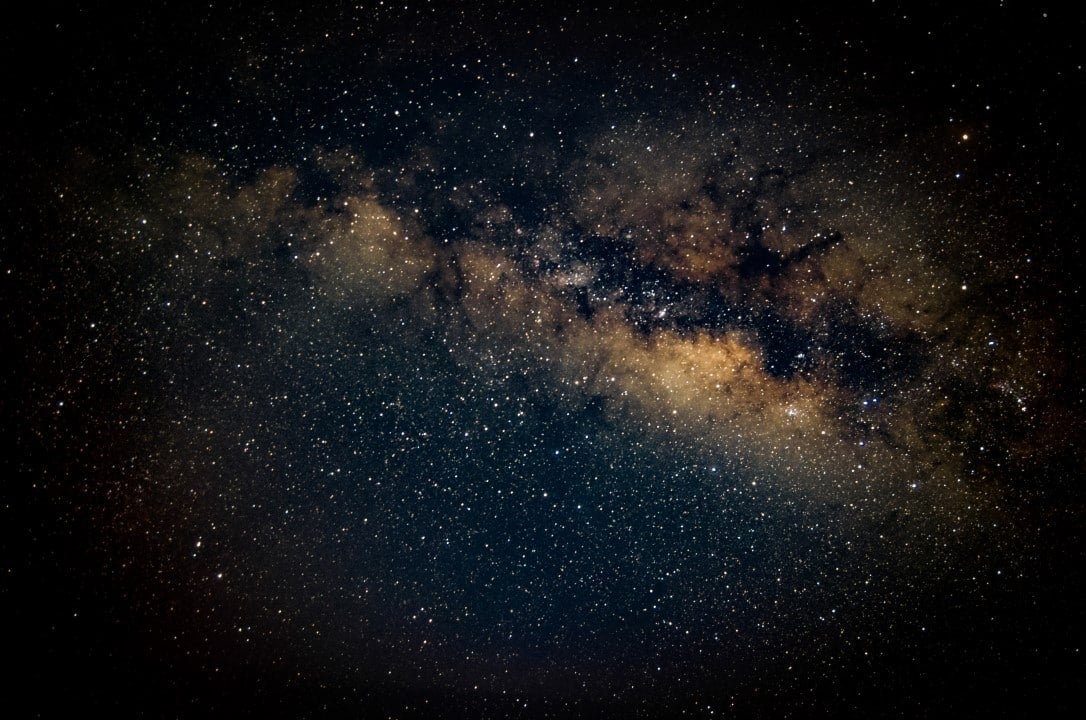
An international team of astronomers has developed a new approach to measuring the expansion rate of the nearby universe, resulting in lower values than previous local estimates. Scientists analyzed the motion of dwarf galaxies within galactic groups neighboring Via Láctea and identified a Hubble constant of approximately 64 km/s/Mpc. The number directly contrasts with traditional measurements based on supernovae of the Ia type, which pointed to a faster rate of around 73 km/s/Mpc in the cosmic neighborhood.
The universe has been going through a continuous process of expansion since the Big Bang event, which occurred around 13.8 billion years ago. The Hubble constant acts as the central mathematical parameter to quantify this separation, establishing the direct relationship between the speed of separation of the galaxies and the distance at which they are located from the observer. Historical Divergências measurements between the early universe and the current universe have created an impasse in cosmology known as the Hubble tension. The new result brings local data closer to the oldest observations of the cosmos.
Dinâmica gravitational in Centaurus A and M81
Dois scientific articles detailing the discovery were recently published in the specialized journal Astronomy & Astrophysics. The work included the participation of researchers from Leibniz Institute for Astrophysics Potsdam (AIP) and focused on the separate analysis of two large stellar clusters: the Centaurus A and M81 groups. The team used a novel dynamic approach that considers competing physical forces in deep space. Internal gravitational attraction acts constantly to keep galaxies together in their respective clusters. Simultaneamente, universal expansion works in the opposite direction to push them away.
Essa interaction of opposing forces creates a unique observational environment for scientists. The balance allows calculating the local Hubble constant without the need to depend directly on the brightness of supernova explosions. The data indicates that expansion in the nearby universe occurs at a considerably slower rate than projections based on conventional distance measurement methods. Direct observation of the cosmic flow around these groups provides an independent and robust metric.
Para achieve this precision, the researchers mapped the orbital motion of dozens of dwarf galaxies that orbit the centers of mass of the main groups. Essas smaller galaxies function as sensitive tracers of the local gravitational field. The speed at which they move reveals the total mass of the group, while their progressive distance indicates the force of cosmic expansion acting in that specific region of space.
Aplicação of the TRGB method as a cosmic ruler
The main technique used to measure the exact distances to these dwarf galaxies is based on the indicator known as TRGB. The acronym in English refers to the maximum point of the red giant branch. Esse stellar evolutionary stage occurs when stars of similar mass to Sol run out of hydrogen and begin to burn helium in a rapid event called a helium flash. Nesse exact moment, stars reach a standardized luminosity peak.
The predictable brightness of these red giants turns the TRGB indicator into a highly reliable cosmic ruler for modern astronomy. The tool had already been used in previous surveys to calibrate the luminosity of supernovae and try to attenuate the voltage of Hubble. Naquelas occasions, the results generated values close to 69.8 km/s/Mpc. The current study increased the complexity of the approach by incorporating the real physical dynamics of galaxy groups.
- Simultaneous measurement of group mass and expansion rate reduces systematic errors in calculations.
- The use of dwarf galaxies avoids exclusive dependence on rare and unpredictable events like supernovae.
- The TRGB technique provides high-precision distance data based on documented stellar evolution.
Obtaining high-precision data on distances and relative speeds allowed the team to model the cosmic flow with an unprecedented level of detail. Dentro of these sets, which bring together from a few to dozens of galaxies, local gravity competes directly with universal expansion. The simultaneous calculation avoided reliance on long and complex calibration chains, which often introduce larger margins of error into the final results of cosmological research.
Impacto direct to the so-called voltage of Hubble
The combination of all dynamical and observational factors resulted in the Hubble value being around 64 km/s/Mpc for the local region of the universe. Esse specific number changes the perspective on cosmic evolution as it aligns much more precisely with estimates derived from the early universe. Measurements based on the cosmic microwave background radiation, which represents the luminous echo of Big Bang, establish the constant between 67 and 68 km/s/Mpc.
The debate about the voltage of Hubble has gained strength in recent decades precisely because of the discrepancy between the two ends of the history of the universe. Background radiation observations consistently point to a more moderate expansion. In contrast, direct measurements in the nearby universe, anchored in the brightness of Ia supernovae, indicated an accelerated rate greater than 73 km/s/Mpc. The statistical difference between the two methods seemed to require the formulation of new laws of physics.
The new determination obtained through the movement of the Centaurus A and M81 groups reduces this gap drastically. The study authors highlight that Via Láctea’s cosmic neighborhood may simply be expanding more slowly than estimated with previous methods. The greater agreement between independent approaches suggests that part of the observed stress derives from limitations in specific techniques or from purely local gravitational effects.
Refinamento data and future observations
The dynamical method focused on groups of galaxies circumvents historical uncertainties associated with using supernovae as standard candles. Recent Eventos, such as the observation of the supernova SN H0pe at high redshift, had reinforced the thesis of higher local values. The new studies offer a counterpoint based on direct gravitational physics. Force balance analysis provides a consistent and mechanistically provable view of expansion in our region of space.
Pesquisadores from several institutions continue to refine techniques for mapping movements and masses at different astronomical scales. The combined use of precise indicators such as TRGB with complex dynamic analyzes represents a qualitative leap in the search for data consistency. The methodology paves the way for independent measurements to be carried out in other regions of the nearby universe, expanding the database available to cosmologists.
The current results contribute to the consolidation of the general understanding of cosmic evolution, maintaining the validity of the fundamental physical model accepted by the scientific community. The harmonization of the different temporal windows of cosmology now depends on the replication of the method. Astrônomos plan to use next-generation telescopes to observe other groups of galaxies, seeking to confirm the values obtained and definitively adjust the expansion parameters of the local universe.