

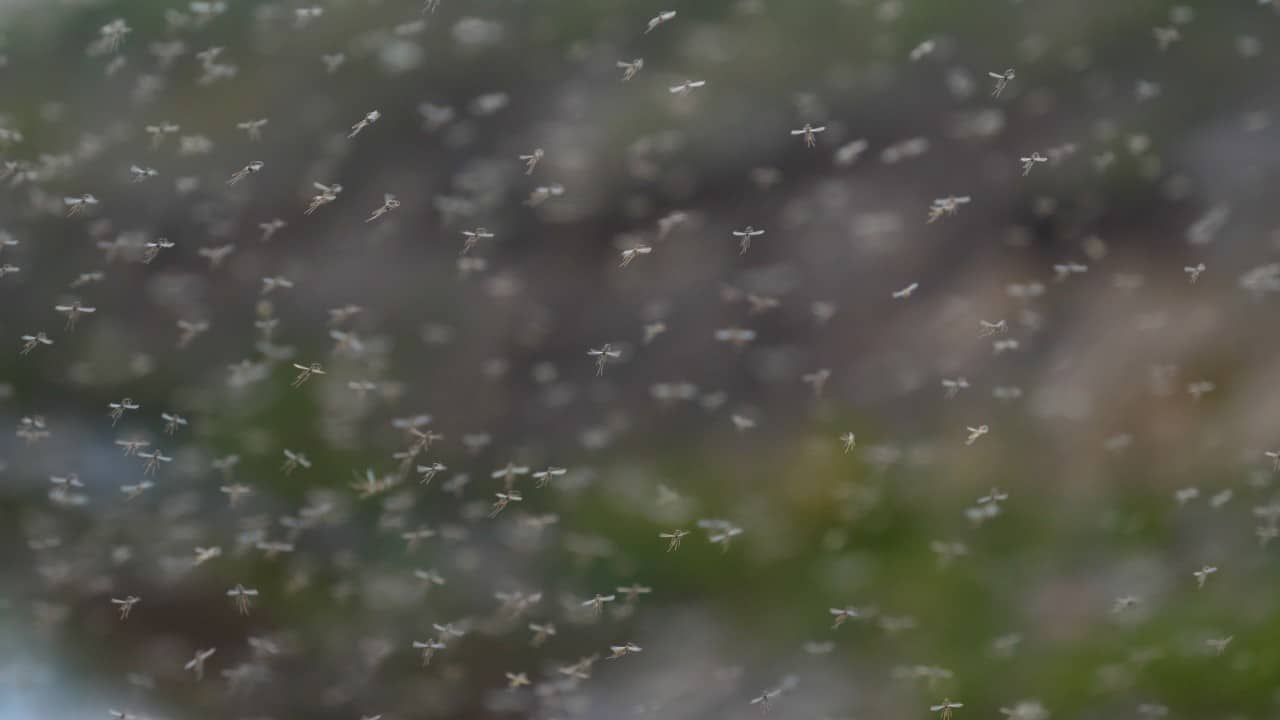
Google, through its parent company Alphabet, requested authorization from Agência of Proteção Ambiental of Estados Unidos (EPA) to release up to 32 million mosquitoes at Califórnia and Flórida. The initiative is part of the Debug project and involves sterile males carrying the Wolbachia bacteria. The objective is to reduce the population of Aedes aegypti, which transmits dengue, zika, yellow fever and other diseases.
The measure represents an innovative technological approach to vector control. The released insects do not bite and do not transmit pathogens. The EPA opened a public comment period, which closed on June 5, 2026. The final decision is still pending.
Projeto Debug uses technology to separate and create sterile males at scale
Alphabet has developed advanced mosquito breeding, sex separation and automated release systems. Essa infrastructure enables large-scale production, something that was previously expensive and time-consuming. Males carry Wolbachia, a natural bacterium present in around 40% of insect species, but absent in wild Aedes aegypti.
Quando a modified male mates with a wild female, the eggs do not hatch. The population of harmful vectors gradually falls. The method has already been tested in other regions with impressive results.
- The mosquitoes released are exclusively males, which do not bite humans.
- Wolbachia is transmitted naturally and does not alter the insect’s DNA.
- The sterile insect technique has existed in agriculture for over 60 years.
- Debug combines biology with data analytics, sensors and automation.
- The initial focus is Aedes aegypti, an invasive species in many areas.
Essa combination of hardware and biology allows precise monitoring of releases and adjustments in real time.
Previous Experiências show significant reduction in mosquitoes and disease cases
Em Singapura, the Debug project has supported Programa Wolbachia since 2018. Weekly releases have reached over 10 million males. The Aedes aegypti population dropped by between 80% and 90% in areas studied. Dengue cases decreased by more than 70% after 6 to 12 months.
Na Califórnia, preliminary tests took place in 2017 by Verily, former controller of Debug. Resultados indicated efficient suppression at specific sites. The new request expands the scope to two regions with the presence of the vector.
Especialistas highlight that Aedes aegypti is not native to Califórnia nor Flórida. Isso reduces the risk of imbalance in the local food chain, as few predators depend exclusively on this species.
Bactéria Wolbachia alters reproduction without direct impact on human health
Wolbachia interferes with egg development after mating. Wild Fêmeas mated with modified males produce non-viable offspring. Over time, the number of females capable of reproducing decreases.
Importante notice that only males are released. Eles do not bite and do not spread the bacteria to humans. The strategy is already applied against other pests, such as fruit flies.
The Debug enhances the process with automation. Sensores and algorithms optimize creation, packaging and distribution. Essa technological evolution makes application in larger urban areas viable.
Especialistas debate environmental risks and public health benefits
Alguns researchers urge caution. Ecologist Nathan Burkett-Cadena, from Universidade of Flórida, considers it safer to target invasive species like Aedes aegypti. Ainda thus warns of possible cascading effects if the method expands.
Bioethicist Henry Greely, from Stanford, defends social debate before initiatives that could lead to the local suppression of a species. On the other hand, neurogeneticist Matthew DeGennaro of Universidade Internacional of Flórida argues that humans introduced Aedes aegypti into new territories. Controlá it would be a liability.
EPA evaluates the application under Lei Federal of Inseticidas, Fungicidas, and Rodenticidas. The focus is on safety and effectiveness. Public Comentários helped clarify doubts about ecological impact.
Ficha Debug project technique and next steps
- Quantidade requested: up to 16 million mosquitoes per year, totaling 32 million in two years.
- Locais: selected regions in Califórnia and Flórida.
- Espécie target: Aedes aegypti (main transmitter of arboviruses).
- Método: males with Wolbachia via enhanced sterile insect technique.
- Current Status: request under review by EPA after end of comment period.
- Resultados expected: gradual reduction of the wild population and associated diseases.
- Tecnologia: automation for breeding, sexing and release at scale.
Alphabet has not yet released a detailed schedule if authorization is granted. Dependendo of the decision, the first releases could occur as early as 2026. The project represents yet another example of how technology companies apply data and engineering expertise to public health challenges.
The debate continues between innovation, environmental safety and ethics. Enquanto That’s right, mosquitoes continue to kill millions of people a year around the world. Estratégias like this one seek to reverse this situation with scientific precision.