

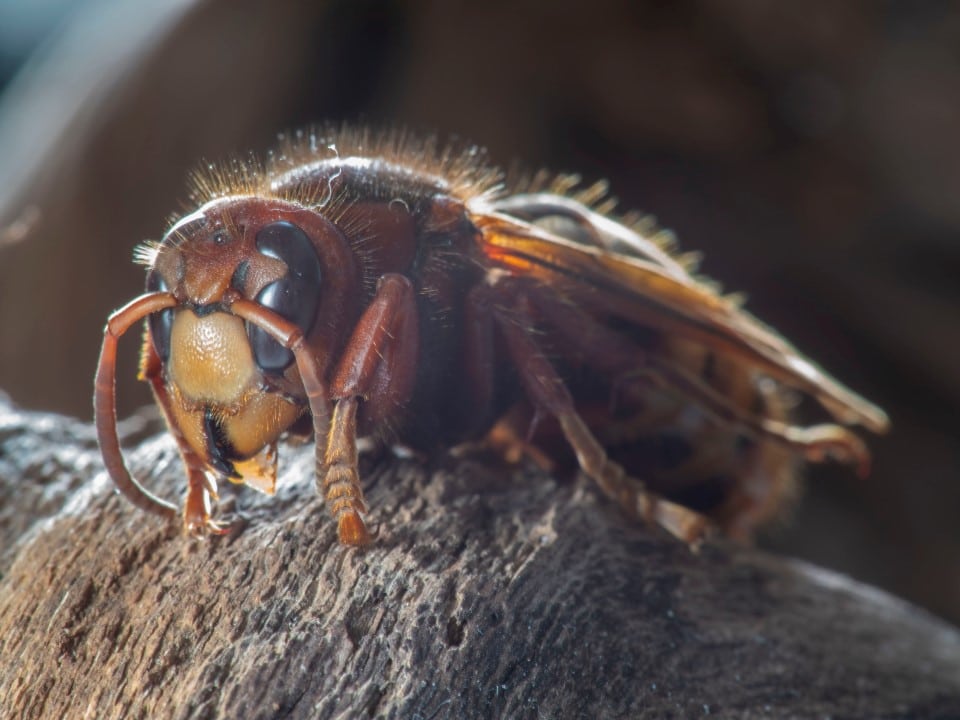
Yusuke Kawamura describes a persistent battle with wasps on his property. The collaborator reports annual attempts to control insects that return even after successful captures. Ele highlights the month of May as the ideal time to take action against the queens.
The method involves using a plastic bottle with two holes on the side. The container receives an attractive liquid and hangs between trees. Vespas enters, attracted by the smell, but cannot leave. Kawamura captured a queen in April twice the size of the workers and with a rounded abdomen. The queen stays inside the hive after May and does not fly out, which makes it easier to destroy the nest when capturing her.
Capturar only workers proves to be useless. Muitas attack if the right moment is missed. The author mentions searches of the property without finding nests. Mesmo Thus, wasps with large yellow jaws reappear in late summer. Elas fly for kilometers and build several nests in the region.
Método capture requires precision timing
Control depends on acting before the queen lays more worker eggs. May Depois, only female workers leave and increase the risk of attacks. Kawamura tested the strategy with partial success in previous years. A captured queen interrupts the hive cycle.
Ele compares the tenacity of insects to other pests such as termites and centipedes. The house has suffered infestations in recent years, possibly linked to climate change. The wasps return despite repeated efforts.
- Uso plastic bottle with side holes for irreversible entry
- Líquido specific attractant for wasps
- Posicionamento between trees during the queens’ flight period
- Foco exclusive to the queen for hive destruction
- Evitar late action that attracts only aggressive workers

Reflexões about parallels with conflicts
Kawamura hesitates to compare humans to insects, but mentions insights into conflict treatments. Ele cites Estados Unidos’s attack on Irã under the Trump government. Imagens of destroyed schools and affected children circulated widely. Mísseis and airstrikes hit targets, followed by negotiations on agreements.
The author recalls Vietnã, where strategies included scorched earth, napalm and Agente Laranja. The herbicide contaminated soil with dioxin. Áreas are still undergoing decontamination. No Japão, Segunda Guerra Mundial bombings killed hundreds of thousands of civilians in cities like Hiroshima. Kawamura’s father experienced the air raid on Kure and described the treatment as worse than that given to insects.
União Soviética in Afeganistão’s invasion caused millions of deaths and refugees. Conflitos and Ucrânia also appear in the contributor’s observations. Essas situations illustrate historical patterns of devastation in wars.
Desafios persist in pest control
The property continues to have wasps despite captures. The author reinforces the need to find multiple nests. Vespas fly long distances and establish distant colonies. Simple Estratégias helps, but does not eliminate the problem completely.
Especialistas in Asian Hornet Control recommends spring traps for founding queens. The focus in May aligns with the biological cycle before colony expansion. Kawamura applies practical knowledge year after year.
Experiência staff reveals the tenacity of insects
The employee shares accumulated frustrations. Cada success against a queen does not prevent further infestations. Their large jaws and collective behavior make wasps formidable adversaries. Ele extends observation to other invasive insects in the region.
Global warming appears as a possible factor for increased presence. Residências face similar pressures in several areas. The plastic bottle method offers an affordable, homemade alternative for monitoring.
Kawamura continues to monitor the surroundings. The search for hidden nests continues. The war against wasps requires patience and constant adaptation each season.