

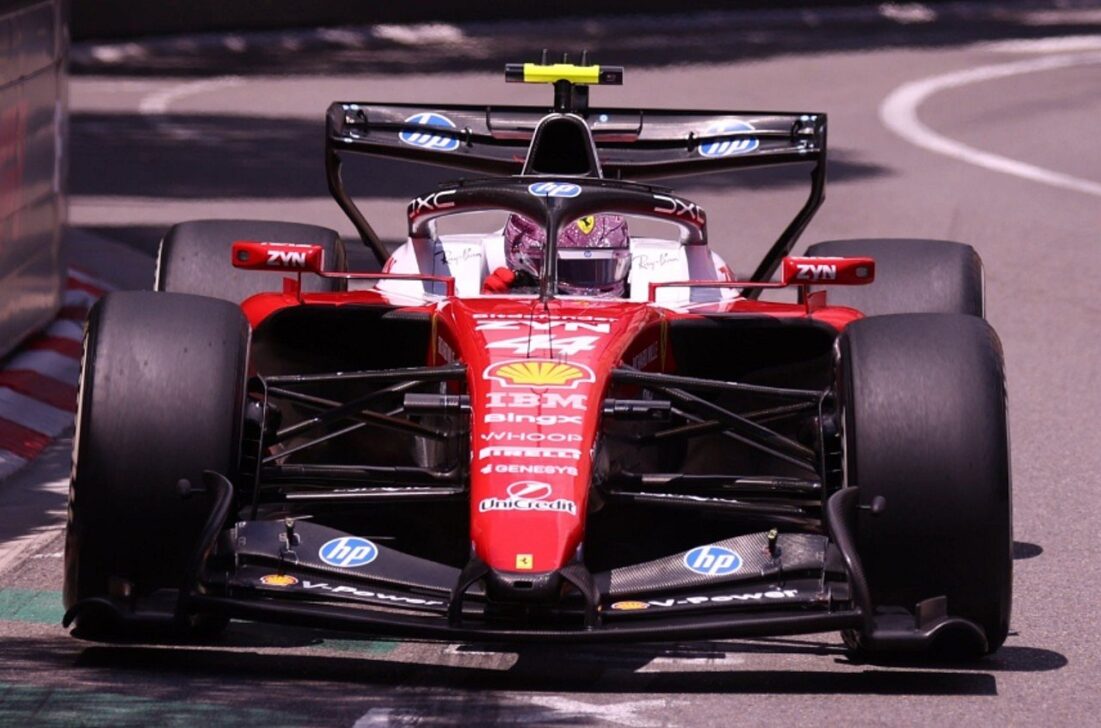
The Grande Prêmio of Mônaco of Fórmula 1 moves the world motorsport calendar this Sunday (24), with a start scheduled for 10 am according to Brasília time. The stage takes place on the principality’s traditional street circuit. The race requires extreme precision from pilots on a narrow route surrounded by guardrails. The event attracts global attention due to its technical complexity and the historical prestige involved in the fight for the city’s streets.
The Mercedes team starts with a competitive advantage after Kimi Antonelli secured pole position in qualifying. The young driver outperformed his direct opponents in the qualifying sessions. Conquering first position on the grid represents a fundamental step towards victory on a track where overtaking is rare. Equipes and mechanics adjust the last aerodynamic and cooling details before the red lights go out.
Desempenho of Kimi Antonelli gives advantage to Mercedes
Kimi Antonelli’s performance during qualifying demonstrated absolute control over Mercedes’s car in Mônaco’s twisting corners. The driver recorded the best time at the decisive moment of the session. The German team worked intensely on adjusting the suspension to deal with the undulations of the urban asphalt. Largar at the front offers clean air and pace control in the opening laps. The pressure on the pole position is immense from the first meters of acceleration.
Mercedes’s strategic planning focuses on maintaining the lead until the first pit stop window. Tire compound wear management will dictate the pace of the first stint of the race. Engineers monitor brake temperatures constantly through telemetry. The layout does not offer long straights for the natural cooling of the single-seater systems. Qualquer miscalculation in the pit stop strategy could cost the race lead and jeopardize the weekend.
Complexidade technique and risks of the street circuit
The Mônaco layout has unique characteristics that differentiate it from all other tracks in the Fórmula 1 regular season. The narrow streets do not forgive the slightest miscalculation in the tangency of the curves. Riders pass within millimeters of protective barriers at speeds exceeding 200 km/h in specific sections. The absence of large escape areas means that a small wheel lock results in immediate abandonment. The mental concentration required reaches its maximum level during the 78 laps of the contest.
The Sainte Devote curve, located just after the pit straight, represents the first major bottleneck of the race. The funneling of the peloton at this point creates a high risk of multiple collisions at the start. Race marshals maintain strategically positioned cranes to quickly remove crashed cars. The entry of the safety car is a very high statistical probability at this stage. The teams prepare alternative stopping plans to take advantage of possible yellow flag interruptions and gain time over their rivals.
Estratégia racing and the challenge of overtaking
The chronic difficulty of overtaking turns Grande Prêmio from Mônaco into a true high-speed chess match. The performance difference required to overcome an opponent on the track is much greater than on permanent circuits. Drivers depend on other people’s mistakes or undercut strategies in the pits to gain positions. The undercut consists of anticipating changing tires to turn faster laps with new rubber. The tactic requires millimeter precision from mechanics when changing compounds.
Straggler traffic adds an extra layer of complexity for race leaders. The blue flags guide slower drivers to give way, but the narrow route makes it difficult to maneuver safely. Time lost behind a lagging car can ruin the strategy built over dozens of laps. Radio communication between the pit wall and the cockpit becomes incessant. The driver needs precise information about the distance to rivals and the exact moment to push the engine’s pace.
Opções broadcast to Brazilian audiences
Motorsport fans at Brasil can count on a multiplatform coverage network to follow all the details of the sporting event. The distribution of image rights allows different spectator profiles to choose the best way to watch the race. The favorable time zone makes it easier to watch on Sunday morning. The broadcasts begin with pre-hour programs to analyze the starting grid, weather conditions and interviews with team managers.
- Globo TV shows the race live on open television nationwide, guaranteeing free access to the main stage of the calendar.
- The sportv channel broadcasts the race on pay television, offering complete training coverage, in-depth analysis and behind-the-scenes from the paddock.
- The F1TV Pro app provides the category’s official streaming signal, with access to all on-board cameras, telemetry data and team radio.
The choice of platform defines the viewer’s level of immersion during the almost two hours of the event. The streaming service attracts a more technical audience looking to analyze sector times in real time. Open television ensures the massive reach of the category in the country. The integration of social media with official broadcasts expands the debate on race incidents and the decisions of Federação Internacional and Automobilismo stewards.
The historical weight and prestige of the principality
Vencer on the streets of Mônaco elevates the status of any driver in the history of international motorsport. The stage makes up the motorsport Tríplice Coroa, alongside the 500 Milhas of Indianápolis and the 24 Horas of Le Mans. The trophy presented by the Monegasque royal family represents the pinnacle of careers for many competitors. The podium ceremony takes place in a unique format on the steps of the royal box. The glamorous atmosphere of the event directly contrasts with the physical and mental brutality required inside the cockpit.
Athletes’ physical preparation reaches its peak to withstand lateral gravitational forces in low and medium speed curves. The neck and arms suffer extreme wear due to the constant changes of direction on the winding route. The steering wheel is turned thousands of times over the total distance of the race. Prior hydration is rigorous to compensate for the loss of liquids under the flame retardant suit. The physical exhaustion added to the psychological tension turns the final flag into a moment of exhaustion for all competitors who manage to complete the regulatory distance.