

The global automotive industry is preparing an aggressive expansion in the sports utility vehicle segment in the coming years. Fabricantes from different continents finalize the development of vehicles that combine electrified propulsion, cutting-edge technology and renewed design. The movement meets a growing demand for sustainable models that preserve internal space and the ability to travel on different terrains. Marcas traditional and new companies in the sector align their schedules for a wave of debuts from 2026 onwards.
The technological transition involves the adoption of platforms dedicated exclusively to electric vehicles. Automakers invest in improving high-density batteries and ultra-fast charging systems to eliminate range anxiety among drivers. The planned portfolio ranges from compact options aimed at daily urban use to extremely luxurious models with super sports car performance. The diversification of prices and categories indicates the maturation of the zero-emissions market.
Automotive market Expansão drives new platforms
The electrification of SUVs represents a structural change in global assembly lines. The Land Rover Defender Sport emerges as one of the protagonists of this new phase of automotive engineering. The British manufacturer uses the EMA architecture to develop the smaller version of its most famous utility. The platform maximizes approach and departure angles, ensuring the electric vehicle maintains the brand’s signature off-road capability.
Protótipos of the new model is already undergoing rigorous phases of dynamic testing. The boxy shape remains its visual signature, now updated with a full-width light bar on the front. The Land Rover Defender Sport will hit the market exclusively with electric motorization in 2026. Engineers concentrate efforts to deliver the instantaneous torque of the electric motors in a controlled manner on trails and rough terrain.
The restructuring of factories requires complex adaptations to accommodate the heavy battery packs in the vehicle floors. The lower center of gravity improves the stability of SUVs on highways. Companies are also seeking to optimize the aerodynamics of bodies to reduce drag and increase energy efficiency on long journeys.
Bentley Urban SUV and Porsche Cayenne Electric redefine high performance
The ultra-luxury segment receives special attention with the introduction of the Bentley Urban SUV. The model goes down in history as the British automaker’s first fully electric vehicle. With launch confirmed for 2026, the car measures approximately 5.1 meters in length, positioning itself just below the Bentayga. The purposeful design incorporates refined aesthetic elements inspired directly by the EXP15 concept.
The mechanical package delivers approximately 1,000 hp. The number guarantees a record acceleration in Bentley’s trajectory. The interior finish preserves the standard of comfort found in the Flying Spur sedan. Dynamic agility is reminiscent of the behavior of the Continental GT. In the same high-performance category, the Porsche Cayenne Electric features a 113 kWh battery pack.
The German utility vehicle achieves a range of more than 640 km on a single charge. The Turbo version generates up to 1,140 horsepower and a massive torque of 1,500 Nm. The vehicle reaches 100 km/h in just 2.5 seconds. Towing capacity reaches 3,500 kg, equal to traditional combustion models. McLaren is also entering the fray with an SUV codenamed P47, adopting a plug-in hybrid configuration with a 4.0-liter twin-turbo V8 engine to rival Italian brands.
Fiat GigaPanda and Jeep Renegade bet on versatility
The volume market also features significant innovations to appeal to families and urban drivers. Fiat schedules the global reveal of GigaPanda for October 2026, during Paris’s Salão. The utility adopts a chunky visual identity, strongly inspired by the straight lines of models from the 1980s. The vehicle shares the Smart Car architecture with the Citroën C3 and offers configurations for five or seven occupants.
The Italian manufacturer plans to make multiple engine options available to serve different markets. Consumers will be able to choose between pure gasoline versions, hybrid systems and a fully electric model. The zero-emission variant provides an estimated range of 400 km. The affordable pricing strategy aims to compete directly with established rivals such as Nissan Qashqai.
The Stellantis group advances simultaneously with the second generation of the Jeep Renegade, scheduled for 2027. The compact SUV will feature a purely electric option for the first time in its history. The exterior design maintains the iconic seven-slot grille. Plásticos robust wheel arches and bumpers guarantee the necessary protection for off-road forays.
Mercedes GLC Electric and Rivian R2 integrate advanced technologies
Technological integration dictates the pace of development of premium medium-duty vehicles. The Mercedes GLC Electric incorporates an 800-volt electrical architecture to enable ultra-fast charging at public stations. Maximum range reaches 653 km in European test cycles. The air suspension system is derived directly from the top-of-the-line S-Class sedan, providing a smooth ride on uneven asphalt.
The front features an illuminated grille made up of 942 individual pixels. The cabin houses large digital screens that concentrate entertainment and navigation controls. Do other side of the Atlântico, the Rivian R2 prepares its entry into the European market in the coming years. The American midsize SUV is positioned as a direct competitor to the Tesla Model Y.
The Rivian R2 delivers more than 560 km of electric range. The all-wheel drive system includes specific driving modes for severe off-road conditions. The manufacturer integrates exclusive functional features into the vehicle design:
- Janelas fully lowerable rear seats to increase air circulation in the cabin.
- Tocha lighting discreetly built into the driver’s door.
- Front Compartimento optimized for secure equipment storage.
The practical additions aim to appeal to an audience focused on outdoor activities and camping. The expansion to the Europa represents a key step in the American electric mobility company’s global strategy.
Skoda Epiq and Volvo EX60 complete efficient portfolio
The European market will receive the Skoda Epiq in May 2026. The compact utility introduces the Modern Solid design language, characterized by a more rugged and adventurous appearance. The vehicle uses the MEB+ platform developed by Grupo Volkswagen. The trunk capacity reaches 475 liters, a significant volume considering the car’s small external dimensions.
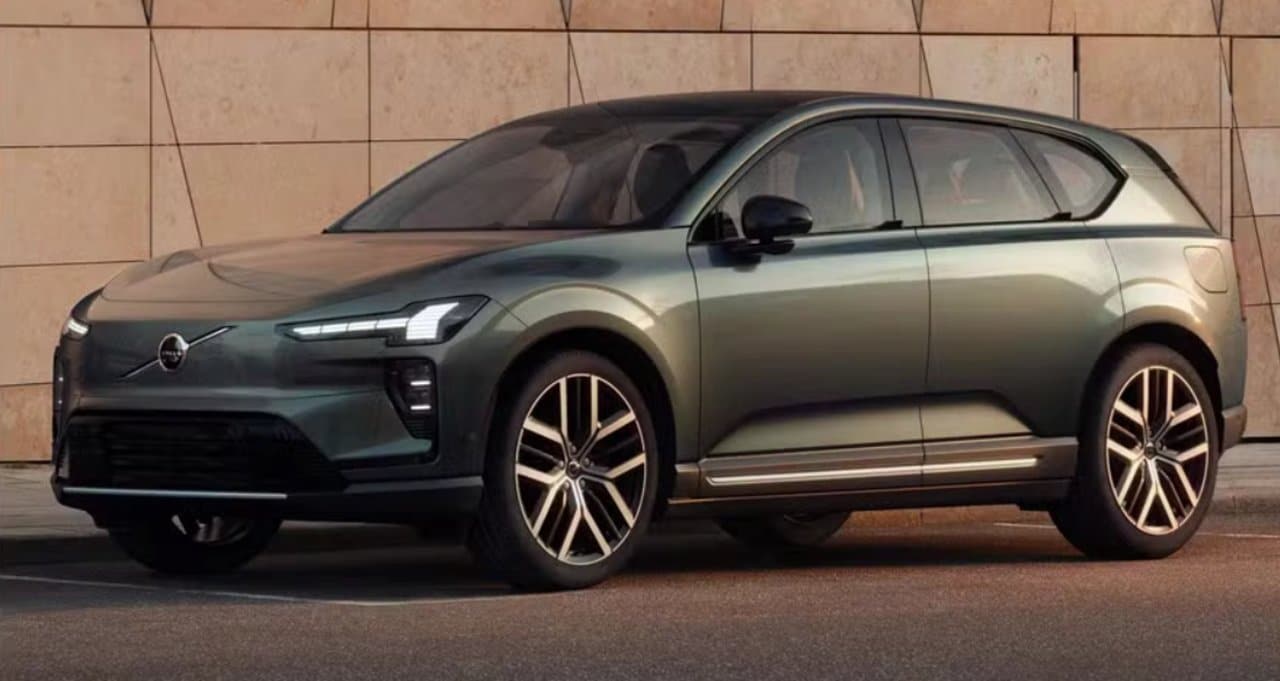
The maximum autonomy of the Skoda Epiq reaches 430 km. The starting price is in the £25,000 range, establishing the model as an affordable gateway to electric mobility. In the premium segment, the Volvo EX60 arrives as the zero-emission alternative to the popular XC60. The Swedish manufacturer uses the new SPA3 architecture to build the chassis.
The flagship version of Volvo EX60 supports a remarkable range of up to 810 km. The charging system accepts up to 370 kW of power at compatible stations. The capacity allows you to add 337 km of autonomy in just 10 minutes of connection. The open interior concept integrates advanced technology from the Google to manage connectivity, navigation and driver assistance systems in real time.