

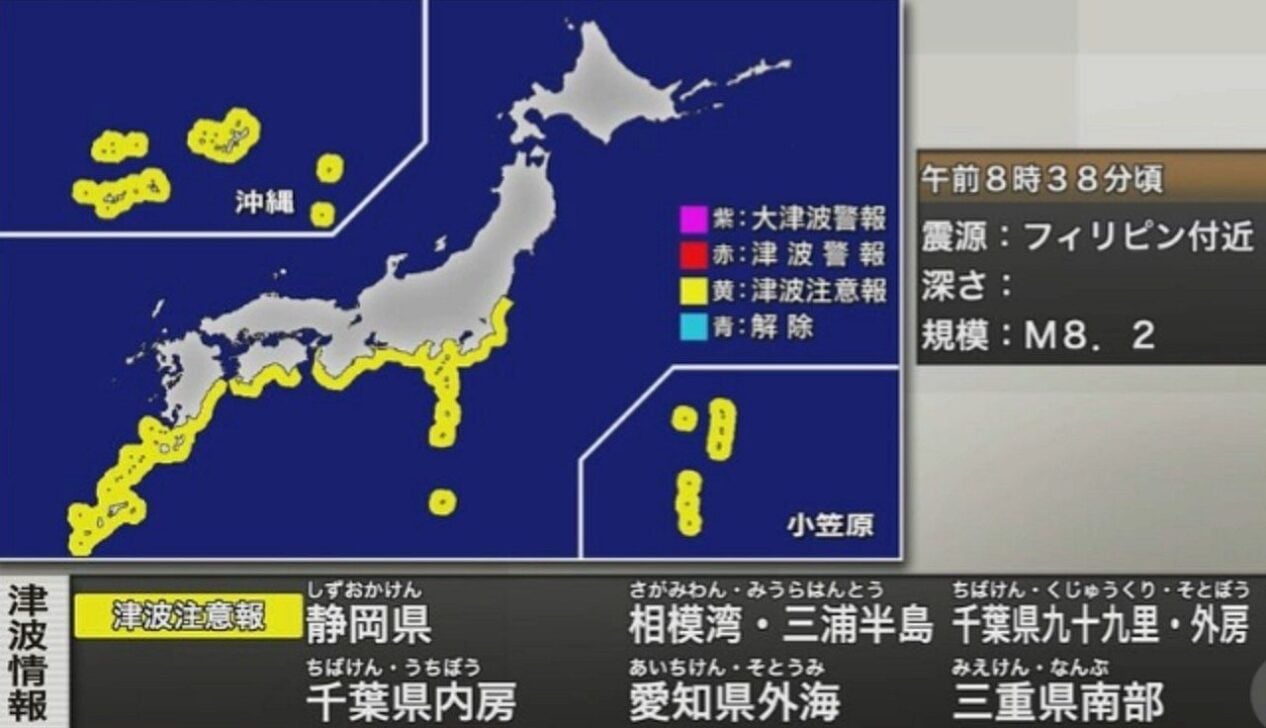
The city of Kawazu, located in the province of Shizuoka, issued a level 3 tsunami warning on the 8th. The safety measure directly affects five districts in the coastal region. Local Autoridades recommended the immediate evacuation of elderly people and people with reduced mobility. The decision came after a strong earthquake hit Filipinas. The tremor raised concerns about the formation of giant waves towards Japanese territory. The municipal government activated rapid response protocols. The main objective is to guarantee the protection of human life before the arrival of any maritime impact. The mobilization involved several fronts of action by public authorities.
Evacuation Alerta focuses on protecting the elderly and vulnerable
The municipal administration made the evacuation order official at 12:39 pm local time. The initial focus is on groups most susceptible to risks during natural disasters. Idosos represent a significant portion of the local demographic. Pessoas with disabilities or motor difficulties are also part of the priority group. The guidance requires immediate movement to safe shelters. Locais located on high ground serve as the main refuge. Anticipating movement seeks to avoid congestion on escape routes. Response time is crucial in seismic events. The window between the issuance of the alert and the possible arrival of waves requires extreme agility from rescue teams.
Equipes of social assistance assist in transporting residents with physical restrictions. The city hall reinforced the need to remain calm during the journey. Panic disrupts evacuation logistics. The operation follows strict public safety guidelines. Adapted Veículos were moved to areas of greatest risk. Health Profissionais accompany vulnerable groups to reception centers. The shelter infrastructure has basic medical supplies and stretchers. The absolute priority is to remove all individuals with limited mobility from the danger zone before any change in sea level.
Tremor on Filipinas triggers monitoring system on Japão
The trigger for the mobilization in Shizuoka came thousands of kilometers away. A seismic shock of great magnitude hit Filipinas. The Oceano Pacífico basin functions as a conduit for the energy released by underwater earthquakes. The massive displacement of water creates waves that travel at high speeds. Agência Meteorológica of Japão monitors these anomalies in real time. Especialistas assessed the potential trajectory of the tsunami. The Japanese east coast is naturally vulnerable to events generated south of Ásia. Alert Level 3 indicates a moderate to high risk of coastal flooding. The exact height of the waves varies depending on the topography of the seabed.
Baías and inlets can amplify the size of the water body. Surveillance remains active until the warning is officially canceled. Oceanic Sensores transmit continuous data to command centers. The accuracy of the information defines the degree of response from local authorities. The deep-water buoy system detects millimeter variations in ocean pressure. Esses data feeds supercomputers that calculate the estimated time of arrival of waves. The issuance of the alert on Kawazu was based on these mathematical projections. Anticipation allows the coastal population to gain precious minutes to search for safe locations.
Áreas affected and mobilization of emergency teams
The Kawazu city hall’s risk mapping identified the sectors most exposed to the advance of the sea. Proximity to the coastline dictated the selection of evacuation zones. The order covers five specific districts within the municipality. Moradores from these locations received direct instructions to leave their homes. Areas designated under Alert Level 3 include:
- Yatsu
- Nawaji
- Mitakahama
- Hama
- Sasahara
Evacuating these areas requires precise coordination. Local police established roadblocks on access roads to the beaches. Traffic only flows towards the interior and mountains. Bombeiros patrol the streets to ensure all vulnerable residents leave. Voluntários from civil defense help guide the flow of people. Rapidly abandoning risk areas minimizes the possibility of casualties. The temporary shelter infrastructure was already operating at full capacity within hours of the announcement. Suprimentos basic water and food awaited the evacuees. Guarda Costeira also issued warnings for vessels to return to port or seek deep water.
Protocolos for security and rapid communication with the population
The dissemination of information occurred through multiple simultaneous channels. Japão’s early warning system is one of the most advanced in the world. Alto speakers installed on poles broadcast voice messages throughout Kawazu’s city. The sound of sirens broke the local routine. Aplicativos cell phone issued notifications with shrill beeps. Mensagens text reached the devices of all residents registered on the regional telephone network. The redundancy of the means of communication ensures that the warning reaches the entire population. Television and radio interrupted normal programming. Telas displayed maps with danger zones highlighted in red.
The clarity of the message avoids dubious interpretations. The instruction was simple and direct. The safety protocol guides the immediate search for high places. Effective communication saves lives in natural disaster scenarios. The city hall maintains open telephone lines to answer urgent questions. The information network serves as the first line of defense. The J-Alert system, managed by the central government, sent the emergency signal directly to local transmission towers. Process automation eliminates human delays in the chain of command. The speed in delivering the alert reflects the country’s level of technological preparation to face seismic threats.
Prevention Histórico Strengthens Japanese Coastal Resilience
The rapid response at Kawazu reflects decades of investment in civil security. Japão has historically faced the constant threat of earthquakes and tsunamis. The architecture of coastal cities incorporates physical barriers and signposted escape routes. Preventative education begins in the early school years. Crianças participate in regular evacuation simulations. The culture of readiness permeates all layers of society. The event at Filipinas served as a real test for Shizuoka’s defense mechanisms. Integration between government agencies, security forces and the civilian community worked as planned. Constant review of contingency plans allows for quick adjustments to rescue operations.
Alert level 3 requires absolute seriousness. Excessive prevention guides local government actions. Sea level monitoring will continue for the next few hours. The suspension of the alert will only occur after technical confirmation of complete safety. Returning to homes depends on official authorization from crisis management teams. Coastal Patrulhas assess possible damage to port infrastructure and containment dikes. The release of access roads to the coast will occur gradually. The population remains sheltered until the risk of dangerous sea fluctuations is completely ruled out by the competent authorities.