

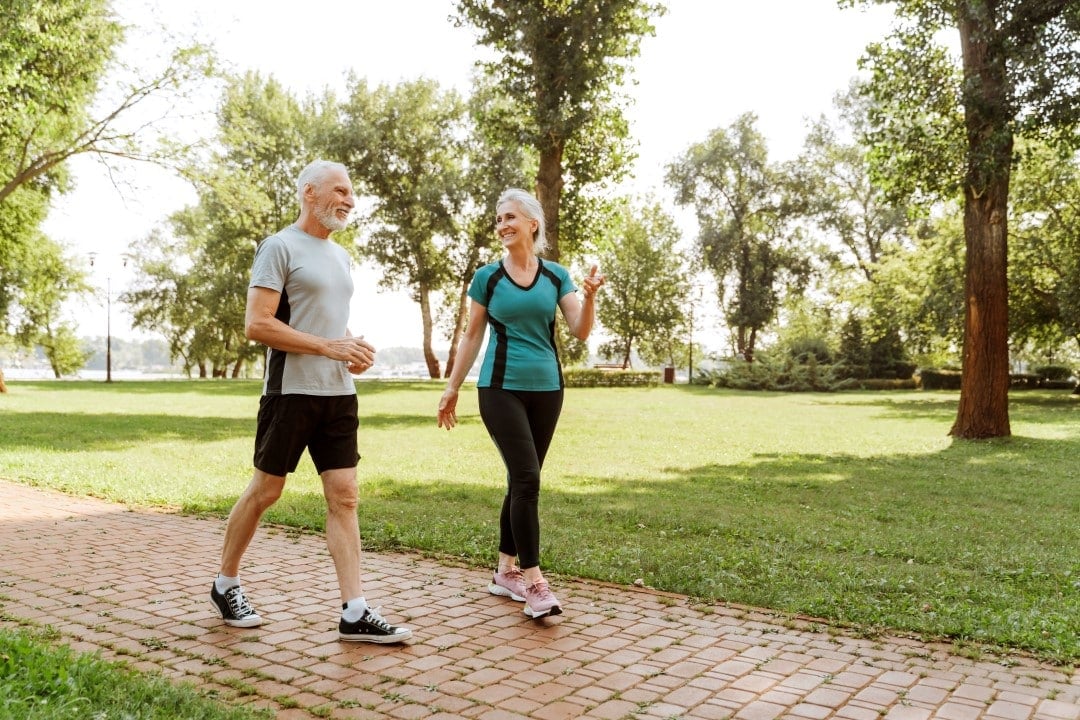
A new study conducted in Australia investigated why people reduce their walking pace and feel more tired as they get older.
According to research from the Universities of Flinders and Canberra, the body begins to adopt a “safety first” strategy as it ages, giving up energy efficiency to prioritize maintaining balance.
Researchers examined movement data from 107 healthy adults, ages 26 to 86. The work identified important age-related changes in the way the muscles around the ankle manage each step.
Lead author, Cody Lindsay, highlighted that the ankle serves an essential role in both supporting balance and propelling the body forward. He explained that, as the years go by, the body begins to prefer stability over efficiency, which turns walking into a more demanding task to keep the person upright.
The analysis showed that, in older individuals, opposing muscle groups around the ankle activate more frequently at the same time. This process, called co-contraction, stiffens the joint and reinforces balance the moment the foot touches the ground.
However, this adaptation comes at a price. Even with greater muscular effort, the ability to generate forward propulsion decreases, making the act of walking use more energy.
The study also found that elderly people produce less impulsive force with each step, which leads to shorter strides and, consequently, a reduced walking speed.
According to the authors, these modifications not only accelerate fatigue but also make it more difficult to walk longer distances and increase the risk of falls, by limiting recovery after trips or slips.
Experts indicate that, to preserve mobility in old age, exercise programs need to go beyond muscle strengthening and include specific training in balance, coordination and integration of muscles during movement.