

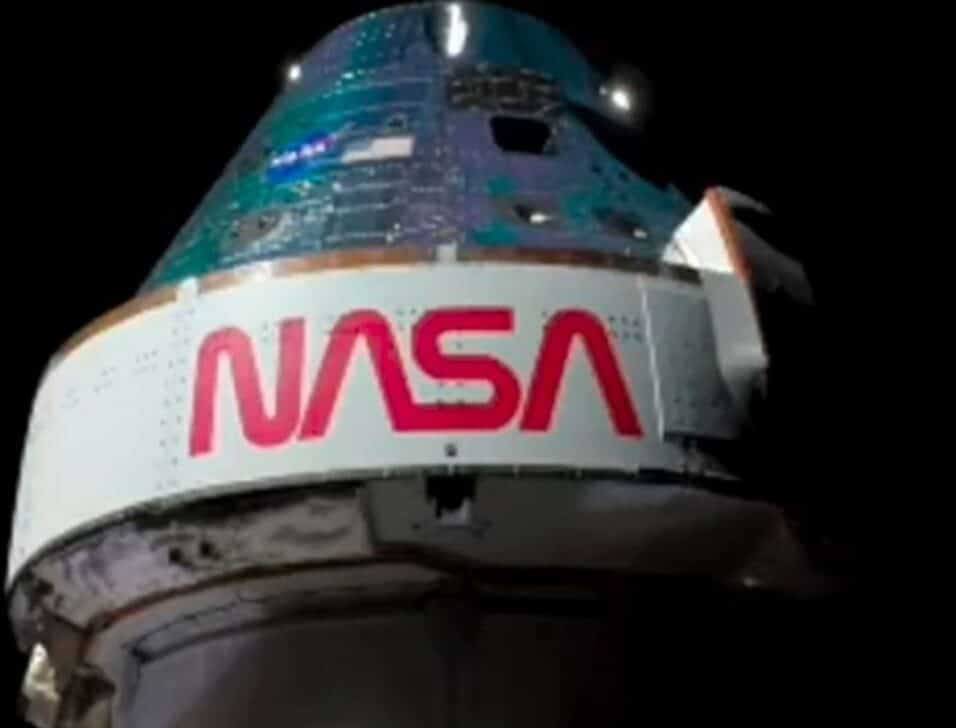
This Tuesday, NASA will officially announce the four astronauts who will be part of the Artemis 3 mission. The event takes place from noon Brasília time at the Johnson Space Center, in Houston. The space agency is also expected to update the progress of preparations for the manned flight scheduled for 2027.
Initially planned as the first human landing on the Moon since Apollo, Artemis 3 underwent review. Now the focus is on docking tests in Earth orbit, a fundamental step before subsequent lunar operations. The change allows us to safely advance the necessary technologies.
Artemis 3 mission adopts test profile in Earth orbit
Artemis 3 will be launched from the Kennedy Space Center in Florida, with the Space Launch System rocket carrying the Orion capsule with four crew members. Unlike the original plan, there will be no descent to the lunar surface. The flight will serve to validate operations with landing modules developed by commercial partners.
The SLS will place Orion into low Earth orbit. There, the spacecraft will test rendezvous and docking maneuvers with prototypes such as SpaceX’s Starship and Blue Origin’s Blue Moon Mark 2. Astronauts will be able to enter at least one of these modules during the mission to evaluate crew transfer and life support systems.
- The launch uses a spacer in place of the active upper stage to maintain a physical configuration compatible with future flights.
- Orion has a European service module for propulsion and control.
- Tests include new heat shield for re-entry to Earth.
- The mission extends the time spent inside Orion compared to Artemis 2.
- International participation remains under evaluation, with possible contributions from Canada and ESA.
Engineers prepare the spacer at the Marshall Center in Alabama. This component simulates the mass and dimensions of the original system without engines, facilitating future development.
Crew announcement marks progress in preparations
The live broadcast reveals the names of those selected. Among those listed are Raja Chari, Nicole Mann, Kayla Barron and Andre Douglas, according to preliminary reports. The agency has not yet confirmed the exact composition before the event.
Reid Wiseman, Jeremy Hansen, Christina Koch and Victor Glover, from Artemis 2, should not be part of this mission. The choice prioritizes experience in complex operations and specific training for new coupling tests.
The announcement comes months after the success of Artemis 2, which carried out a manned flight around the Moon. Data from that mission feeds refinements in Orion and SLS for Artemis 3.
Partnership with private companies defines complexity of the operation
For the first time, NASA coordinates multiple launches and integration with vehicles from companies like SpaceX and Blue Origin. The Orion capsule must dock with landing modules in Earth orbit to simulate lunar scenarios.
This approach reduces risks before Artemis 4, now considered the first with a manned landing, scheduled for 2028. Tests in real conditions with humans on board validate docking, life and movement systems between ships.
Scientists are also evaluating the launch of CubeSats during the mission. Scientific experiments in orbit and new forms of communication with Earth are part of the objectives.
Technical details prepare safe return to Earth
Orion will use its service module to stabilize orbit and perform maneuvers. The upgraded heat shield will be tested in re-entry, withstanding extreme temperatures. Teams monitor environmental control, oxygen and resource recycling systems.
The flight must last long enough for detailed analysis. Unlike Artemis 2, Artemis 3 will not use the same deep communication network, which requires adaptations.
Impact on Artemis program boosts lunar exploration
The mission consolidates the role of incremental testing. Success on Artemis 3 paves the way for sustained operations on the Moon and, in the future, missions to Mars. Collaboration between NASA, industry and international agencies accelerates the timeline.
Experts are following the event in search of more information about the exact duration, additional activities and detailed launch schedule. The announcement represents a visible milestone in continued progress.