

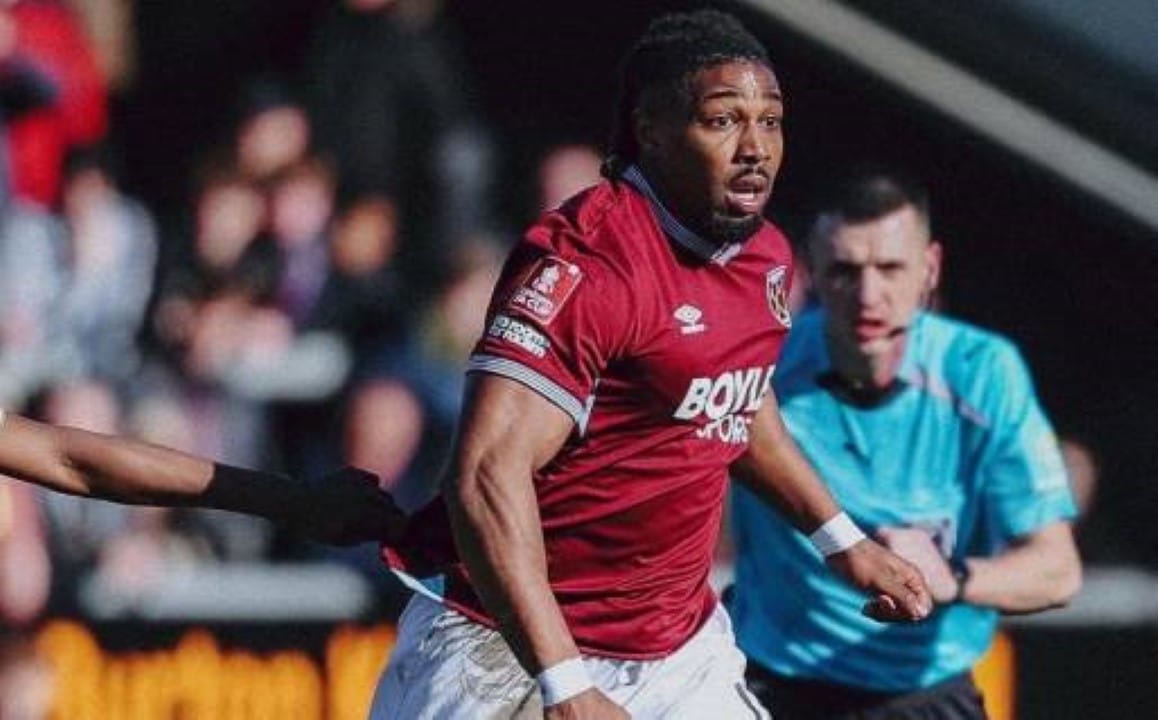
The West Ham United board made it official that Adama Traoré’s cycle at the London institution will come to an end with the end of the current sporting season. The employment relationship of the Spanish athlete, who recently turned thirty, expires definitively on June 30th, at which point he will join the competitive transfer market as a free agent. The player’s release occurs in a scenario of profound internal restructuring, motivated by the team’s unexpected drop to the second division of English football, a severe blow for a club that has one of the most robust payrolls in the country.
Frustrated investment and reunion with Portuguese coach
The signing of the right winger took place in the winter transfer window, in January 2026, when the club spent approximately two million pounds sterling to take him from Fulham. The market movement was an express request to promote the athlete’s reunion with commander Nuno Espírito Santo, a professional with whom he had experienced the peak of his technical and physical career during their joint spell at Wolves. The technical committee’s bet was based on the premise that the tactical familiarity between the two could rescue the Spaniard’s best football.
At that point in the season, the expectations of fans and the British press were considerably high, based on the recognized capacity for acceleration and physical imposition that have always characterized the striker’s style of play. However, adapting to the tactical scheme required in the fight against relegation proved complex, and the performance within the four lines fell far short of the financial investment and confidence placed by the board in the athlete’s recovery project.
Discreet numbers in the campaign that culminated in the fall of London
During the semester in which he defended the team’s colors at the London Stadium, the player’s individual performance reflected the collective instability of the squad. In around twenty-four matches played in the world’s top national league, the winger failed to find the net once and contributed just one assist to his teammates. This lack of effectiveness in the final third of the field worsened the situation of a team that was already suffering from a lack of goals and ended up in eighteenth place in the Premier League table.
Relegation to the Championship, a fact that had not haunted the club’s corridors since the distant 2010/11 season, materialized in dramatic fashion in the closing round of the tournament. Although the team did its part in achieving a resounding three-nil victory over Leeds United, the combination of results did not help. Tottenham’s triumph over Everton mathematically sealed the Londoners’ tragic fate, forcing a drastic change in sporting planning for the following year.
The fall of the division acts as a catalyst for a profound reformulation in the football department, requiring drastic cuts and the departure of parts that do not fit into the new financial reality. The dismantling process has already begun to take shape with some movements confirmed behind the scenes by the team:
- Termination of the contract of experienced goalkeeper Łukasz Fabiański, who leaves the goal after years of service to the institution.
- Immediate release of Adama Traoré to ease the monthly payroll and make room in the budget.
- Active search for new profiles of players who are accustomed to the physical demands and exhaustive calendar of the English second division.
Trajectory marked by physical explosion and lack of regularity
The striker’s professional history is a faithful portrait of a talent that alternated moments of brilliance with long periods of inconsistency. Cutting his teeth in Barcelona’s traditional youth categories, the famous La Masia, he had to leave Spanish football to build his reputation in England. It was at Wolves, between 2018 and 2021, that he terrorized opposing defenses with his unparalleled muscular explosion, becoming one of the greatest dribblers on the European continent and even being called up for his country’s senior team.
After this peak in performance, the athlete’s career entered a spiral of transfers that did not result in consolidation. He spent time at Aston Villa, briefly returned to Barcelona on loan and wore the Fulham shirt before accepting the challenge in east London. Now, at thirty years of age, the player finds himself at a professional crossroads, needing a sporting project that understands his limitations in completing plays and enhances his ability to break defensive lines at speed.
Spanish market emerges as the main route for the athlete’s future
With the confirmation of his free availability on the market, the player’s name is already beginning to circulate heavily behind the scenes of several European teams, especially in his home country. Elche, which currently competes in the Spanish second division, emerges as one of the most likely destinations, having placed the striker at the top of its list of priorities to reinforce the offensive sector in the next transfer window. The club’s board of directors sees the signing as an opportunity to add weight and international experience to the squad.
In addition to the interest in the access division, other associations that make up the LaLiga elite are monitoring the situation closely. The possibility of incorporating an athlete with Premier League experience without the need to pay transfer fees to their home clubs is a huge attraction for teams with limited budgets. The major obstacle to the completion of any agreement lies in the player’s salary demands, who will need to accept a considerable reduction in their salaries to adapt to the economic reality of their potential new employers.
Financial and sporting reconstruction in the English second division
For the West Ham board, the departure of the Spanish winger is just the first step in a long journey of institutional reconstruction. Playing in the Championship requires a quick adaptation to a completely different business model, where television revenues plummet drastically compared to the astronomical amounts distributed among the elite of British football. Management will need to be surgical in utilizing the parachute payments provided by the league to cushion the financial impact of the crash.
The focus of the recruitment department will now be on identifying emerging talents and ball workers who can withstand the marathon of forty-six rounds of the access competition. The reduction of the wage bill, exemplified by the non-renewal of heavy contracts such as that of the recently released striker, is the fundamental measure to guarantee the club’s long-term sustainability and pave the way for a return to the first division.