Table etiquette rules: fork up or down betrays cultural habits
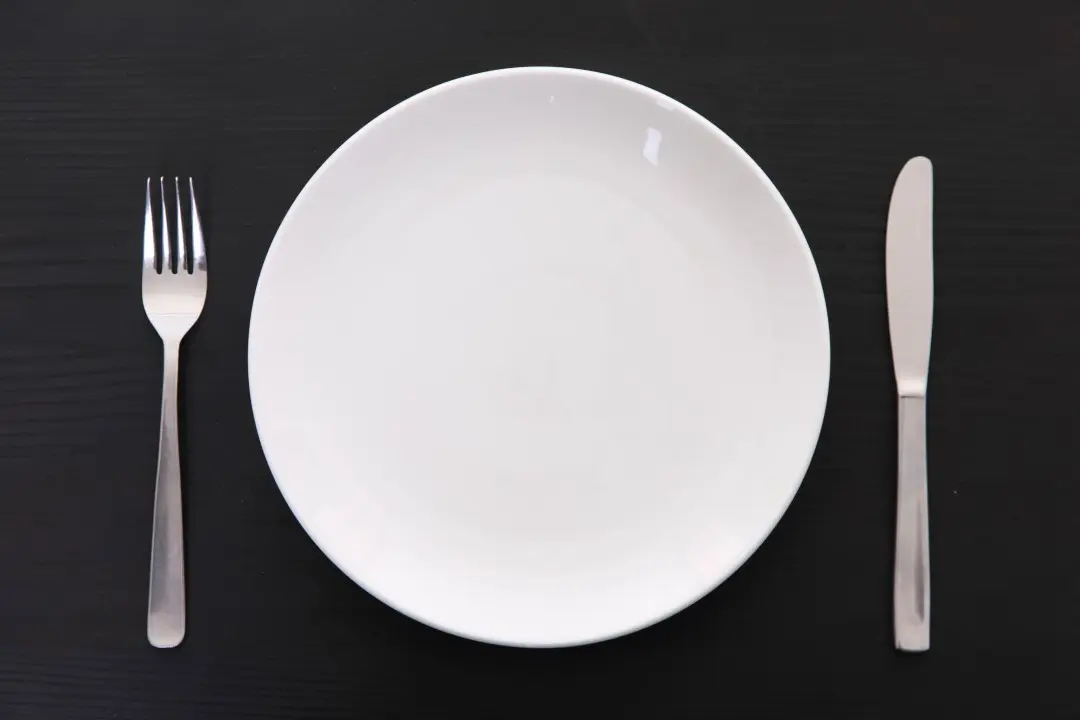
When Brooke Black and her Danish husband started living together in the United States, she doesn’t remember different ways of eating at the table being an important topic.
It was only after the mother of two moved to Denmark, in 2020, that she really realized that she used cutlery differently from her husband and practically all the Europeans around her.
Raised in the US state of Illinois, Black reports that her mother only placed forks on the family dinner table, except in cases like steak, which required a knife to cut.
“I haven’t used a knife my whole life,” says Black, who shares observations about cultural differences in everyday life in Denmark on his Instagram account. Although she jokes that “a fork can also double as a knife,” she never learned the “zigzag” style common among many North Americans, who cut meat with the knife in their dominant hand and then transfer the fork to the same hand to eat.
But, at family gatherings in Denmark, by holding the fork in his right hand from the beginning with the tines facing up and leaving the knife next to the plate practically untouched, Black soon noticed that he was attracting attention.
“I’m constantly being teased by my husband’s family. At the table, at my mother-in-law’s house, everyone asks: ‘What are you doing?’, because they eat with a fork in their left hand, tines facing down, and a knife in their right hand”, she says.
Black says he ended up adapting, at least in public, to the so-called continental style, using the fork in his left hand and the knife in his right to cut Danish dishes such as the delicate smørrebrød, the traditional open-faced sandwiches.
Even when eating “Danish”, however, she often still feels out of place.
“They all have that silent, sensible way of doing things. And I’m just a noisy woman spearing food”, she jokes.
The nuances of how cutlery is used on both sides of the Atlantic can be disconcerting. While there are obvious differences, the subtleties are more difficult to master and the exact origin of these variations remains unclear.
Continental style and the “more laborious” American method
Tables are set in a similar way in much of the Western world, but the two main styles of using cutlery, American and Continental, have differences that are not always easy to learn.
Jacqueline Whitmore, business etiquette expert and founder of the Protocol School of Palm Beach, Florida, sums up the differences.
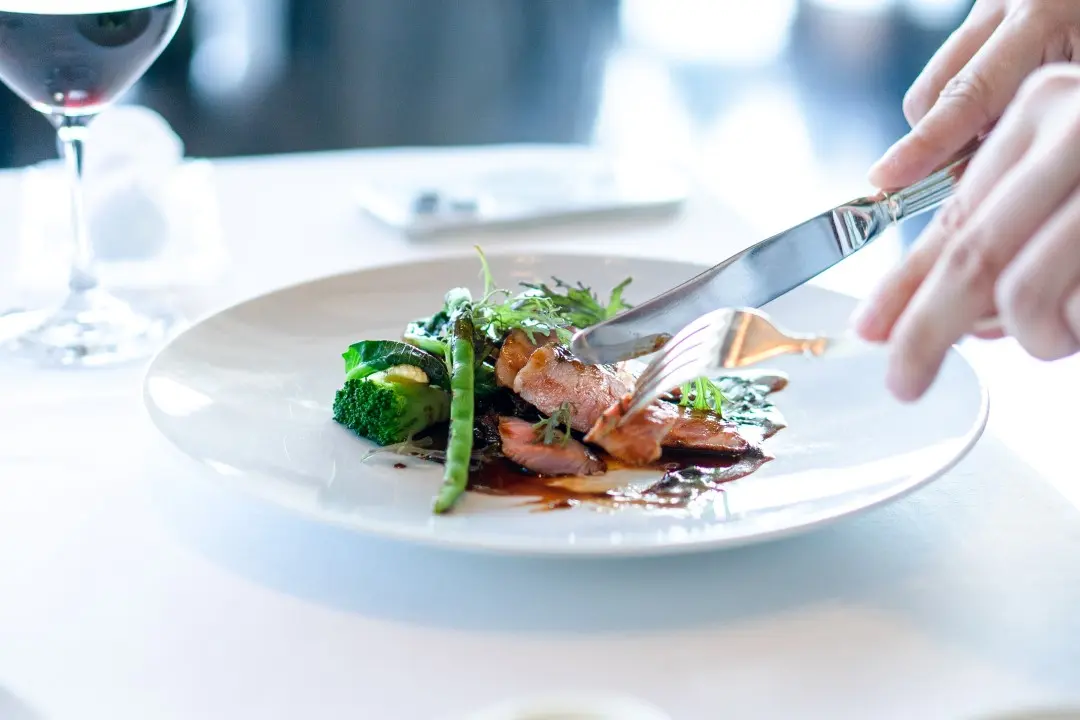
“In the continental style, you use the knife and fork simultaneously, taking the fork to your mouth with the tines facing down, without ever putting the knife down while eating”, he explains. The knife is in the dominant hand, ready to cut when necessary or to push food that cannot be skewered with the inverted tines of the fork.
What is considered the American style follows a cut-and-swap approach. The knife is held in the dominant hand for cutting, with the fork in the non-dominant hand holding the food, tines facing down. Then, the knife is placed in a resting position on the plate, so that the fork is transferred to the dominant hand, with the tines facing upwards, to eat.
“The American style is a bit like a zigzag. You cut the meat, put the knife aside on the plate and move the fork from one hand to the other. So it’s a little more laborious,” admits Whitmore.
To make things even more complicated, the British style has its own way of using cutlery, which subtly differs from the continental one, according to British etiquette expert William Hanson, author of the book “Just Good Manners”. British and Continental styles are often confused, says Hanson, who has nearly four million followers on Instagram.
As if the variety weren’t enough, not all etiquette experts agree exactly on which practices define each style. Ultimately, though, etiquette comes down to being friendly and making guests feel comfortable, regardless of how they hold their cutlery.
To adapt or not?
So, if visiting Europe, or other places where the continental style predominates, should an American accustomed to “zigzag” change the way they use cutlery?
It depends on the nature of the visit, says Lizzie Post, co-president of The Emily Post Institute and great-granddaughter of famous etiquette expert Emily Post.
When traveling on business in Europe, Post recommends trying to adapt and dining continental style. Still, she wouldn’t expect someone visiting her in the United States from abroad to adopt the American way of eating.
In general, it argues that it is acceptable to eat the way a person feels most competent and comfortable.
“If you come from another place, do the best you can with what you know and the way you do it comfortably,” he says.
But if you’re up for a challenge, Post says it’s great to have the ability to adapt to the country you’re visiting.
Most important questions
Instead of worrying about whether you’re being rude by holding your fork with the tines facing up or down, it’s much more important not to hold your cutlery incorrectly in your hand, says Post. Grabbing them like a fist, for example, is never appropriate.
A fork should be held with the handle resting in the palm of the hand, with the index finger stopping short of the top of the fork, explains Hanson. The knife is held with the index finger stopping at the point where the blade and handle meet, while the other fingers are folded around the handle in the palm.
Post laments that general table etiquette is not widely taught in the United States.
“There is nothing in our school system that teaches us this universally, and it ends up depending on each family”, he observes, when talking about the rules at the table.
Some etiquette rules are common to all dining styles. Cutlery, for example, should never touch the table after you start eating, says Post, and should remain on the plate during a break.
But other practices, such as where to place the cutlery when you want to pause the meal, vary.
In the American style, according to Whitmore, the pause signal occurs when the knife, with the blade facing inward, is placed along the upper right part of the plate, at a subtle angle. The fork, with the tines facing upwards and the handle facing outwards, should be positioned with the handle pointing at 4 o’clock, in the middle part of the plate, to indicate that the person is taking a break. For waiters who know the etiquette, this position is a silent signal not to ask, “Are you still eating?”
In Continental and British styles, the pause position involves crossing the fork and knife in the center of the plate, with the fork above the knife and the tines facing down, according to Hanson and Whitmore. There are also different positions that indicate the end of the meal.
Whitmore, who says she dines continental style despite being American and living in the United States, considers the technique “less noisy and less intrusive” and says that learning it allows her to integrate anywhere in the world where cutlery is used to eat.
Leia Também

Motoboy prevents tragedy by rescuing baby crawling on avenue in ES; mother is arrested for abandonment

Peak approach of giant asteroid to Earth occurs this Saturday, without danger of impact

Europe records a thousand deaths in France and record temperatures with heat wave that affects economy and infrastructure
“Why not learn another way, so you have options to blend in and make your table manners secondary to conversation,” he suggests.
A real minefield
In addition to the American and Continental styles, which are the most used, there are other variations around the world.
In the British style, for example, the tines of the fork should never be facing upwards in formal contexts when the knife is also being used, according to Hanson. In informal settings, when eating dishes like risotto that don’t require a knife, this is acceptable.
In addition to which hand holds what and which way the fork tines face, some more questionable table habits are definitely noticeable.
“We wouldn’t say anything, but we would notice if an American cut up all the food on their plate, which is what we do for children in this country,” Hanson points out, referring to the United Kingdom.
Whitmore claims that, in his travels around the world, it was in the United States, his country of origin, that he witnessed the most “scandalous” acts of bad table etiquette. Examples include people licking knives or stirring drinks, such as iced tea, with a fork or knife due to lack of a spoon.
As with all rules of etiquette, Hanson considers that “knowledge is power.”
“You can choose when to use it and when not, or decide to what extent you want to increase or decrease the degree of formality, depending on the context”, he highlights.
And while many people in the UK, US and Europe know how to dine in a relaxed way, “there are still occasions, and always will be, when you need to resort to this level of the scale”, adds Hanson, regarding more formal meals.
Strachwitz says it’s perfectly normal to feel like you’re in a “minefield” when dining outside your own culture. Hugo Strachwitz is director of Debrett’s, an authority on British and international protocol and etiquette.
However, he emphasizes that any confusion is secondary to the importance of being a good guest in someone’s home or at their table.
“Be kind, courteous, and accepting of the dominant culture or rules that prevail. And if you come across something you’ve never seen before, or aren’t familiar or comfortable with, you can politely ask, ‘I’ve never seen this before. How does it work?'” he suggests.
According to Strachwitz, it is up to the host to ensure that guests feel comfortable in their company.
“Be genuinely yourself. This may mean dining in your own style. So, if an American is dining in a non-American environment, it is up to the host not to draw attention to this difference in a way that causes discomfort, offense or makes the guest feel embarrassed,” stresses Strachwitz.
An unclear story
The exact reason for the evolution of these different ways of using cutlery remains shrouded in some historical uncertainty.
How these differences arose is not entirely clear. However, historians point out that table forks appeared much later than knives and spoons.
In the 16th century, forks were already commonly used at the table in Italy, according to an article in Smithsonian magazine, and their use later spread to the rest of Europe. But it was only in the middle of the 19th century that the use of table forks really took hold in the United States.
It’s safe to say that the way people served meals influenced their use of cutlery, says Strachwitz.
In the period before the Napoleonic Wars, at the beginning of the 19th century, the typical service in Europe was service à la française, with all the dishes on the table at the same time. At the beginning of the 19th century, however, service à la russe, with dishes served in stages and requiring different cutlery, was introduced to France from Russia. In the mid-19th century, this model was already popular and was also spreading throughout the United Kingdom.
However, it is more difficult to determine exactly where and when cutlery usage habits began to diverge. A food history expert told Slate.com that Americans adopted from the French the method of cutting food and then exchanging hand-held cutlery — a habit that the French themselves would eventually abandon.
Helen Zoe Veit, associate professor of history at Michigan State University in East Lansing, served as a historical consultant on the first season of HBO’s “The Gilded Age.” When investigating how Americans held cutlery in the 1880s, she questioned whether they followed the British style.
“There was no definitive authority on the subject,” says Veit.
What was evident was that in the mid- to late 19th century, Americans were “very insecure about their manners.”
“They were really trying to define what it meant to belong to the elite, what it meant to be sophisticated, educated and refined. Therefore, they sought to establish a set of typically American etiquette norms”, he explains.
And opinions differed.
“They didn’t always know what that meant. They questioned whether they should follow British etiquette or French customs. And there were those who said: ‘To hell with Europe. We should just create our own way of doing things from a cultural point of view'”, says Veit.
This explanation may be of comfort to Americans who feel lost at a European table.
“I think as long as people eat properly, without making noise, and can keep food on their plate without dropping it on the table or down their shirt,” says Hanson, that should be enough, adding that there are more important concerns in life.
Hanson’s main recommendation to students is to hold the cutlery correctly and only start eating when everyone is seated and has their food in front of them.
Strachwitz sums it up even more simply: “The essence of good etiquette, wherever you are, is consideration and respect for others.”
With that in mind, be nice and enjoy your meal.