Global failure in the DoorDash system paralyzes deliveries and affects thousands of drivers in North America By Luís Henrique Costa
5 min read
 |
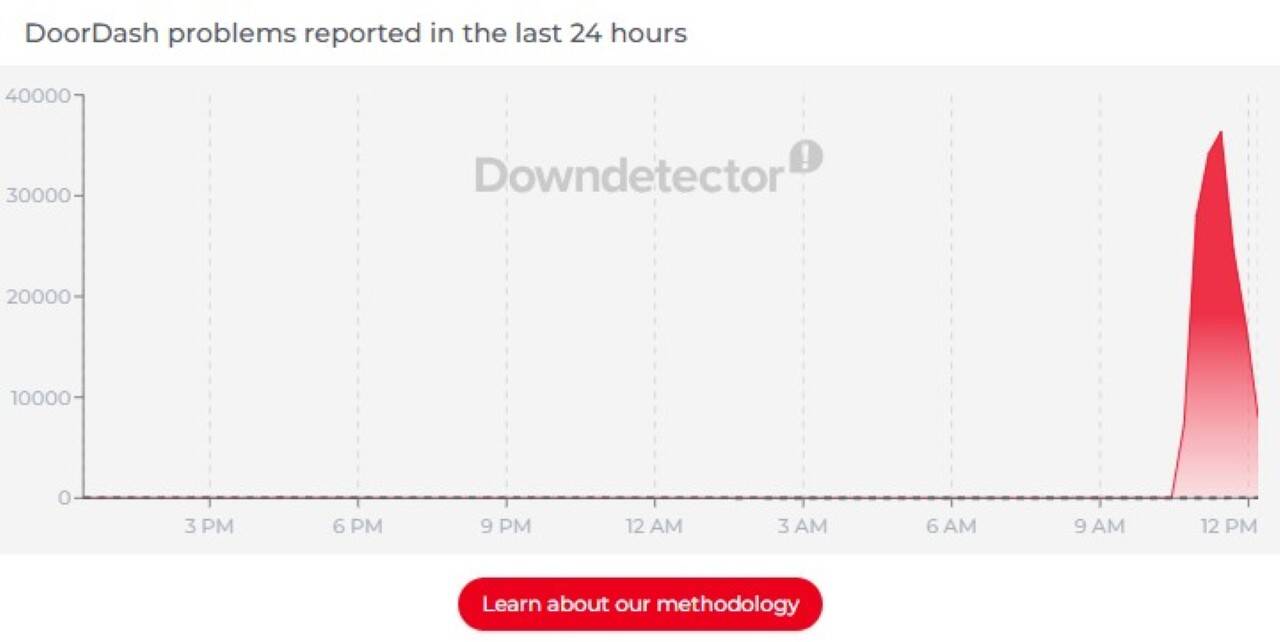
On the morning of Tuesday, the 16th, severe instability hit the servers of one of the largest delivery platforms in the world, abruptly interrupting the daily operations of consumers and workers. The digital collapse of the DoorDash app generated a massive wave of frustration, reflected in more than thirty-five thousand error notifications registered on network traffic monitoring platforms in a very short space of time. Consumers trying to secure their meals were faced with endless loading screens, while the company’s infrastructure struggled to reestablish the data connection.
Digital blackout time and the main obstacles faced by consumers
The first signs that the network was giving way began to appear at exactly nine hours and forty minutes, considering the New York time zone, which corresponds to ten hours and forty minutes according to the Brasília clock. From that moment on, the software interface began to display generic messages asking people to check their internet connections, masking a deep internal flaw in the company’s databases. Navigating virtual menus became impossible, completely blocking the shopping journey of those looking for convenience during business hours.
A significant aggravating factor in this outage involved the financial processing system integrated into the delivery platform. Several customers reported that, when trying to complete the transaction, the value of the meal was immediately deducted from their credit cards or digital wallets, even without the order tracking number being generated. This disconnect between the payment gateway and the logistics routing system creates an extremely anxious scenario, requiring users to monitor their bank statements for automatic chargebacks that can take time to process due to the volume of simultaneous errors.
Direct impact on the income and routine of the platform’s logistics partners
The interruption of service did not only cause inconvenience for those waiting for lunch, but also hit the backbone of the operation: the independent couriers, known in the company’s ecosystem as Dashers. Without prior warning, thousands of drivers and cyclists were summarily logged out of their work profiles, instantly losing access to routes that were already in progress. For these professionals, whose earnings depend exclusively on the time the application remains functional, every minute of inactivity represents an irrecoverable financial loss in a normal working day.
Situations of extreme logistical confusion were reported on the streets of major North American cities during the peak of instability. Professionals who had already picked up packages at restaurants were left with their vehicles loaded with perishable food, completely unable to see the final destination address. Without the support of the application’s geolocation system, delivery becomes unfeasible, forcing workers to discard the products or wait hours for guidance from technical support, which was also inoperative.
Territorial extension of the problem and the behavior of affected markets
The mapping of the fault revealed a continental scope, simultaneously affecting large urban centers in the United States and provinces in Canada, in addition to spilling over into other territories where the brand operates internationally. Independent stability analysis tools, such as Downdetector, showed a vertical graph of complaints, showing that the crash was not an isolated event on a regional server, but rather a collapse in the system’s central architecture. The timing of the failures suggests a problem with software updates or the cloud hosting services used by the technology company.
Interestingly, network recovery showed asymmetric behavior between neighboring countries throughout the day. While Canadian users began to notice a gradual return of basic functionality later in the morning, allowing the completion of some pending deliveries, the scenario in the United States remained chaotic for a longer period. This piecemeal restart is common in large-scale incidents, where software engineers need to restart servers in batches to avoid immediately re-overloading the main database.
Procedures adopted for retained orders and the refund policy
The information vacuum left thousands of consumers in a state of uncertainty regarding purchases that had already been processed before the general blackout. The company’s customer service department was quickly inundated with messages and calls, resulting in endless virtual queues and automated responses that did little to resolve customer distress. The company’s standard protocol for these situations involves the compulsory cancellation of blocked routes and full refund of amounts, however the atypical volume of interrupted transactions will inevitably delay the refund schedule.
To understand the complexity of resolving financial issues in server crashes, it is necessary to observe the different scenarios that arise during systemic instability:
- Orders that were already in transit with the driver logged in offline, which generally arrive at their destination but cannot be marked as completed in the central system.
- Purchases accepted by the restaurant but never assigned to a delivery person, resulting in wasted food and the need for an immediate refund to the customer.
- Transactions where the credit card authorized the charge, but the application database did not generate the preparation order, requiring a subsequent bank reconciliation.
Corporate positioning and temporary migration to competing platforms
The corporation’s official communication in the face of the crisis was considered minimalist by experts in technological risk management. Through a brief alert triggered internally in the software interface itself, management limited itself to recognizing the existence of the technical failure, ensuring that its engineering teams were mobilized to resolve the bottleneck as quickly as possible. The lack of a clear diagnosis of the causes of the incident and the lack of an exact prediction for the full normalization of services fueled speculation on social media and increased general dissatisfaction.
Events of prolonged downtime during peak business hours generate an immediate ripple effect on the on-demand delivery market. Faced with the impossibility of using the service of their choice, a massive portion of consumers quickly transferred their purchasing intentions to rival applications, suddenly boosting the volume of accesses on platforms such as Uber Eats and local logistics services. This forced migration demonstrates the volatility of customer loyalty in the digital convenience sector, where immediate service availability far outweighs attachment to a specific brand.
Information technology experts recommend that, during blackouts of this magnitude, users avoid making successive login or payment processing attempts, as this only contributes to congestion on servers that are already operating at the limit of their capacity. The best strategy is to monitor third-party status dashboards and wait for a definitive announcement on the company’s official channels before re-trusting financial data to the newly restored platform, thus ensuring transaction security and avoiding unwanted double charges.