Black Beauty meteorite from Mars reveals ancient crust and water clues By Luís Henrique Costa
2 min read
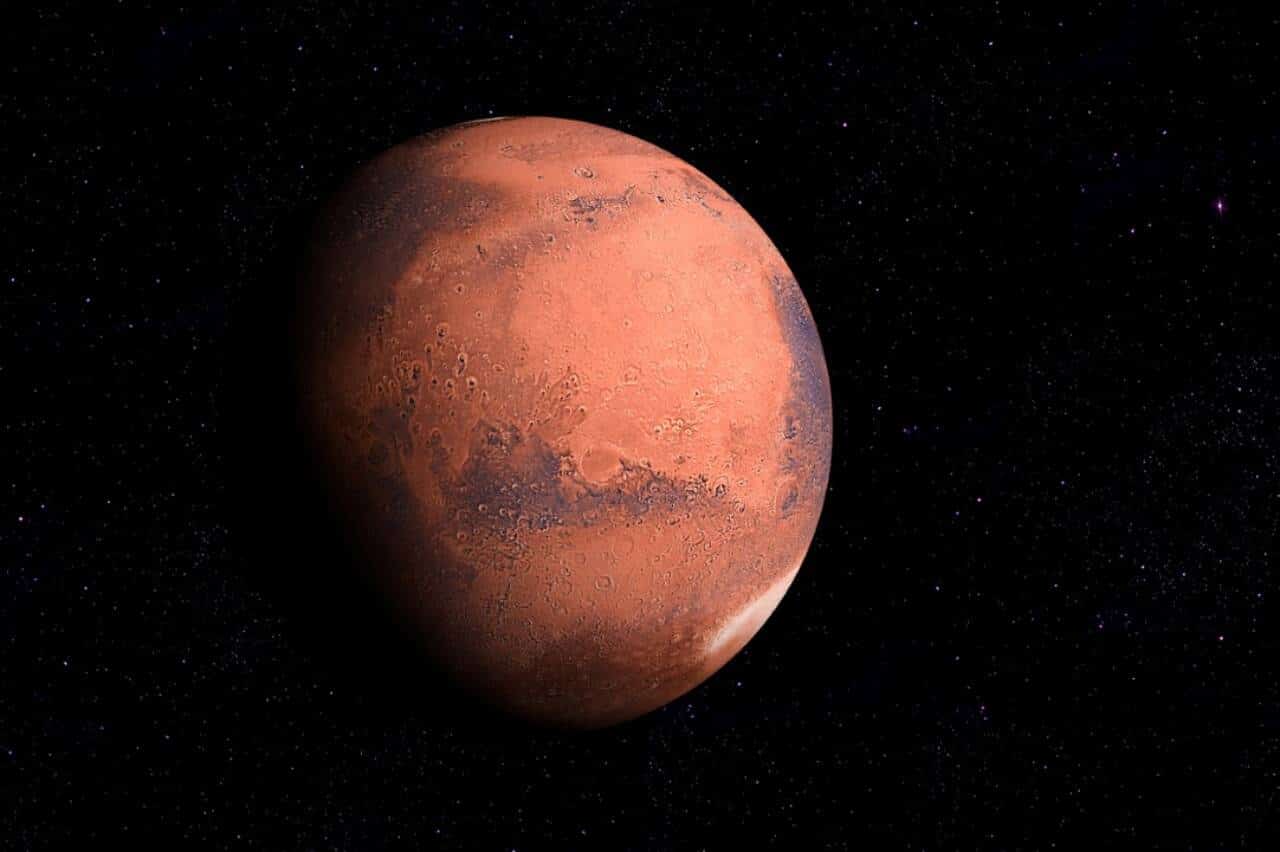 |
A rock from Mars found in the Sahara Desert holds fragments that date to 4.1 billion years, a period when the planet’s crust was still forming. The analysis gives scientists direct records of the earliest surface of the red planet, shortly after the Solar System took shape.
The sample is catalogued as Northwest Africa 7034 and nicknamed “Black Beauty.” It was collected in the African portion of the Sahara and is kept under international scientific custody. Unlike most Martian meteorites, which are made of uniform igneous rock, this one is a breccia, a mix of different minerals cemented by volcanic activity and repeated impacts.
Zircon grains point to a 4.1 billion-year age
Laboratory dating focused on microscopic zircon grains preserved inside the rock. The radioactive decay of chemical elements in those minerals allowed the team to fix the age at 4.1 billion years, a time when Mars was hit by heavy asteroid bombardment. Estimates from other studies of the same meteorite range from about 4.4 to 4.5 billion years.
Keep reading: Orionid meteor shower peaks on October 21 alongside Mars and Jupiter alignments in eastern skies
The Saharan specimen has features that matter for planetary geology. Each one helps scientists reconstruct the early Martian surface.
- Hydrated minerals that show long contact with water in the planet’s first phase
- A breccia texture formed by the fusion of rock fragments after cosmic collisions
- An original weight of about 320 grams, recovered in the African desert
The rock went through a series of violent events before reaching Earth. A large impact on Mars ejected the material out of the planet’s atmosphere. The fragment then travelled through interplanetary space until it crossed Earth’s gravitational path and fell on the African continent.
Water traces inside the rock from early Mars
Analysis of oxygen and hydrogen isotopes in the mineral inclusions reinforced the existence of hydrothermal systems in the early phase of Mars. The data show the crust cooled quickly but also interacted with water-based fluids. Those conditions could, in theory, have offered basic support for microscopic life.
Learn more: Mars and Jupiter cross paths with the Moon in October 2026 sky guide
Scientists are running new lab tests to match the material with data from orbital probes that map Martian craters, aiming to pin down the basin the fragment broke off from. A separate study published in Geophysical Research Letters, with participation of the Technical University of Denmark, used neutron and X-ray tomography to map hydrogen-rich regions inside the same meteorite without cutting it. The team estimated that the clasts hold up to 11% of the sample’s total water content.