

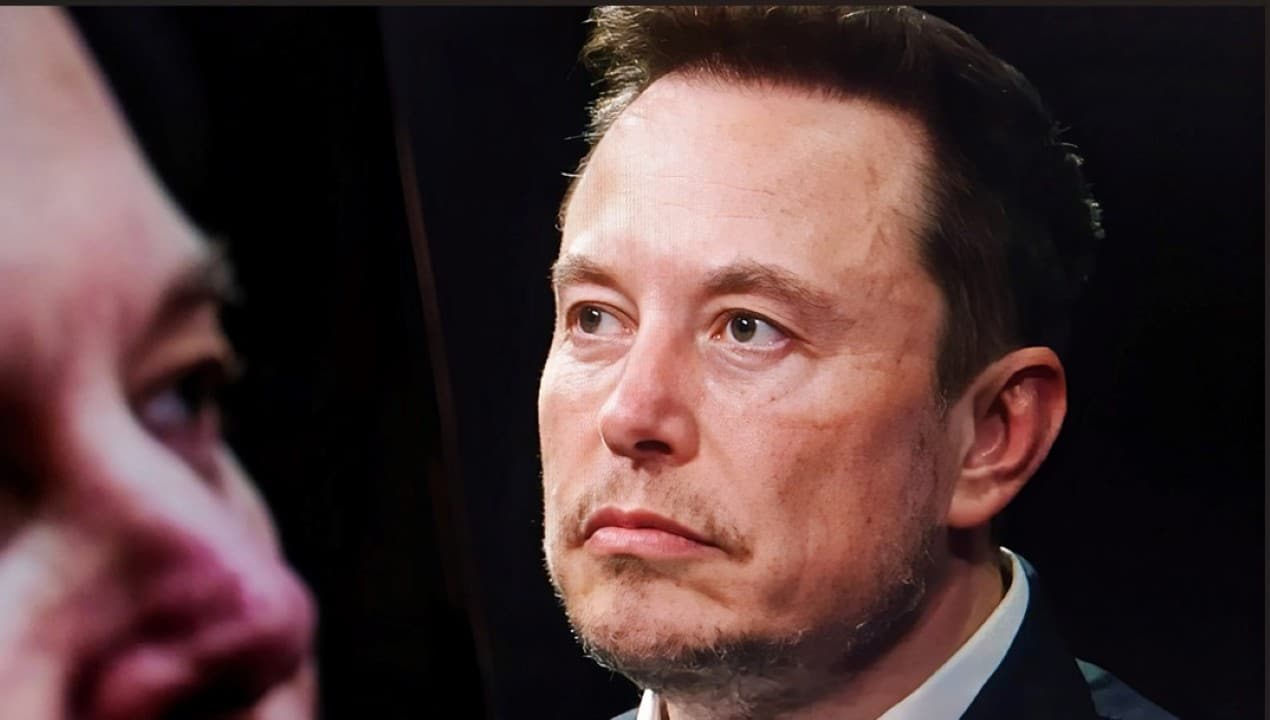
When two of the biggest personalities in the technological universe come together to debate innovations in engineering, the expectation is for an intense discussion. However, Elon Musk revealed that the meeting with Bill Gates, where the Tesla Semi was the center of the dialogue, did not exactly follow this script.
Musk shared the experience in an interview with the All-In podcast, describing Gates’ visit to Tesla’s Gigafactory in Austin. What followed, according to the Tesla CEO, demonstrated a surprising lack of depth or, perhaps, that founding a successful software company like Microsoft does not automatically guarantee proficiency in physical sciences.
The tech billionaire expressed his astonishment: “We would imagine that someone like Bill Gates, who created one of the biggest technology companies in the world, Microsoft, would actually be very strong in the sciences. But actually, in my direct conversations with him… he’s not strong in the sciences. That’s really surprising.”
During the visit, Gates told Musk that it would be unfeasible to produce a semi-trailer truck with a long range. Musk’s response was immediate and pragmatic: “But we already have some. And you can drive them. Pepsi is using them right now. You can drive them yourself or send someone – obviously Bill Gates isn’t going to drive them himself – but you can send someone you trust to drive the truck and see if it can do what we say it can do.” Gates, however, persisted in his disbelief, insisting, “No, no, it doesn’t work. It doesn’t work.”
Musk’s impatience was evident at the time. The Tesla Semi is available in two autonomy versions, with 325 and 500 miles, and, at the time of the conversation, the trucks were no longer a hypothetical project, but a reality in operation.
The first units were delivered to PepsiCo in December 2022, and the vehicles were already being widely used by real operators.
PepsiCo recorded routes of 1,076 miles in 24 hours, with multiple shifts, reaching ranges of up to 410 miles on a single charge in its trucks in the Sacramento region. The word “impossible” was already in contrast to the concrete data.
Bill Gates analysis lacked technical information
Musk tried to steer the discussion toward technical points of disagreement, a common method when confronting an empirical claim without evidence. His attempt to identify the specific objection, focusing on battery energy density versus chassis efficiency, made no headway.
Musk recounted his frustration: “And I was like, ‘Okay.’
Gates’ response confirmed the lack of foundation. “And he didn’t know any of the numbers. And I thought, ‘Well, then doesn’t it seem premature to conclude that a long-range semi-trailer truck can’t work if you don’t know the energy density of the battery or the energy efficiency of the truck chassis?'”
Logistics companies like NFI have tested the Semi, reporting an efficiency of 1.64 kWh per mile. DHL, meanwhile, recorded 1.72 kWh per mile transporting 75,000 pounds of combined gross weight 388 miles on a single charge. These numbers are public knowledge and reinforce the vehicle’s capacity.
The truck operates with three engines, generating approximately triple the power of a conventional diesel truck, with consumption of less than two kilowatt-hours per mile. This, in fact, is not the first time that the two tycoons have publicly opposed each other in relation to the Semi.
Gates’ previous statements on electric trucks
Bill Gates had previously expressed his position in a blog post, arguing that 18-wheel trucks were not suitable for electric propulsion. He wrote that “even with major advances in battery technology, electric vehicles will probably never be a practical solution for things like 18-wheel trucks” and that “electricity works when you need to travel short distances.”
That post was released in August 2020, solidifying his skepticism.
In 2022, Gates also took a short position against Tesla. Musk discovered the movement when Gates approached him to request a donation for his climate-focused philanthropic initiatives, a sequence of events that Musk found particularly galling.
Large-scale production of the Tesla Semi began on April 29, 2026, at a factory in Nevada, with plans to manufacture 50,000 units annually. Musk has shown great optimism regarding the schedule. The truck that Bill Gates considered impossible is now being produced on a large scale, marking a significant turning point. While a complimentary test drive for Gates is unlikely at this point, the offer apparently remains open.