

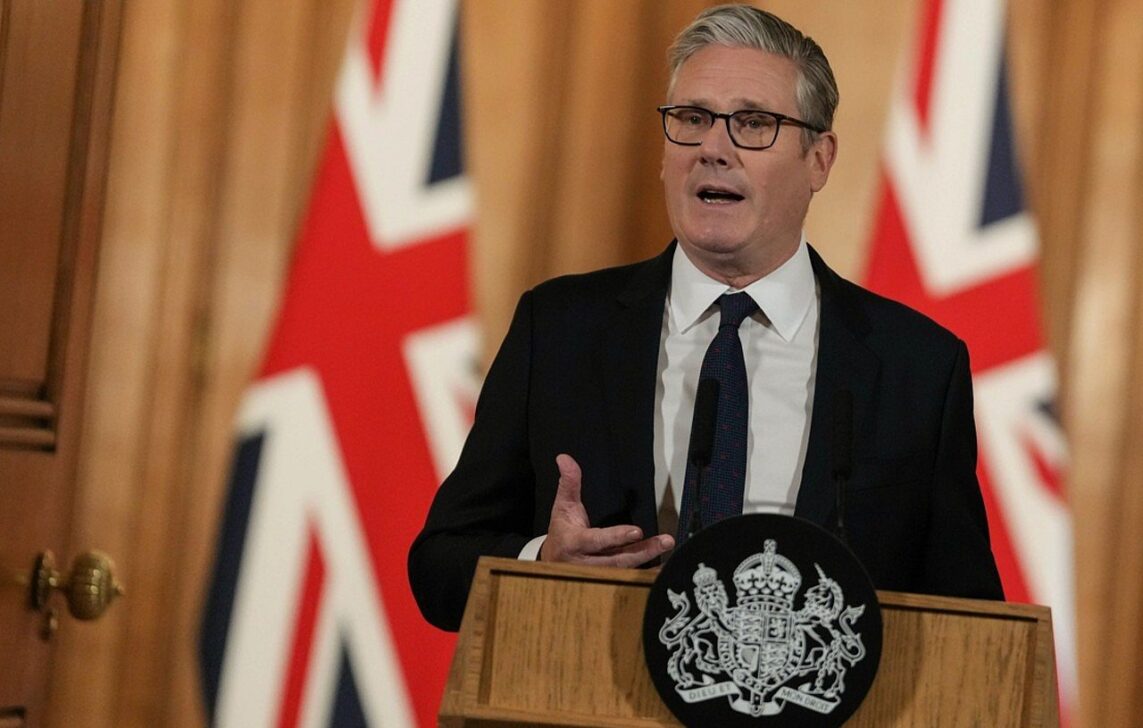
Labor Party leader announces resignation amid internal pressure
Keir Starmer, current leader of the United Kingdom’s Labor Party, formally announced his decision to resign from office, paving the way for a new internal dispute and the possibility of the country having its sixth prime minister in a period of seven years. The statement, made this Monday (22), comes after increasing pressure from parliamentarians from his own party, who questioned the direction and effectiveness of his leadership. Starmer’s departure is expected to take effect in the coming weeks, marking a new chapter in the volatile British political scene.
The labor leader had taken command of the opposition with the promise of revitalizing the party, which was coming from significant defeats. Despite winning a landslide victory just two years ago, bringing the Labor Party back to power with a majority, internal dissatisfaction has built up. The resignation reflects the persistent turmoil that has characterized UK politics over the past decade, with frequent changes in power.
Who can take charge of the Labor Party after leaving
With the imminent vacancy in the leadership of the Labor Party, eyes are turning to potential successors. Former Mayor of Greater Manchester, Andy Burnham, emerges as the most likely name to take over Keir Starmer’s position. Burnham, a well-known figure on the British political scene, has the support of important party members.
Among the other names speculated, former health minister Wes Streeting, who was seen as a possible challenger, declared his support for Andy Burnham and stated that he will not run for leadership at this time. This movement strengthens Burnham’s candidacy, suggesting a more targeted and less fragmented transition within the party. The expectation is that the new leader will be defined within a few weeks, preparing the party for future challenges and, potentially, for the next general elections.
The decade of political instability in the United Kingdom and the impact of Brexit
Keir Starmer’s decision to step down as leader of the Labor Party underlines the deep and ongoing instability that has plagued British politics over the last ten years. Almost a decade after the referendum that decided for the United Kingdom to leave the European Union – Brexit – the country has plunged into a period of unprecedented turbulence, characterized by a rapid succession of prime ministers and marked political fragmentation. This scenario manifests itself not only in the frequent changes of command, but also in the difficulty of governments in implementing long-term agendas and in the polarization of society.
Brexit, voted in June 2016, triggered a series of events that redefined the British political landscape. The departure from the European bloc deeply divided the country, generating economic crises, disputes over borders and an intense debate over national identity. Since then, the United Kingdom has found itself governed by different leaders who, despite promises of unity and stability, have faced immense challenges in reconciling the expectations of different political wings and the population. The promise to “take back control” of the country turned into a decade of incessant search for a new balance, with the erosion of political figures and the difficulty of consolidating a unified vision for the future. This constant turnover in leadership, both in government and opposition, reflects an inability to effectively deal with the lasting consequences of such a divisive decision, impacting popular confidence and the country’s international image.
Starmer’s legacy and the challenges of the Labor opposition
Keir Starmer assumed leadership of the Labor Party at a challenging time, with the mission of rebuilding the party’s credibility after years of internal divisions and unsatisfactory election results. His rise to power with a large majority just two years ago was seen as a triumph, indicating a possible return of the left to the center of British power. However, the honeymoon was short, and Starmer found it difficult to consolidate his position in the face of a still skeptical electorate and a resilient Conservative opposition.
Despite initial successes, internal pressure on Starmer intensified, with some party members questioning his ability to maintain unity and offer a convincing political alternative. His resignation therefore not only marks the end of a brief period of leadership, but also places the Labor Party at a new crossroads. The party will now have the challenge of choosing a new leader who is capable of galvanizing the base, attracting independent voters and, most importantly, presenting a project for the country that overcomes the divisions and uncertainties that still hover over the United Kingdom.