

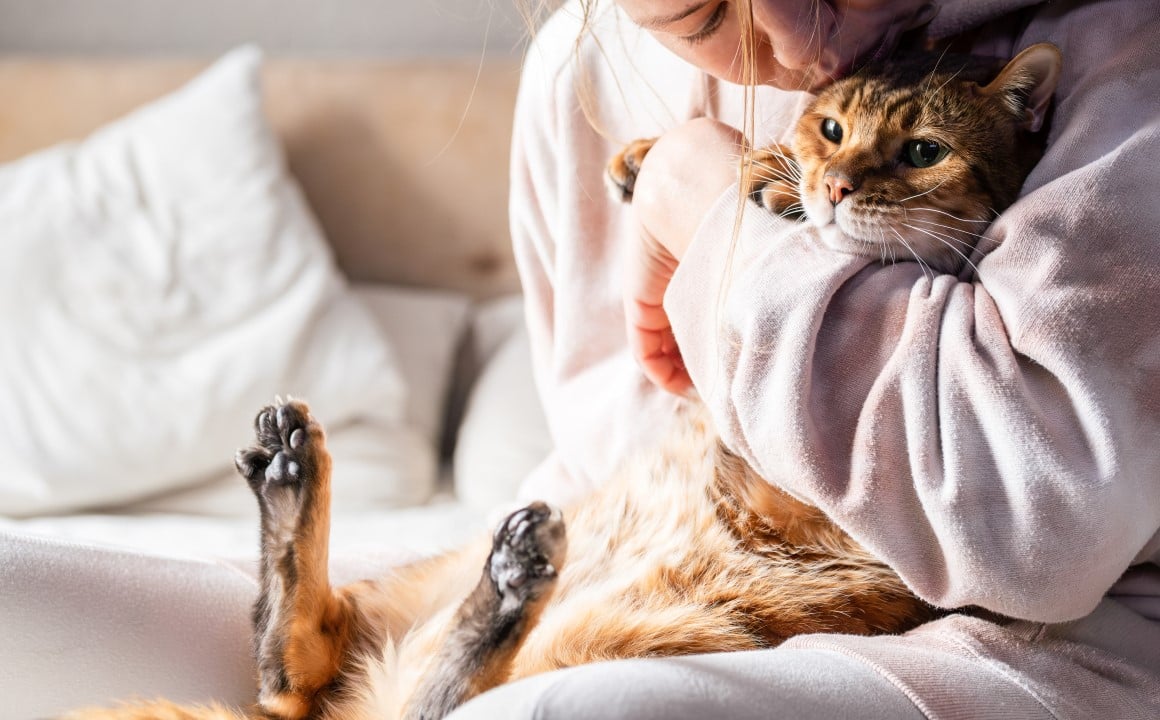
Returning home after an exhausting day can lead many to seek comfort in their pets. While a dog tends to show great enthusiasm and warmth, a cat’s behavior can be less predictable, ranging from a withdrawal to a more hostile reaction, such as hissing.
Although feline owners often defend the affection of their pets, recent research carried out in the Netherlands sought to understand which species, in fact, contributes most to emotional well-being. For five days, scientists monitored pet owners to analyze the impact of interactions with dogs or cats on daily mood.
Published in the specialized journal Frontiers in Psychology, the survey used a smartphone application to collect data. The app sent approximately ten daily alerts to participants over five days, including weekends, in order to record spontaneous interactions with their animals.
Each time the notification appeared, volunteers were asked to answer brief questionnaires about their interaction with the pet, their state of mind at that moment and the level of stress they felt, focusing on the owners’ own perception.
Initial results indicated that contact with any pet was linked to a momentary improvement in mood. Both dogs and cats were able to generate a feeling of well-being in their owners for a brief period of time.
However, despite promoting a temporary peak of happiness, neither dogs nor cats have demonstrated effectiveness in reducing their owners’ stress. While the presence of dogs did not significantly impact tension levels, felines, surprisingly, were associated with a possible worsening of stress in their owners.
Despite the interesting findings, the research has certain caveats. The number of participants with cats (36) was considerably lower than that of dog owners (75), compromising the equivalence of the comparison. Additionally, the survey lacks robust “statistical power” to establish irrefutable conclusions, something admitted by the scientists themselves.
It is also important to consider that the reality of interactions can be more complex. To achieve greater statistical precision, analysts needed to rule out situations in which cats and dogs lived in the same residence.
However, many pet owners, and even those who follow classic cartoons like “Tom and Jerry”, understand that homes with multiple animals do not always function harmoniously.
The beneficial effect does not always come from a single animal, but can arise from the coexistence between different species. However, additional studies are essential to deepen this understanding.

Individual pet personality influences interaction
It is essential to recognize that each pet has its own individuality. Just like humans, a dog or cat can present characteristics such as being distant or affectionate, lazy or energetic, playful or more reserved. The way in which owners establish bonds with their pets is influenced by the interaction between their own personalities and those of the animals, referring to the psychological concept of attachment, which suggests that experiences in childhood can shape relationships in adult life.
Another point to note is that the researchers used direct, single-item questions to assess aspects such as contact with the animals. While this speeds up research, it limits knowledge about the exact nature of the observed interactions (whether a warm hug or a brief caress). Without such detail, it becomes challenging to determine how the specific quality of these interactions impacted the final results.
The distinction is relevant, as dogs and cats have different interactive demands. Historically, dogs were selected for collaboration with humans, while cats had their domestication linked to the control of pest populations, such as rodents.
The selective breeding of cats was significantly less intense than that of dogs, which leads them to maintain traits of their wild ancestor, such as solitary and territorial behavior, something often observed by their owners. When it comes to interpreting feline signals, it is common for humans to have difficulty identifying when their cats are dissatisfied.
In fact, communication challenges are not exclusive to felines; Dog owners may also have difficulty noticing signs of anxiety or discomfort in their canine companions.
Despite the points raised, the use of animals to improve human well-being is a documented practice since the 18th century, with decades of solid evidence. It is clear, however, that the quality and type of interaction between the animal and the owner are determining factors.
If a cat decides to curl up on your lap for a moment of rest, the owner’s stress can be alleviated. On the other hand, if the animal shows resistance and protests with meows, insisting on affection can result in an increase in the owner’s exhaustion.