

Pixar’s most recent production, Toy Story 5, comes with a peculiarity: it is a film that could come with a special rating, aimed specifically at parents.
Anyone responsible for a school-age child will probably find several points of identification in the plot, to the point that their own sighs overshadow Taylor Swift’s melancholic melody that fills the final credits.
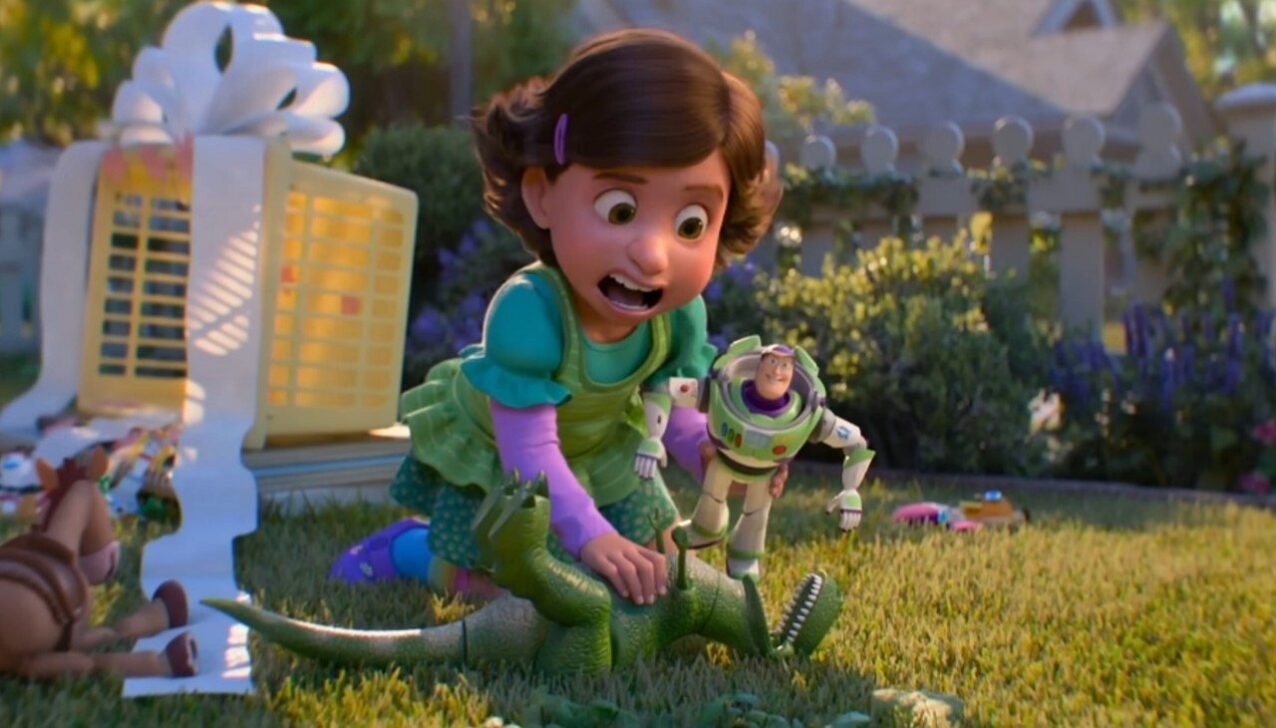
The continuation of the renowned Toy Story saga centers on the character Bonnie, voiced in English by Scarlett Spears.
Approximately eight years old, Bonnie loves playing with her toy friends, including Jessie (Joan Cusack) and Buzz Lightyear (Tim Allen). However, she shows great shyness and difficulty establishing friendships with other children.
Faced with this, her parents, despite some trepidation, chose to give her a tablet called Lilypad, with the voice of Greta Lee. The aim is to allow her to participate in online games with her dance class classmates.
This decision, however, generates apprehension among the toys. They fear that the rise of digital technology has made them obsolete.
The situation, on the other hand, proves to be even more tense for Bonnie’s parents. The concern lies in the possible exposure of the daughter to risks of online abuse, at the same time as they want to prevent her from suffering social isolation.
The animation’s script proves incredibly pertinent, coinciding with the recent announcement by British Prime Minister, Keir Starmer, on June 15, about the ban on access to social networks for under-16s in the United Kingdom, from January 2027, reflecting a growing global concern.
This British measure mirrors actions already taken by Australia, which was the pioneer country in implementing such a ban into law the previous year.
Pixar productions generally take years to be conceived and completed, which, as a rule, prevents them from reflecting current affairs with such precision.
For those, like many viewers, who have children, the narrative can feel like a direct attack on their own experiences.
Given this, it can be said that, forgetting titles like “Obsession” and “Backrooms: A Non-Place”, the real thriller of the year is Toy Story 5, at least from the parents’ perspective.
Family challenges as a focus for Pixar
This approach, however, does not represent a radical departure for the studio. After all, the complexity of being a child and the challenges of being the adult responsible for that child constitute a recurring and preferred theme for Pixar.
Whether portraying a father looking forward to his son’s first day of school in “Finding Nemo” (2003) or a girl disoriented by moving to a new city in “Inside Out” (2015), many of Pixar’s biggest hits seem meticulously crafted to awaken guilt and feelings of inadequacy in parents.
It is this ability that gives the studio an unparalleled power to touch the deepest emotions, something that its competitors can hardly replicate.
Toy Story 5’s distinction lies in presenting ordinary human beings as its main characters.
Most Pixar films have traditionally used fantasy figures as metaphors for parents facing dilemmas, like the emotions in “Inside Out” or the toys in earlier installments of Toy Story. At other times, the emotional charge is softened through characters like fish parents in “Finding Nemo” or superheroes in “The Incredibles” (2004).
In the Toy Story series itself, the children’s characters tend to be secondary, living their lives carefree, while the toys lead existential crises due to lack of attention.
It is worth noting that Toy Story 5 contains several elements of this dynamic; Maybe Jessie should consider moving forward with her own story.
However, this is the only Pixar animation that so deeply explores the overwhelming loneliness of ordinary human children, and their parents’ desperation to find ways to help.
A crucial moment is established right at the beginning, when Bonnie, in a sincere question, asks her parents: “Why doesn’t anyone want to be my friend?”
Perhaps, after this scene, it is necessary to look for a lighter film to recover, like, for example, “Extermination: The Temple of Bones”.
Provocative reflection on Toy Story 5
This does not imply that Toy Story 5 is the high point of the franchise.
Compared to the original trilogy, released between 1995 and 2010, which is unparalleled, the new production lacks the same humor and the most dizzying sequences. Furthermore, the film features an excessive cast of characters and a somewhat intricate plot.
An entire sequence, which shows about 50 identical Buzz Lightyears on a cross-country road trip, could have easily been excised. Talvez a decisão tenha sido incluir essas distrações para aliviar a intensidade da angústia de Bonnie, que, sem isso, poderia ser insuportável para o público — em especial para os adultos.
The result is a thought-provoking but confusing work. Toy Story 5 ranks as one of Pixar’s most ambiguous films, and fails to deliver a scathing critique of social media and digital devices.
With a wide range of Disney apps and video games on the market, it’s likely that the writers were careful not to take an overly negative stance. However, by so directly addressing the pains and insecurities of youth, this may be the most audacious work ever produced by the studio.
Perhaps the time is right for Pixar to transcend toys, action figures and other children’s elements, and create an animation focused solely on the complexity of human beings.